Do you sometimes need a short summary of a hot topic with animal welfare? Where experts will be referenced, quite often providing detailed evidence-based research to backup recommendations?
The LRC team is creating briefs: one-page based information to share with others on some hot topics for community pet rescuers. These briefs may be downloaded and are highly dependent on reference information from a range of trusted sources – quoting the experts. Over time, we will be adding to these, initially these will be NSW and cat focused.
It is critical that everyone involved with cat welfare, especially community cat rescuers & feeders, provide a submission as feedback to this strategy. The draft Victorian Cat Management Strategy (the draft strategy) fails to include intrinsic stakeholders in the “main group” for formulation, including domestic cat management experts (eg APWF), the Australian Veterinary Association (AVA) representatives, Australian Institute of Animal Management (AIAM) representatives, and community cat rescuers and carers.
To provide feedback on the draft strategy, you may either
upload a document (.doc or .docx, no free form entry), OR
complete a survey which has specific questions and usually only one free form entry per topic of only 350 characters.
The LRC guide provides help on the following aspects & draft strategy topics.
On that same webpage you can: download the documents, and provide either a survey or a submission response.
We have yet to assess the limitations in the survey tool, though it indicates you can continue editing over time. However, we always suggest you keep your own notes, which is suitable for an upload and an easy function is available for that.
IF you would like to do your own assessment & response, then please start NOW as the strategy document is 27 pages long, and there is a summary document too.
IF your time is limited then perhaps focus on the key themes which are of most interest to you. We have highlighted some we view as critical to assess.
There is a summary of Vic’s key issues & themes, that is on page 5.
Each of the themes start on page 16, and each is covered in one page each. Therefore if your time is very limited we suggest you focus on just these pages.
The LRC team is working with others to collaborate on our view of the top issues.
We will provide updates in this blog – however initially it appears that there are gaps related to:
domestic cat management best practices (mandatory cat containment is not effective)
The OVERVIEW tab information includes the source documents in Word and PDF for both the Summary and Strategy documents, which may be downloaded.
The OVERVIEW tab also contains FAQs.
Quick Guide to Survey
We view that the survey is very limited based on a) set discussion questions from actions in the draft strategy (some actions are worded differently in the survey to the draft strategy), and b) limited to just 350 characters (not words, includes spaces) for the few free form responses, mainly one per draft strategy “Theme”.
If possible, and you can create .doc or .docx files, then please write submissions with out these constraints 🙂 and enabling you to include URL/links to quoted findings by other.
The theme pages from the strategy document are included in this blog – a section for each Theme and the top issues in our opinion.
We proved the following images of the survey questions for each pages with
examples of the free form text responses – you will need to customise these, and
for all the specific questions with options for you to select – we suggest you choose the last option “No answer / prefer not to say” if you have very limited time and have not read the draft strategy page that is referenced.
The first page of the survey is general FYI etc. Then there is basically an image for each survey page on each Theme. We have highlighted in red any key words in the survey which we believe should be brought to your attention.
The LRC example wording is from the view of community cat rescuers. Everyone is welcome to respond as to their own priorities.
Quick guide & hints for submissions / responses
HINT
EXAMPLE
Start with a reference to the Vic documents.
I provide my submission in response to the Victorian Cat Management Strategy, dated December 2023, and Draft Victorian Cat Management Strategy Summary – Key themes and actions, for your consideration.
Include a summary of your background for context of your concerns.
For many years I have assisted community cat rescuers, animal welfare organisations, and council pounds, with taking in, fostering, and rehoming cats. [feel welcome to add more with “numbers” such as years, numbers of animals that each year or in total you have assisted.]
Refer to the sections of the documents to which your feedback relates.
Theme 1. Promote cat welfare and responsible cat ownership (as a heading) or In relation to Theme 1… etc
Add your concerns & recommendations, use a simple structure for each that you can repeat 🙂
I am concerned about [issue]. This causes [one or more negative outcomes].
I strongly recommend [a change or improvement]. This will provide benefits [describe tangible and intangible benefits].
Add references to trusted sources/ research, include a quote, and URL (links).
Introduction, Managing cats in Victoria (page 6) – gaps with “main groups”
Other key stakeholders and those who deliver animal welfare services should be recognised and incorporated in the development of the framework, strategy, “laws, codes of practice, policies and plans”, including:
APWF the peak body for pet animal welfare approaches & practices,
the AVA, and
community cat rescuers and carers.
Example of very short response [<350 characters]
Other key stakeholders and key deliverers of animal welfare services should be recognised and involved in the development of the framework, strategy, “laws, codes of practice, policies and plans”, including: APWF the peak body for pet animal welfare approaches & practices; the AVA; the AIAM; and community cat rescuers and carers.
Areas of concerns & recommendations
Leading experts in domestic cat management APWF
The APWF provides advice and evidence based research (Australian and from overseas), representatives should be actively involved in the “main group” for formulation of the framework, the strategy etc to provide the best outcomes for animals. . https://petwelfare.org.au/
The APWF research assesses holistic cat management approaches, that are effective and proactive to minimise negative outcomes for animals and people. The APWF representatives also participate in advisory committees at the federal and state levels. They work at the local government/ council level “with shelters, pounds and local communities to provide proven methods that help save animals’ lives”, their “research-based strategies provide pounds & shelters with the knowledge they need to get to zero euthanasia of treatable and adoptable dogs and cats”.
Australian Institute of Animal Management (AIAM)
Considering the intrinsic value and support that the AIAM provides to all levels of government and to Animal Management Officers (AMOs), the AIAM should be considered one of the main groups of stakeholders for key consultation during the formulation of the framework etc.
It is noted that the AIAM was not included in the strategy section for Roles and Responsibilities.
Australian Veterinary Association (AVA)
Representatives from the AVA should be included as stakeholders in the “main group” with the formulation of the draft strategy and the framework components, for their expertise in animal welfare, and as many vets and their practices offer assistance with semi owned and unowned cats including rehoming services for the community. The involved vet practices relieve the burden on the local government / council pound animal welfare systems.
Community Cat Rescuers & Carers
Community cat rescuers and carers are generally volunteers providing a critical service to communities for animal welfare outcomes including rehoming, desexing, responding to health issues etc. This community services reduces the number of animals entering council pounds and shelters operated by animal welfare organisations and others.
Community cat rescuers and carers are a critical stakeholder group who need to be effectively engaged in the development of the animal welfare framework etc and delivery of associated services.
The following diagram has been provided to the NSW government from the LRC team as it amended a government consultant funded diagram to include community rescuers for both cats and dogs to the NSW overview of its systems. This amended diagram includes “small rescuers” in comparison to large animal welfare and rehoming organisations. This includes community groups and vet practices avoiding burdening the council pound systems. It is relevant to Victoria and other states and territories within Australia.
The strategy has: omitted peak advisory organisations eg APWF & AIAM; understated AVA responsibilities; vet practices need to be recognised for treating & rehoming unowned cats/kittens, & subsidised services for rescuers; rescue groups need to be recognised for independent rehoming efforts & financial burden which relieves council pound systems.
[the paragraph above is around 347 characters]
Areas of concerns & recommendations
The strategy section on Roles and Responsibilities omits experts in domestic cat management. A number of organisations and their representatives should be explicitly included with their deliverables and interactions with others forming the cat management framework, monitoring operational performance and escalating needed improvements.
Leading experts in domestic cat management APWF
The strategy section on Roles and Responsibilities needs to include the APWF.
The APWF provides advice and evidence based research (Australian and from overseas), representatives should be actively involved in the “main group” for formulation of the framework, the strategy etc to provide the best outcomes for animals. . https://petwelfare.org.au/
The APWF research assesses holistic cat management approaches, that are effective and proactive to minimise negative outcomes for animals and people. The APWF representatives also participate in advisory committees at the federal and state levels. They work at the local government/ council level “with shelters, pounds and local communities to provide proven methods that help save animals’ lives”, their “research-based strategies provide pounds & shelters with the knowledge they need to get to zero euthanasia of treatable and adoptable dogs and cats”.
AIAM
The AIAM provides support to all levels of government and to council Animal Management Officers (AMOs), the AIAM should be considered one of the main groups of stakeholders for key consultation during the formulation of the framework etc.
The strategy section on Roles and Responsibilities needs to include the AIAM, for their important role and activities, which ultimately are focused on improving outcomes for animals with the improvements to the AMO role in each council.
“The Institute seeks to support those engaged in the business of animal management by promoting:
Animal Management Officer training
Consistency of legislation
Recognition of the value of the Animal Management Officer’s role to society
Support for Animal Management Officer’s from employers and community
Consultation in the creation and development of legislation and workplace processes
Resource and network availability and access
Professionally operated Council shelter facilities with best practice animal care
Strong healthy relationships with external stakeholders”
Veterinary Practitioners
The draft strategy section on Roles and Responsibilities omits recognition that Veterinary Practitioners: take in stray/ abandoned cats (semi owned or unowned), desex, treat, and rehome to families; and some provide subsidised services to community cat rescuers performing a similar role.
The draft strategy section on Roles and Responsibilities for Veterinary Practitioners needs to recognise these essential services for companion animals, and that these efforts relieve the effort and financial burden on the council pound systems. This is a critical component for the cat management strategy for semi owned and unowned cats.
Community Cat Rescuers & Carers
The draft strategy section on Roles and Responsibilities omits recognition that “Rescue Groups and Community Foster Care Networks” with taking in and rehoming surrendered or abandoned cats/kittens, relieve the burden on the state/council animal welfare systems and resources. And that community cat rescuers and carers are performing a key role: alongside the recognised organisations being council pounds and animal welfare organisations; and these community services dramatically reduce the number of animals entering council pounds and shelters operated by animal welfare organisations and others.
The draft strategy section on Roles and Responsibilities for Rescue Groups and Community Foster Care Networks, needs to include the understanding that that community cat rescuers and carers are providing critical services to semi owned and unowned cats, assisting in these becoming owned pets once more.
This is likely a factor for gaps in other sections of the draft strategy document.
Top Issues with Theme 1 Promote cat welfare and responsible cat ownership
The traditional approaches of passive “education” and punitive legislation with negative consequences ($fines etc) are not effective, we need a transformation in approaches to achieve improvements in animal welfare and to minimise the number of abandoned cats/ kittens.
The advice and research from the Australian Pet Welfare Foundation (APWF) should be followed and incorporated in the Vic strategy document. The APWF promotes “evidence-based solutions to save the lives of pets and people”. https://petwelfare.org.au/
Example of very short response [<350 characters]
Traditional approaches of passive education and punitive legislation with negative consequences ($fines etc) aren’t effective. The APWF advice for better people and animal welfare should be incorporated in this strategy. Mandatory confinement, the Trap/adopt or kill, Trap/kill, or Kill programs, are ineffective. https://petwelfare.org.au/
[The above paragraph is 340 characters]
Areas of concern & recommendations
Legislation & punishment-based approaches are not effective
The benefits of microchipping and registration are supported. However, when other legislative obligations are enforced with punitive costs and actions (potentially removing an animal from their owner and transferring to a pound where euthanasia is likely) then the community cat owners may avoid both microchipping and registration.
“Based on the evidence, the current reactive punishment-based model of domestic animal management should be replaced with a proactive support-based model to reduce costs.”
“Legislation and regulation should be amended to remove registration fees for cats and annual permit fees for undesexed cats.” The costs are a disincentive especially for those on low incomes.
“Legislation and regulation should be amended to allow cats to be registered and identified via microchip to an “organisation” rather than only to an individual person” as this assists owners and community cat rescuers and carers of semi owned cats.
“The current punishment-approach of requiring an owner to pay a fine or fee before returning the pet to the owner should be avoided” and “pets should be returned to identified owners and reasonable payment plans for any impoundment fines and fees (where needed) should be organised, instead of continuing to hold the animal after the owner is identified”.
“Legislation and regulation should be amended to prohibit deeming domestic cats that are trapped around where people live or frequent or are admitted to pounds, shelters or similar facilities as being ‘feral’. Cats trapped in response to nuisance complaints or those entering pounds should clearly be defined as domestic cats, regardless of their behaviour.” This also applies to the culture in communities with regarding all roaming cats as “feral” cats.
Proactive coal-face engagement with communities
Communication and cultural change programs should be funded to assist with solutions to increase the rate for desexing, minimise freely roaming pets, and minimise the abandonment of cats and kittens.
The following “hard issues” need to be addressed in the communities with the coal-face teams of Council Animal Management Officers and community cat rescuers:
low socio economic residents will require assistance with solutions including free desexing, transporting animals, and completing registration processes (One Welfare Approach);
different country or religious cultures impeding desexing and confinement where possible;
promotion of cat enclosures and confinement to properties (without legislation), with assistance in addressing the challenges such as strata bylaws, rental agreements with landlords, neighbour disputes with uses of fences etc.
“The current punishment-orientated domestic animal management model should be replaced with a support-based model consistent with the One Welfare concept which optimises the well-being of people, animals and their social and physical environment. Support-based strategies prevent impoundment and reduce council costs for e.g., assisting owners to build dog fencing, providing free pet identification, returning pets to identified owners and organising reasonable payment plans (where needed) instead of continuing to hold the animal after the owner is identified. Please see support-based strategies for reducing intake and euthanasia in pounds detailed throughout this submission.”
“Implement ‘Pets for Life’ concept strategies where dog and cat owners and stray cat semi-owners are supported to keep their pet or stray cat (versus relinquishment), which is a cost-effective. This should include funding for programs to help disadvantaged pet owners to keep pets with their families by assisting with veterinary costs, registration costs, and fencing.”
“Legislation and regulation to prohibit ‘No pets’ clauses in tenancy agreements in the same way it is illegal to discriminate against tenants with children, to ensure pet friendly rental accommodation matches demand across Australia.”
“Funding to promote Bed-time feeding of cats which is a highly effective way for cat owners to keep pet cats safely inside at night voluntarily (but mandatory cat containment should be rejected because it increases cat intake and euthanasia in pounds without reducing stray cats overtime).”
Desexing is the most effective approach to minimise the number of kittens being born each year, and our state and local governments need to assist with solutions beyond webpages with recommendations and occasionally offering subsidised desexing programs with “handcuffs” to microchipping and registration ie waiting for residents to be responsible.
Example of very short response [<350 characters]
The strategy needs to explicitly include: free high intensity desexing with assisted transport in low socio economic areas; free desexing for semi owned and unowned cats under community cat rescuers/carers, and council AMOs; subsidised desexing for owned cats. These approaches are proven effective by APWF research. https://petwelfare.org.au
[The above paragraph is 342 characters]
Areas of concern & recommendations
[Example, customise with your words]
Explicitly include in the draft strategy
free high intensity desexing with assisted transport in low socio-economic areas such as the Banyule program over several years;
free desexing for semi owned and unowned cats under community cat rescuers/carers and council AMOs;
subsidised desexing for owned cats.
These approaches including Banyule council program and APWF Community Cat Programs are proven effective by the APWF and with evidence based research.
Supporting Information
[quotes & references may be directly used]
In 2020 Jennifer Cotterell, then the Animal Management Officer (AMO) for Banyule Council recommended to the Australian government:
“To implement free cat desexing programs throughout Australia. The cost of the program itself is considerably less than the price that cats, vets, shelter workers and AMOs currently pay for running trap, impound and adopt or kill programs.”
This was based on the successful cat desexing program Jenny championed at Banyule over a number of years which started with a wish list involving:
“Completely free cat desexing
The implantation of a microchip so the cats could be traced back to an owner
Free council registration for the first year
A transport service provided by council AMOs for those that had none”.
2024 preliminary publication of Banyule desexing program research includes:
“Instead of traditional trap-adopt-kill, proactive management of urban cats based on targeted sterilization should be utilized by government and animal welfare agencies in Australia and internationally. These types of programs are effective at reducing intake and euthanasia and are cost-effective.”
“In Australia, traditional methods of cat management by local government (councils) animal management officers (AMO) have been ineffective, with cat-related calls and cat impoundments continuing to increase, resulting in many healthy cats being euthanized. This has detrimental effects on the mental health of AMOs, pound and shelter staff and veterinarians.”
“The City of Banyule, Victoria implemented a free cat sterilization, microchipping and registration (licensing) program in 2013-14. Initially targeted to three low socioeconomic suburbs with the highest cat-related calls and intake, where enforcement action had little effect.”
“The program was available to all cats in the area, including stray cats being fed by caregivers, provided they took ownership of the cats. There were no limitations on the number of cats enrolled per household and free transport was provided if required. The program was later expanded city-wide. Over eight years, city-wide cat intake decreased by 66%, euthanasia by 82%, with an increase in proportion of cats reclaimed by owners from a baseline of 6% of intake (2012-13) to 16% (2020-21). Cat-related calls decreased in the target area by 51% and city-wide by 36%. The council’s financial outlay was 84,000,which [resulted in decreased costs associated with cat−related calls of] 266,225.00. Instead of traditional trap-adopt- kill, proactive management of urban cats based on targeted sterilization should be utilized by government and animal welfare agencies in Australia and internationally. These types of programs are effective at reducing intake and euthanasia and are cost-effective.”
APWF Summary on community cat programs & desexing programs includes:
“The scientific basis for contemporary community cat programs shows that when high intensity desexing of all cats, targeted to areas of high cat impoundments or complaints, is combined with components of trap-adopt-or-return home methods, this can be successful in managing semi-owned and unowned cats in urban areas. There are now half a dozen publications documenting the basis for successful trap-adopt-or-return home programs at the suburb or city level (Levy et al. 2014, Spehar 2017, 2018a, 2018b & 2019, Kreisler et al. 2019). And in contrast to lethal programs that have little public support, non-lethal programs attract support from welfare agencies, rescue groups and individuals who help contribute to the cost.” (page 20) NSW Pound Inquiry submissions webpage /
Mandated cat containment/curfews have not been proven effective by councils. Free or heavily subsidised and assisted desexing programs have been proved effective in minimising the numbers of cats, roaming cats, and impacts to wildlife. Both of these have been researched by APWF. Desexing support needs to be provided to semi owned and unowned cats.
Supporting Information
[quotes & references may be directly used]
“The proposed actions in the plan regarding cat curfews, caps on cat ownership and restricting ownership of cats in local government areas demonstrates a lack of understanding of the cause of the free-roaming cat problem in our cities and towns based on current Australian research. Therefore, the proposed solutions are highly flawed, will be costly to enforce and will be ineffective at protecting wildlife populations of concern.” APWF Response to draft TAP https://petwelfare.org.au/response-to-draft-tap/
“The Australian Pet Welfare Foundation (APWF) strongly encourages inside containment of cats at night, and where possible, contained to the owner’s property during the day in a comfortable environment which meets the cat’s physical and mental needs.
However, the APWF is strongly opposed to mandated cat containment (night curfews and 24/7) because it leads to increased cat nuisance complaints, increased cat impoundments, increased cat and kitten euthanasia, increased costs and enforcement difficulties for local governments, increased mental health damage to veterinary staff and community residents caused by euthanasing healthy cats and kittens and no reduction in the overall number of wandering cats.”
“Mandated cat containment has been proven to be an ineffective strategy; a failure at reducing wandering cats in the short and long term, both in Australia and internationally. Mandated cat containment is not an effective strategy to reduce wandering cats because most wandering cats are strays with no owner to contain them. Even for cats with an owner, containment is often not achievable due to factors such as housing limitations, lack of financial resources and concerns about the welfare of confined cats.
Mandated cat containment actively prevents the resolution of the problem of wandering cats because it presents a huge barrier to cat semi-owners taking full ownership of the stray cat they are feeding.”
The APWF information on key issues with cat containment include the following.
“RSPCA Australia Identifying Best Practice Domestic Cat Management in Australia 2018 report acknowledges:
“Overall, councils with cat containment regulations have not been able to demonstrate any measurable reduction in cat complaints or cats wandering at large following the introduction of the regulations”.
In the City of Yarra Ranges (Victoria), in the 3rd year after mandating 24/7 cat containment:
• cat-related complaints increased by 143%
• Yarra Ranges Council acknowledged that the significant increase in cat complaints, is likely to be a
result of the introduction of a 24-hour cat curfew in 2014.
• impoundments increased by 68%
• euthanasia increased by 18% (human population only increased by 2%) (Yarra Ranges 2021)
…
In the City of Casey (Victoria), 20 years after introducing mandated 24/7 cat containment:
• the number of cats impounded was still 296% higher than baseline (from 264 cats in 1998 to 1,047
cats in 2019/20), more than double the rate of the human population increase.
• In 2000, Casey received 349 cat nuisance and related complaints which had increased to 376
complaints in 2020/2021 (Casey Council 2001 & 2021a, b)
…
The number of cat nuisance complaints and impoundments are important parameters because they reflect the size of the wandering cat population in the surrounding area.
The City of Hobsons Bay (Melbourne, Victoria) has publicly acknowledged that mandated 24/7 cat
containment is not an effective strategy for reducing the number of wandering cats or associated issues and has rejected cat curfews (Hobsons Bay 2014).
Some USA jurisdictions have introduced mandated 24/7 cat containment known as cat “leash laws” which have proven to be ineffective and impossible to enforce. When leash laws are passed, animal control impound more stray cats because they do not have an “owner” to contain them. This results in more cats being impounded and then killed but without reducing the overall number of roaming cats in the area. A number of USA jurisdictions have repealed their cat leash laws because they found they were unenforceable (Smithfield Virginia USA 2003, Edmonds City Council Washington USA 2012, Gretna City Council LA USA 2014, Hughes 2002, Alley Cat Allies 2022).
Based on data from councils, 24/7 cat containment regulations would not provide any measurable benefit in reducing complaints, cat impoundments, potential wildlife predation or cat-related costs and would instead increase costs to local governments”
Desexing is the most effective approach for managing semi owned and unowned cats.
Action (A) 10 also implies shorter time to euthanase besides shorter times to adopt or transfer an animal. Reduced times for euthanasia are not agreed with.
A 12 does not indicate what happens to the cats who are not adopted. There needs to be explicitly stated alternatives such as supporting community cats under semi owned arrangements.
A 13 is vague and could at worst represent anything including trapping, shooting, poisoning owned, semi owned, unowned domestic cats who wander / roam onto a property. There needs to be transparency in the strategy with explicit intended approaches that will be considered.
[Refer to Theme 2 for effective desexing programs eg Banyule free desexing and APWF community cat programs.]
Community cat rescuers/ carers and the cats under their assistance need support, including free desexing, and establishing safe environments for the cats and people.
The prevention of cruelty to animals legislation etc needs to incorporate exemptions to assist community cat rescuers / carers, researchers etc to enable desexing and feeding etc without fear of being charged with abandoning an animal, an animal abandoned by its original owner. [Refer to Theme 7]
Causes of pets being abandoned need to be addressed at the source, ie the original owners with One Welfare solutions rather than punitive actions usually resulting in deaths of animals at council pounds.
TNR and RTF techniques have proven successful. In Australia, the APWF and other community cat programs have used these techniques.
Supporting Information
[quotes & references may be directly used]
[Refer to Theme 2 for supporting information (quotes and reference links) for effective desexing programs eg Banyule free desexing and APWF community cat programs.]
APWF advice includes:
“Changes to state and local government bylaws are urgently required to allow management of owned, semi-owned and unowned cats using scientifically proven, best-practice methodologies.” (page 19)
“Notably, there are no reports in the Australian or international literature of high intensity trap adopt-or kill programs being successful at the city or suburb level.” (page 20)
The research into the Newcastle cull of semi owed cats, The Impact of Lethal, Enforcement-Centred Cat Management on Human Wellbeing: Exploring Lived Experiences of Cat Carers Affected by Cat Culling at the Port of Newcastle, includes:
“The results demonstrates strong relationships between the caregivers and the cats, and negative impacts on caregiver mental health and quality of life associated with this lethal cat management practice. It is recommended that a care-centred management approach be taken, whereby authorities identify and assist caregivers to implement neutering and, if possible, adoption.”
“the severity of the adverse psychological impacts, and the morbidity rate amongst the cat caregivers we interviewed, was far greater than would be expected as a risk to the community if the cats had remained at the site. We therefore suggest that potential legal ramifications should be considered before authorities intentionally choose a method of management that is likely to inflict substantial harm on community members.”
Punishment to Support: The Need to Align Animal Control Enforcement with the Human Social Justice Movement, includes:
“Person-centered and culturally competent policies and programs that focus resources on addressing root causes of pet health and welfare issues as opposed to an emphasis on code enforcement can create more positive, scalable, and sustainable improvements in human, other animal, and environmental health and welfare outcomes. This shift from punishment-oriented approaches to support-based models of animal control aligns the animal welfare field with the modern human social justice movement.”
“…Shifting animal control policies from punishment to support is intended to act on the recognition of the physical and emotional benefits of the human–animal bond and incorporating animal control agencies into a more robust system that supports pet ownership“
How and when will humane approaches be used for feral cats, as a pest animal does the prevention of cruelty to animals legislation apply? 1080 poisons are not humane.
Techniques for feral cats need to be tailored to the geographical areas and animals under threat. A broad-brush mass killing approach across all of Australia is not appropriate, and there are tendencies for the community to apply lethal approaches to any roaming cat.
Conservation fencing is the most effective way to protect native animals.
Trial TNR in areas of low threat to wildlife, eg farms, industry based environments.
Supporting Information
[quotes & references may be directly used]
RSPCA Australia advises:
“All jurisdictions should define all cats with some dependence (direct or indirect)
on humans as domestic cats. Cats who are unowned, unsocialised, have no
relationship with or dependence on humans and reproduce in the wild should
“Veterinarian, Howard Ralph, stated “1080 poisoning is like being electrocuted for two-plus days”.”
“…has been banned in most countries, due to concerns for humans and non-target species. Its use was banned in the United States in the early 1970s after people died. Australia and New Zealand use 95% of the world’s 1080″
“1080 poison is a chemical used to kill unwanted or unwelcome wildlife across Australia. It is a white, odourless, and tasteless poison and is considered a chemical of national security concern by the Federal Australian government, based on its fatality to all lifeforms. It is one of the most toxic substances found anywhere on earth and is in the same restricted regulatory schedule as other notorious poisons like arsenic and cyanide.”
Death “…can take anywhere from half an hour to up to 48 hours. During this time, the victim experiences severe suffering and stress. They endure prolonged seizures, bleeding from bodily orifices, including the eyes, mouth, and anus. There is no antidote to 1080 poisoning. Scientists from the RSPCA have concluded that 1080 is not a humane poison.”
“…1080 targets the body’s natural functioning and disrupts the animal’s CNS and heart. Animals who ingest 1080, exhibit signs of extreme distress and pain. They are noted to scream, cry, vomit, defecate, and suffer violent and prolonged seizures [8]. People who have witnessed animals dying of 1080 state that they often run into walls or objects and lose control of their limbs [9]. They die with a final convulsion up to 48 hours (two entire days) after ingesting the poison”
“Governments across the country use it to kill dingoes, possums, wallabies, pademelons, rabbits, foxes, pigs, and cats.”
Animal Liberation Australia [https://www.al.org.au/ban-1080#gsc.tab=0]
DR Katherine Moseby advises on feral cat management and wildlife and includes”
“We’re trying to train native animals to cope with a certain number of feral cats because we’d like to have bilbies and bettongs surviving outside fences one day” (Doctor Katherine Moseby)
“…we’re being practical about it, accepting the cats are here to stay in some form for a while, and building the capacity for our native animals to cope”
Australian Wildlife Conservation organisation advises:
“A critical strategy for reducing the impact of foxes and cats on native wildlife is the establishment of large feral predator-free areas, surrounded by conservation fences…
Wildlife translocation and reintroduction programs conducted inside these fenced reserves are proven to be the most effective way of keeping native fauna safe and ecosystems intact.”
Other key stakeholders should be involved in the strategy “main group” and working group including:
APWF the peak body for pet animal welfare approaches & practices;
the AIAM with expert AMOs; the AVA; and
representatives from vet practitioners and community cat rescuers who are taking in and rehoming both semi owned and unowned cats.
Collaboration approaches need to include face to face engagement with various segment of pet owners and communities where cats reside. It is strongly suggested that a matrix of relationships is established for target animal welfare stakeholders, with a detailed communication plan developed to provide the best outcomes for animals and people.
[Refer to the responses to Theme 1 for more information on these critical stakeholders.]
Supporting Information
[quotes & references may be directly used]
[Refer to the responses to Theme 1 for more information on these critical stakeholders.]
RSPCA advices on One Welfare including an example of isolated and vulnerable cat owners:
“Community health programs for pet owners – The bond between owners and their pets can decrease social isolation, increase a person’s sense of purpose and bring joy to someone’s life. This is especially true for more socially isolated groups such as elderly people or people struggling with homelessness. However, these circumstances can also make it difficult for these people to give their pets adequate care.”
Registration should be free, as any cost disincentives registration. Punitive legislation and costly stays in council pounds also disincentives people registering their pets and being held accountable.
Cats should be able to be microchipped & registered to an organisation rather than an individual person to help management of semi owned cats.
Rectify the existing legislation where community cat rescuers/ carers are at threat of being charged with abandonment for assisting semi owned and unowned cats.
Respectfully recognise the efforts of community cat rescuers/ carers who take in, desex and rehome these cats and need funding assistance especially for desexing and other vet treatments.
Supporting Information
[quotes & references may be directly used]
In response to the recent NSW inquiry, APWF recommended a number of legislative imporvements, these include the following.
“Recommendation 3
Domestic cats (owned, semi-owned and unowned) should be excluded from the legal definition of feral cats in legislation and regulation. Feral cats should be defined as having no relationship with or dependence on humans (neither direct nor indirect), surviving by hunting or scavenging for food (not fed intentionally or unintentionally by humans), and living and reproducing in the wild (e.g., forests, woodlands, grasslands, deserts).
Recommendation 4
Legislation and regulation should be amended to allow cats to be registered and identified via microchip to an “organisation” rather than only to an individual person.
Recommendation 5
Legislation and regulation should be amended to remove registration fees for cats and annual permit fees for undesexed cats.
Recommendation 6
Legislation and regulation should be amended to prohibit deeming domestic cats that are trapped around where people live or frequent or are admitted to pounds, shelters or similar facilities as being ‘feral’. Cats trapped in response to nuisance complaints or those entering pounds should clearly be defined as domestic cats, regardless of their behaviour.
Recommendation 9
Legislation and regulation should be amended to prohibit deeming domestic cats that are in traps or entering pounds, shelters or similar facilities as being ‘less socialised’ ‘unsocialised’ ‘feral’ or ‘unsuitable for adoption’ based on fear behaviours exhibited prior to habituation, and prior to providing the cat with reasonable habituation time (based on science) in a non-stressful environment.
Recommendation 11
Legislation and regulation should require cats be given sufficient habituation time (at least 8 days) in a non-stressful environment before behavioural assessment begins. Based on science, the average time for cats to habituate is 5 days to 5 weeks and ranges from a minimum of 3 days to 5 weeks or longer to habituate. Euthanasing cats based on behaviour before sufficient habituation time has been provided in a non-stressful environment and continuous multiple behavioural assessments made, should be prohibited in legislation and regulation.
Recommendation 12
Euthanasing cats based on WHS reasons should be prohibited in legislation and regulation. Cats do not present a WHS concern when staff are trained and proper equipment is used. Proper equipment enables staff to avoid direct handling of any cat (including cats that are exhibiting fear behaviours – for e.g., hissing, growling, striking or hiding).
Recommendation 19
Legislation and regulation should be amended to enable Return-To-Field (RTF) for healthy or
treatable cats (desexed and microchipped).
Recommendation 20
Legislation and regulation should continue to prohibit mandatory cat containment (night and 24/7 mandatory cat containment) because it increases cat intake and euthanasia in pounds without reducing stray cats overtime.
Recommendation 22
Cat feeding bans should be prohibited in legislation and regulation and replaced with effective solutions including Community Cat Programs.
Recommendation 27
In legislation and regulation and in the relevant enforceable Code, the minimum legal requirement for euthanasia and method of euthanasia should be as follows: Euthanasia must only be performed by a registered veterinarian using barbiturate overdose (which may be in combination with sedation and analgesia).”
Mandated cat controlling approaches have not been successful
Mandatory / legislated practices are not effective
It is of great concern for any “mandatory” legislated practices for pet/owned cats as they have not been proven to be successful for a range of reasons. Domestic cat management practices which have not been proven to be successful include “mandatory registration, identification [microchipping], desexing and containment to the owner’s property (or equivalent control… and… mandatory cat prohibition zones” (refer APWF). Continuing to promote these in government documents (such as the draft Threat Abatement Plan, Invasive Species Council documents and council documents) as strong mandates is misleading without the scientific evidence-based research as proof these are effective and cost efficient.
We view these unsuccessful legislated mandates as inefficient and a waste of funds/ not as value for money, which will take a toll in not applying effective and proven techniques to achieve reducing the numbers of all cats.
The APWF assessment is fully supported: “The draft TAP reflects lack of consultation with expert scientists in contemporary urban cat management. The proposed actions in the plan regarding cat curfews, caps on cat ownership and restricting ownership of cats in local government areas demonstrates a lack of understanding of the cause of the free-roaming cat problem in our cities and towns based on current Australian research. Therefore, the proposed solutions are highly flawed, will be costly to enforce and will be ineffective at protecting wildlife populations of concern.” APWF Response to draft TAP https://petwelfare.org.au/response-to-draft-tap/
The APWF is strongly supported in their assessment and recommendations in relation to cat management approaches for stray cats, being semi owned and unowned domestic cats, which includes:
“Changes to state and local government bylaws are urgently required to allow management of owned, semi-owned and unowned cats using scientifically proven, best-practice methodologies.” (page 19)
“Notably, there are no reports in the Australian or international literature of high intensity trapadopt-or kill programs being successful at the city or suburb level.” (page 20)
Negative impacts on staff and volunteers at council pounds & shelters with high euthanasia rates
[references to be included]
Negative impacts on cat carers where lethal methods have been used to kill cats
[references to be included]
Cat Management – successful approaches
“The scientific basis for contemporary community cat programs shows that when high intensity desexing of all cats, targeted to areas of high cat impoundments or complaints, is combined with components of trap-adopt-or-return home methods, this can be successful in managing semi-owned and unowned cats in urban areas. There are now half a dozen publications documenting the basis for successful trap-adopt-or-return home programs at the suburb or city level (Levy et al. 2014, Spehar 2017, 2018a, 2018b & 2019, Kreisler et al. 2019). And in contrast to lethal programs that have little public support, non-lethal programs attract support from welfare agencies, rescue groups and individuals who help contribute to the cost.” (page 20)
Return to field (RTF) and Trap Neuter Return programs have proven successful
[references to be included]
High intensity (mass) free desexing programs have proven successful
“In Banyule City Council (Melbourne, Victoria) in the third year after implementing a high-intensity free desexing program (a community cat program) targeted to where cat-related calls and impoundments were occurring in Banyule (typically the low socio-economic areas):
impoundments decreased by 61%
euthanasia decreased by 74%
cat-related calls decreased by 64% (from 11 to 4 cat calls/1000 residents)
Since 2013, Banyule has spent $60,000 on its free desexing program and saved $397,500 on cat impoundment costs alone (Cotterell 2021, Banyule City Council 2020).”
In 2020 Jenny Cotterell, then the Animal Management Officer (AMO) for Banyule Council recommended to the Australian government:
“To implement free cat desexing programs throughout Australia. The cost of the program itself is considerably less than the price that cats, vets, shelter workers and AMOs currently pay for running trap, impound and adopt or kill programs.”
This was based on the successful cat desexing program Jenny championed at Banyule over a number of years which started with a wish list involving:
“Completely free cat desexing
The implantation of a microchip so the cats could be traced back to an owner
Free council registration for the first year
A transport service provided by council AMOs for those that had none”.
One Welfare approaches for solutions rather than negative enforcement
One welfare approaches delivering support to communities and their pets have proven successful (rather than enforcement and kill approaches) and aligns with council Animal Management Officers evolving to proactive community support over enforcement of legislation etc
It appears that the inhumane techniques for poisoning feral and now stray cats (proposed in the draft TAP) is, in our opinion, hitting new heights of misleading information and lows for humane treatment of feral and now stray cats. These draft TAP and related proposals are strongly opposed.
1080
1080 is an inhumane poison that is not instant and not painless, likened to being electrocuted for days and will kill native animals as well as introduced species, It has been banned in other countries for decades, our governments must cease using 1080 (RSPCA, Howard Ralph Veterinarian, Animal Liberation Australia),
The FELIXER Machine
The Felixer Machine, inappropriately named after a domestic cat icon, for which developers admit there are faults / software bugs, likelihood of hitting other native animals (quolls, dingo pups), and constraints with AI and photo identifications being based on human intervention, with potential to be used on domestic cats in suburban areas (PetSmart/Invasive Species Solutions, Thylation the developers)
The Minister’s presentation to launch the new draft TAP (video) promoting 1080 and the Felix Machine on Channel 9
The blurring of the lines between feral cats and domestic cats, mainly in the form of the images used, and the lack of mentioning that the feral cat term in the draft TAP is proposed to be expanded for stray cats who are domestic semi owned and domestic unowned cats, ie that stray cats may also be targets for the Felixer Machine, shooting programs and increased baiting
Video of a domestic cat in a typical suburban backyard is used during the initial discussion of the Felixer Machine to lure feral cats
Multiple images of cats used throughout the program are likely domestic cats, as feral cats avoid humans and would not be still even for a photo
The Thylaton representative describing that a cat hit with the highly toxic poison “dies quite peacefully” which is incorrect
Tanya confidently claiming “cats kill about six million animals every night in Australia” repeating the misleading figures based on assumptions rather than evidence based science
The program also includes that feral cat shooting programs, increased use of baiting will be used without any further explanation
Treating illnesses with cats is very important for each cat’s health and to limit any contagious diseases. However, we need to not demonise cats for the diseases.
The LRC team provides references and quotes from trusted organisations and experts.
[This page is “under construction” and more information on separate topics will be added soon.]
While toxo is a major concern for people with immune deficiencies, it appears people with strong immunity are much less likely to be infected.
The research “2019 The One Health Approach to Toxoplasmosis: Epidemiology, Control, and Prevention Strategies”, includes some relevant factors and recommendations, including
Undetected transmissions are of concern and more rigorous testing should be instigated
People and animals are more likely to be infected from raw or undercooked meat, contaminated water, soil or vegetables etc and addressed with basic hygiene and cooking/ preparation of meals
A vaccine for cats has been developed
Integration of human health, animal health and ecosystems is required to generate new approaches and manage this disease.
“Recent studies have demonstrated that undetected environmental oocyst transmission is the major route of T. gondii transmission presenting a direct public and animal health problem (Tenter et al. 2000, Dabritz and Conrad 2010, Boyer et al. 2011, Hill et al. 2005, 2011, Torrey and Yolken 2013; VanWormer et al. 2016). The risk factors for human and animal infection include consuming infected raw or undercooked meat; ingestion of contaminated water, soil, vegetables, or anything contaminated with oocysts shed in feces; blood transfusion or organ transplants; intrauterine or transplacental transmission; and drinking infected unpasteurized milk. The majority (78%) of congenital toxoplasmosis cases from four epidemics in North America originated from oocyst exposure, though only 49% of these cases could be confirmed as foodborne. Two public health studies in Chile evaluated oocyst-acquired infections in pregnant women and in swine, which are a primary food source; T. gondii oocyst-specific IgG antibodies were determined in 193/490 (43%) of serum samples from pregnant women and in 24/30 (80%) of 30/340 (8.8%) the swine (Muñoz-Zanzi et al. 2010, 2012). Oocysts can also contaminate drinking water sources, both small-scale wells (Sroka et al. 2006) and larger reservoirs (Bowie et al. 1997), and can contaminate surfaces, such as dog fur (Frenkel et al. 2003) or keypads (Bik et al. 2016).”
“Future research should also focus on vaccine development. A vaccine is available for sheep in some countries, but no vaccine exists for other livestock, humans, or wildlife. A vaccine for domestic cats was produced, but its implementation has been limited by high costs of production, short shelf life, and lack of interest from domestic cat owners (Dubey 2010).”
“The increasing demand for food safety together with the potential economic impact of legislation aimed at risk reduction has brought attention to the need for the development and standardization of diagnostic tests for Toxoplasma infection. Such tests will need to provide an accurate estimate of risks of transmission of toxoplasmosis to humans and must perform with comparable specificity and sensitivity across a range of animal species. Despite the lack of widespread, effective screening processes are in place for consumer meats, with new standardized tests which may be useful for disease monitoring and control (Nunes Mecca et al. 2011).”
“One Health has emphasized the need to bridge disciplines linking human health, animal health, and ecosystem health. Toxoplasmosis demands integrative approaches breaching disciplinary boundaries. This integration is needed to generate new approaches to manage and control the disease. The complexity of toxoplasmosis requires the development of a dashboard system of measures that are a combination of health and ecological indicators, that is, an easy set of indicators for quick reference to identify prevention and management needs.
Transdisciplinarity, integrative research, and capacity building are core elements in establishing One Health interventions that address toxoplasmosis.”
It is strongly recommended that free cat vaccinations for toxo are assessed for offering as a proven way of reducing this disease considering the quoted figures for impacts to businesses.
This blog is a summary of the evolution of the terms and definitions for cats in Australia, ie how do we categorise cats largely by their behaviours. These terms (however poorly defined) are critical as they dictate or imply legal obligations – whether you agree with them or not. Our LRC post references:
“The Good” being the latest industry expert knowledge from APWF & others
“The Bad” being our current government terms & confusions/ misunderstandings
“The Ugly” being the recent proposal in the Australian draft Threat Abatement Plan that proposed stray cats be a subclass of feral cats
Feral cats versus Domestic Cats: Owned; Semi owned; Unownedcats
APWF response to the draft TAP,
note the definitions, more is available in the APWF position statement on cat definitions
Note:
use multi-cat or other terms than colonies
eg semi owned such as community cats; & community cat rescuers/ carers
The LRC team considers Jacquie Rand and her team at APWF are leaders in Australian for domestic cat management, and their work is presented overseas and aligned with international organisations. Therefore well considered the latest & the best!
The strategies for managing cat issues need to be customised based on the categories.
The best categories for cats have been developed based on shared behaviours and are clearly mutually exclusive, ie it is easy to distinguish what category a cat is assigned to.
The LRC team notes that various state/ territory, local government and animal welfare organisations use the terms and definitions from RSPCA Australia (2018) and since then the APWF (2023 and earlier).
“The Bad”: current government terms
The feral and stray terms are embedded in various legislation and related documents: Commonwealth, state/ territory and local government (councils). However, there are few definitions. The terms in legislation etc describe the legal obligations for how cats are to be treated and managed. Without shared Australian definitions for these terms, it leads to different interpretations and confusion.
2015 Feral cats declared a pest animal
“At the Meeting of Environment Ministers (Melbourne, 15 July 2015), Ministers endorsed the National declaration of feral cats as pests. As part of this declaration, Ministers agreed to review arrangements within their respective jurisdictions and, where necessary, to remove unnecessary barriers to effective and humane control of feral cats.”
Please note, the LRTC team does not provide legal advice, and the following is our view on complex and vague legislation.
NSW Feral Cats
NSW has a Biodiversity Act and separate protocol document for feral cats.
The NSW Companion Animal (CA) Act 1998 includes a reference to feral cats and it did contain reference to stray cats which appears to have been removed since 2020.
NSW Companion Animal Cats
Section 30 of the CA Act includes where cats may be removed from prohibited areas, and may involved: “any person… may seize a cat that is in a place in which cats are prohibited under this section for the cat’s own protection” providing the cat’s owner is not present; otherwise only authorised persons may remove a cat.
Prohibited areas include food preparation (but not the roadway or walkway next to one of these), and Wildlife Protection Areas (WPA) that each council may designate, and may designate which of these do not allow roaming cats. Therefore, each council WPA needs to be checked. Interestingly in many situations, each council may allow dogs on leashes and it is not rare for dog owners to be found at fault walking dogs off leashes for which there is just a penalty, the dogs are not impounded like cats.
Section 31 includes information on nuisance cats, to be responded by an authorised officer of a council.
Section 32 provides information on actions which may be taken to protect persons and animals against cats, including: ”(1) Any person may lawfully seize a cat if that action is reasonable and necessary for the protection of any person or animal (other than vermin) from injury or death”; ”(3) If a cat that is not under the effective control of some competent person enters any inclosed lands within the meaning of the Inclosed Lands Protection Act 1901 and approaches any animal being farmed on the land, the occupier of the land or any person authorised by the occupier can lawfully injure or destroy the cat if he or she reasonably believes that the cat will molest, attack or cause injury to any of those animals”; and “(6) An authorised officer is not to give a direction under this section for the purpose of causing a cat to be taken to a council pound unless the authorised officer is satisfied that the owner of the cat cannot be identified”.
We note that the CA Act does include definitions for animals (which in some cases, does not mean humans, insects nor birds), nor farmed animals. It is questionable that introduced animals that are considered pests are included. It is also questionable that community cats (singles or groups) may be Semi Owned under community cat rescuers/ carers. At this time (January 2024), it is noted that Green NSW are proposing recognition of Semi Owned cats in alignment with the NSW Pound Inquiry for which the final findings and recommendations have yet to be published.
Rehoming Organisations and Community Rescuers / Carers
It has been and still remains confusing for citizens and designated Rehoming Organisations and community rescue groups in relation to obligations for stray cats being domestic semi owned (eg community cats) or unowned), and for citizens who believe they may seize/ trap a cat.
In 2020 stray cats were included in the Companion Animals Act under section 62. This was referenced and still is referenced in the NSW Rehoming Organisation application form – an obligation that new applicants are still required to sign/agree to:
“I understand that it may be a breach of the Companion Animals Act 1998 for staff or carers of the organisation to accept an animal into care if the animal has been brought in as a stray or surrendered by someone other than the animal’s owner, rather than being surrendered by the animals’ owner or supplied from a council pound, either directly or via another animal welfare organisation (see section 62 of the Act).” was included in the NSW Rehoming Organisation application forms versions June and November 2022.
The previous scheme for 17(c) exemption organisations included “stray/feral and/or colony cat”:
“I understand that it may be a breach of the Companion Animals Act 1998for staff or carers of the organisation to accept an animal into care if the animal has been brought in as a stray/feral and/or colony cat or surrendered by someone other than the animal’s owner, rather than being surrendered by the animals’ owner or supplied from a council pound, either directly or via another animal welfare organisation (see section 62 of the CA Act).”
This was also confirmed in 2020 by NSW OLG in response to a query on this obligation:
“I can confirm that, if you are an Approved Person (which is something that is approved by our Program Delivery Team), then yes you are able to scan the details of a microchipped animal to enable you to return the stray animal to its rightful owners. If you are NOT an Approved Person, then you must deliver that animal to the closest pound to enable the pound to return the stray animal.
If you wish to apply for a clause 17(1)(c) exemption (previously clause 16(d) exemption), you are not allowed to rehome stray animals under this exemption. Any stray animals, must be delivered to a pound OR as mentioned above, if you are an Approved Person, you may scan the animal and return it to its rightful owner. “
Assessment Officer -Performance Team, Office of Local Government email Oct 6 2020
It appears that this obligation has been repealed/ removed/ replaced under the NSW Companion Animal Act,
These obligations for designated Rehoming Organisations or community rescue groups are vague and confusing, as it is not clear:
that rehoming organisations are prohibited from rehoming cats removed from non-prohibited places, or perhaps even prohibited places (provided they have not been seized from such places as indicated elsewhere in the Act),
if a person removes a cat from a non-prohibited area, or perhaps a prohibited area without ‘seizing’ the animal under the Act, then the cat would not need to delivered to the owner, a pound or approved premises,
how the obligation in the application declaration may be effective if the Act no longer includes the specific stray cat term and obligations.
AWL QLD Assessment in 2020
LRC support the AWL QLD assessment across jurisdictions provided to the government in 2020 (we are waiting on the submissions in 2023) – does it appear that little has changed?
“Currently many Councils are refusing to help local communities desex the unowned cats which live and breed in cities and towns, because most State Government laws identify unowned cats as “feral” cats and make it an offence to feed or manage these cats…
With reclassification of unowned cats in cities and towns as “domestic” cats not “feral”, our Cooperative Desexing Program could be expanded to incorporate desexing and management of these cats to also reduce their numbers ethically and sustainably.”
“…the Commonwealth Government has avoided the issue of unwanted and unowned cats in urban and suburban areas or in rural towns and farming areas (despite AWLQ and others discussing and urging this with the Threatened Species Commissioner in 2017). This is counterproductive as state and local governments have struggled to provide a consistent message or develop consistent supportive policies to prevent the breeding, wandering and abandonment of cats in Australia.”
“Current legislative and regulatory approaches to cat management by federal, state and local governments have been largely reactive rather than preventative. In some states, local government has ignored cat management, and expected private not-for-profits to manage an overload of unwanted cats. In other states local government are using punitive and ineffective animal control strategies e.g. fines for people who feed cats or extra charges for people who take in too many abandoned cats.”
“The prevalence of unowned domestic cats has largely been ignored by many Councils as well as state and federal governments. Little work has been put into assessing how many cats there are and ways to prevent these two groups of cats which can contribute to predation and the breeding of unwanted cats.“
“Compassionate members of the community have been left struggling to feed and manage these cats and are often ineffective in reducing their numbers due to limited resources. However, evidence suggests numbers of unowned cats can be reduced if assisted with desexing and monitoring for any further undesexed cat immigration. Because community efforts are sometimes subverted by Councils who conduct random trapping and killing without consultation, compassionate people will not report the location of these cats. According to a Brisbane survey, most people prefer non-lethal management of stray cats by desexing, than by killing, or leaving the cats as they are.” AWL QLD 2020
“The Ugly”: Australian draft TAP proposal
There were two key issues with the 2023 Australian draft Threat Abatement Plan for feral cats:
Proposing for stray cats to be a subclass of feral cats, which
is not logical as stray cats are better known as domestic owned, semi owned or unowned cats
implies stray cats will be destroyed as are feral cats
Not yet consulting with domestic cat experts and using evidence based research in the strategies, steps and responses for feral cats to be applied to stray cats (domestic owned, semi owned or unowned).
The APWF summarised the impacts of this proposed approach.
“In 2015, environment ministers made a commitment to the national declaration of feral cats as a pest, and most jurisdictions accordingly now recognise feral cats as a pest. Feral pest species are to be destroyed (not rescued and rehomed). Throughout the draft TAP, wherever the feral cat term is used, the same responses and actions would then appear to apply to stray cats. As cat definitions are non-existent or loose in each state/territory legislation, it may also be implied that from the date the TAP is approved by the Minister, the TAP cat definitions will flow down to all legislation in states/territories and all local governments.” APWF response to draft TAP
The draft TAP includes a change which has a significant impact for stray cats.
Feral cats are to be destroyed and not rescued nor rehomed.
Overview of differences in government versus industry terms for key terms (eg stray cats)
The diagram below highlights over the last several years, the views of classes or categories of cats. Take note of the Australian government’s definitions, which so far have failed to take into account the cat industry experts knowledge and recommendations, including
The definitions for these key terms are shown in the next diagram (zoom in 😉 )
The term for “stray” cats has been replaced by experts with domestic semi owned or domestic unowned cats, yet the government has a different view
The 2023 draft Threat Abatement Plan (TAP) for feral cats proposed that stray cats be a subclass of feral cats – neither a logical nor appropriate proposal, nor aligned with domestic cat experts.
The 2018 RSPCA cat terms and definitions have been supported by many trusted and respected animal welfare organisations: the Australian Institute of Animal Management (AIAM); Animal Welfare League QLD; Cat Welfare Society Inc. T/A Cat Haven; Australian Veterinary Association (AVA). This foundation has been evolved under the APWF based on Australian evidence based research.
LRC provides a range of quotes and reference sources to clarify the impacts of cats on wildlife. The majority of these are based on scientific evidence, however some views are also included (and the distinction between the two is made obvious). These quotes and reference sources are provided due to the assumptions and misunderstandings that have been included in media and “studies”, and some of our governments’ views in the Australian draft Threat Abatement Plan (TAP) on feral cats. https://consult.dcceew.gov.au/draft-updated-threat-abatement-plan-for-predation-by-feral-cats
It has been recognised by our government that the biggest threat to wildlife is habitat loss most often due to land clearing for developments (Australia’s State of the Environment Report 2021). https://soe.dcceew.gov.au/biodiversity/key-findings
“Habitat loss and clearing has caused the extinction of 62 Australian terrestrial species since European colonisation… The state of the environment in Australia is deteriorating as a result of cumulative and increasing pressures from climate change, habitat loss, invasive species, pollution and resource extraction. The massive scale of impacts, for example from the 2019-20 bushfires that burnt more than 8 million hectares of native vegetation, may leave ecosystems susceptible to collapse. We can expect many ecosystems to undergo sudden, unpredictable and often irreversible transitions to new states leading to biodiversity decline, erosion, loss of soil fertility and an increase in greenhouse gas emissions.” https://www.dcceew.gov.au/sites/default/files/documents/6.%20DCCEEW-SOE_factsheet_Habitat%20and%20Natural%20Capital.pdf
Questionable opinion that cats occur across 99.9% of Australia very often quoted as a fact
The federal government’s draft TAP Background document includes an explanation that feral cats occur in 99.9% of Australia, and that this was calculated by subtracting the percentage of the limited known areas of cat free locations from 100% for the whole nation. That feral cats are prevalent is agreed, however, it is highly questionable that without evidence-based proof, as to why this misinformation spread?
“Based on the total areas of enclosures and the maximum number of islands without cats, the total extent of areas in Australia without feral cats is less than 8681 km2, meaning that feral cats occur in 99.9% of Australia”. https://consult.dcceew.gov.au/draft-updated-threat-abatement-plan-for-predation-by-feral-cats
It is noted that this estimated figure is provided by the Threatened Species Recovery Hub, and they choose to present this estimated assumption in in their material labelled “Science” and “fact”.
Estimates of feral cats are a significant range as feral cats have not been effectively counted
It is of great concern that the federal government’s draft TAP includes the statement that there “are 1.4 to 5.6 million feral cats in natural environments (with the number fluctuating depending on environmental conditions), over 0.7 million feral cats in heavily modified habitats, and 5.3 million pet cats (2022 estimate)”, without providing context of how this estimate has been calculated, which has most likely been heavily based on assumptions. These figures are often used by many other media publications.
It is noted that the TSRH only view two categories of cats being feral and pet/owned. This implies all abandoned / stray domestic cats, either unowned or semi owned (eg in managed colonies or community cats) have been incorporated and classed as feral in behaviour, which is not valid nor logical.
The TSRH have a different view from industry experts on the category of cats and their behaviours. The behaviour and impacts of stray domestic cats predominantly under the care of people are entirely different to true feral / wild cats.
In reality, domestic semi owned cats are usually fed by carers/ rescuers, and even domestic unowned cats may seek food as scraps as left as rubbish from people.
Estimates of owned / pet cats do not reflect the significant fluctuations from recent events
The TSRH provides just one number for the number of pet cats, though the numbers have fluctuated greatly over the last few years.
The TSRH confuses feral cats with stray domestic cats with an also confused understanding of cat colonies.
Therefore, with the “extrapolation and modelling”, their estimates are highly questionable.
These figures are often used by many other media publications.
It is noted that the Animal Medicines Australia provided new figures on the numbers of pets. However this was produced around the peak of pet adoptions during the first two years of Covid home based restrictions, and since then we are all very aware of now experiencing the worst ever period of pets being surrendered and abandoned.
The difference between causing versus contributing to species extinctions
It is of great concern that the Federal government’s draft TAP includes “Cats have caused profound species loss in Australia” when this it not proved by evidence. Was it just only one situation on an island where cats were able to be identified as the cause of intinction of one species? In other publications it is noted that the impacts of cats is a contributing factor, however, this appears to be often misquoted by many across the internet and social media.
Other contributing factors tend to be habitat loss (the top impact for wildlife), drought, bushfires especially increased in intensity and frequency due to climate change.
[to include references]
Debunking the questionable “generalisations” on all cats across Australia re prey (introduced or wildlife)
Recent Vic Wildlife Report includes habitat loss, road accidents and illegal pet keeping as main causes of harm to wildlife
Sad news for Vic wildlife of record of injuries in 2023 – this is likely similar for all other states & territories. Major causes include:
– climate change & loss of habitat (aligns with the 2021 State of the Environment Report)
– accidents, mostly road / vehicle injuries
– people intentionally causing harming or death, mainly roos and possums
– health deteriorations due to being illegally kept as pets by people
“…it is important to note that there is actually no scientific evidence that domestic cats living in the vicinity of people, impact Australian native wildlife populations. In fact, population studies have not found a measurable effect of domestic cats on native birds and mammals (Barratt 1998, Grayson 2007, Lilith 2010, Maclagan 2018). In addition, there is no evidence that cat restrictions in urban areas benefit native wildlife populations.”
“The estimates of wildlife predation by pet and stray cats are also very flawed. For example, it is frequently quoted that pet cats predate 61 million birds each year. This was based on extrapolation of surveys of cat owners 20 to 30 years ago, and the majority of studies (4/6) were not published in peer-reviewed literature. Based on these surveys, the authors concluded the average pet cat predates 15.6 birds per year (the peer-reviewed studies estimated a median of 1.5 birds a year). The researchers then multiplied 15.6 birds by the total number of pet cats, regardless of whether they were confined inside or were elderly or never seen to predate. They then imply pet cats cause devastating effects on native wildlife in our towns and cities. However, the published population studies from urban areas of Australia have not been able to document a population effect on birds or mammals (reptiles and amphibians have not been studied).
Importantly, banning cats from some suburbs has been shown to have no beneficial effect on native mammals in adjacent bushland. Similarly, the presence of cats had no effect on the density and diversity of birds, but density of housing, distance from bushland and decreasing size of remnant bushland had a strong negative effect on bird populations.” https://petwelfare.org.au/response-to-draft-tap/
“Despite the lack of scientific evidence, domestic cats in Australia still receive significant blame for negative impacts on native wildlife populations. False blame for wildlife impacts directed at domestic cats is harmful because it contributes to the implementation of ineffective domestic cat management strategies and can be used as a justification for lethal approaches to domestic cats…
“An ongoing issue is that impacts of feral cats on wildlife are often wrongly attributed to domestic cats, even though they are two distinct and geographically separate populations with different behaviour and ecology. The impact of feral cats on native wildlife in natural environments is well-documented. Surprisingly, however, limited research exists on domestic cat wildlife impacts. The impacts (if any) of domestic cats on native wildlife populations is largely unknown. Contrary to popular belief, there is actually no definitive scientific evidence demonstrating viability or conservation impacts at a population level on Australian native wildlife by domestic cats living around people. Despite this lack of evidence, domestic cats in Australia still receive significant blame for negative impacts on native wildlife populations.” https://petwelfare.org.au/wp-content/uploads/2023/07/Data-to-Support-Position-Statement-on-Domestic-cats-and-native-wildlife.10jn.n-t.pdf
Do Pet Cats Deserve the Disproportionate Blame for Wildlife Predation Compared to Pet Dogs?
“…substantial attention and blame directed at domestic cats for their hunting behavior is disproportionately large compared to that directed toward domestic dogs, given that our results show that of dogs and cats that catch prey, dogs are more likely to catch native species… hunting by domestic dogs and cats appears to be of relatively minor conservation concern compared with issues such as habitat loss and urban development” https://www.frontiersin.org/articles/10.3389/fvets.2021.731689/full
“The number of native Australian animals killed by feral cats each night is also difficult to calculate”
It is noted that even several years ago that the range of findings vary between many different studies of the contents of cats’ stomachs which it appears have predominantly been from feral cats in arid areas. This situation does not appear to have changed in these years with balancing across various studies and gathering more evidence in Australia for domestic cats and drawing findings for all and domestic cats.
There exists research which indicates other factors have a greater impact than feral cats. Without addressing these factors, then the approach of killing / eradicating cats cannot be effectively measured and is unlikely to greatly benefit the wildlife.
“The mystery of the Top End’s vanishing wildlife, and the unexpected culprits”
“The mystery of the Top End’s vanishing wildlife, and the unexpected culprits” includes it was “found that the collective influence of feral livestock — such as buffaloes, horses, cattle and donkeys — has been largely underestimated. Even at quite low numbers, feral livestock can have a big impact on our high-value conservation areas and the wildlife they support.”
“The isolated areas where mammals are persisting have retained good-quality habitat, with a greater variety of plant species and dense shrubs and grasses.”
Researched across the very north of Australia where fires are seldom experienced and including in national parks, native animals such as tree dwelling creatures eg brushtail possums, plus bandicoots and native rodents and more, have dramatically diminished. While feral cats have had an impact, it is the buffalo, horses, etc who though in small numbers have had a much more significant impact on habitat and impacts to native species. Based on the same research as the point above, however highlights habitat loss where fires are not a contributing factor.
“Feral animals in NT putting native wildlife in peril”
“…managing herbivores and fire rather than culling cats, is likely a more effective way of protecting small mammals”
Further comments on this same piece of research include “Cats play a role in mammal declines, but the impact of cats is greatly magnified in areas where vegetation has been degraded by frequent fire and over grazing.”
“…no evidence that culling has reduced overall numbers of feral cats in Australia”
“Despite culling of cats over many years, there is no evidence that culling has reduced overall numbers of feral cats in Australia, which is difficult in vast, remote landscapes (Stobo-Wilson et al. 2020).” [https://petwelfare.org.au/wp-content/uploads/2023/09/APWF-Submission-to-Inquiry-of-Feral-Domestic-Cats-2020.22.jr_.n-t.pdf]
What do urban cats mainly eat?
For urban cats it is rats and mice that are more preferred over other animals/mammals.
For example, the domestic cat stomach content analysis study (Brisbane, Qld) includes that the stomach contents analysis provided evidence of introduced black rats.
“The preliminary findings from a recent UQ study show that pet cats overwhelmingly catch mice followed by rats and small lizards, and only infrequently native birds, which are common species such as Noisy Mynahs (Franklin & Rand unpublished data). These findings are consistent with data from many studies which report the main component of feral cats’ diet consists of mice, rats and rabbits (Dickman 2009). This is also consistent with the findings from Macquarie Island where cats had a positive effect on wildlife because of their predation of introduced rabbits (Bergstrom 2009).”
Don’t judge habitat on its novelty: Assessing the value of novel habitats for an endangered mammal in a peri-urban landscape
Sarah J. Maclagan, Terry Coates, Euan G. Ritchie “…bandicoot abundance was higher at novel than remnant sites, with the highest abundance at the novel site with the most urbanised surroundings …The majority of bandicoots at novel sites were resident, and breeding activity, recruitment of first-year adults, and survival of mature adults were observed at all novel sites.
Our results demonstrate the potential significance of novel habitats for conserving threatened species within heavily-modified landscapes, and encourage us not to judge the quality of habitats on their novelty alone.” https://www.sciencedirect.com/science/article/abs/pii/S0006320717321262e
Species richness and community composition of passerine birds in suburban Perth: is predation by pet cats the most important factor?
Do cat restrictions lead to increased species diversity or abundance of small and medium sized mammals in remnant urban bushland?
Maggie Lilith, Michael Calver, Mark Garkaklis “It appears that pet cats are not the major influence on the species diversity or abundance of small and medium-sized mammals at these sites and that vegetation characteristics may be more important.” https://www.publish.csiro.au/PC/PC100162
Other related evidence based research
Barratt DG (1998) Predation by house cats, Felis catus (L.), in Canberra, Australia. II. Factors affecting the amount of prey caught and estimates of the impact on wildlife, Wildlife Research, 1998, 25, 475–487.
Lazenby B.T., Mooney N.J. and Dickman C.R. (2015) “Effects of low-level culling of feral cats in open populations: a case study from the forests of southern Tasmania”, Wildlife Research, 41(5), 407.
Leis L (2021) What effect does diet have on body condition of unowned cats in the Southern Downs Region, Queensland? A thesis submitted In partial fulfillment of the requirements for the degree of Bachelor of Science (Honours) Submitted: November 2021
Lilith M, Calver M, Styles I, Garkaklis M (2006) Protecting wildlife from predation by owned domestic cats: Application of a precautionary approach to the acceptability of proposed cat regulations Austral Ecology 31 (2), 176-189.
Matthews A., Dickman C.R. and Major R.E. (1999) “The influence of fragment size and edge on nest predation in urban bushland”, Ecography, 22(4), 349-356.
Miller, P.S., Boone, J.D., Briggs, J.R., Lawler, D.F., Levy, J.K., Nutter, F.B., Slater, M. and Zawistowski, S. (2014) “Simulating free-roaming cat population management options in open demographic environments”, PLoS ONE, 9, e113553.
Interested in helping our native wildlife to have safer lives? Here are a number of the small to major options to help wildlife safe in their rightful homes, i.e. their natural habitat. Some of the small options are useful in urban areas too. Hopefully, these options provide a starting point for a discussion with your councillors and council team if you seek to improve conditions for wildlife.
Also, there is usually a need for assisting with counting and monitoring wildlife too in your local area. Please also take the time to check if your council already has a biodiversity report for the wildlife most in need in your LGA. If not, then ask why not? and look for your state advice / reports.
Some councils already have a few wildlife sky bridges / other solutions – why not ask your council team about these and locations? Most often, cost is the most prohibitive factor, and to change and improve situations for our wildlife will take lobbying your council and state/ territory government.
Help your local wildlife enjoy a safer life in their home / natural habitat.
A very recent rope bridge for a range of wildlife has been installed on an often used road that runs alongside a native park in Sydney, and then the major part through a number of very leafy north shore suburbs.
If this can be achieved in one council local government area, let’s see if we can find out the costs to build, and then promote a business case/ proposal for more in every council area?
Some councils already have a few wildlife sky bridges / other solutions – why not ask your council team about these and locations? Usually cost is the most prohibitive factor, and to change and improve situations for our wildlife will take lobbying your council and state/ territory government.
Virtual fences – trial at Eurobodalla proving effective (<80km & after dark)
23 September 2023 the Eurobodalla council provided an update which includes:
“It was the first road in NSW where the virtual fencing was trialled. In the eight months after installation of the virtual fence, only five animals were killed. Recently, the fence had some teething issues and lost power, most likely caused by insufficient solar charging in winter because of overshadowing by trees. In just two weeks four animals were killed, highlighting how effective it is when fully operational…
“One unfortunate limitation of the virtual fence is they don’t work in areas where the speed limit is faster than 80 km/hr because cars pass too quickly for the virtual fence to be effective.”
There are benefits in reducing the number of animals injured or killed, however, there are constraints to these fences:
these only operate after dark when cars have their headlights on to trigger the devices
there is a constraint that vehicles are travelling under 80km/hour
there is limited opportunities for wildlife to “learn” as if the wildlife doesn’t respond to the warning sound the consequences are often lethal.
Fauna Crossings offer a range of tunnel and bridge solutions
The LRC team has been following this Aussie company for a few years – they provide a range of solutions, one of the largest was a sky bridge across 80 metres! Showing that a range of solutions is possible for a range of our wildlife.
They have a “brochure”, which may be a great starting point with local councils and discussing with native wildlife support groups to assess where is the most need?
Conservation Fencing, “please fence us in!”
“Standing at 1.8m tall, the steel fences initially look unfinished – but it is all part of the purpose. …“the top of the fence is deliberately floppy. It’s designed this way to stop cats from getting in. If one was to climb the fence, the floppy top is unstable, and their body weight is enough to make the floppy top sag down and they will strike the two energized wires.”
(Note: the latter likely impacts other animals not just feral cats)
There is also another supplier Waratah, and possibly more providing appropriate fencing.
Major infrastructure wildlife overpasses & under passes
Interestingly, there have been major overpasses and underpasses built in regional areas, and this first one in Sydney is still currently being built.
Cost is a significant factor, and to retrograde is allegedly even more expensive. However, what options were considered? Were simpler options considered?
Contrary to our federal government proposal, the animal welfare experts define stray cats as domestic semi owned (eg community cats, colony cats etc) and unowned (many being recently abandoned) & that stray cats are NOT feral cats.
If this changes it means no more rescuing nor rehoming for stray cats labelled as a PEST animal as are feral cats & foxes.
The LRC team is offering help to respond to the draft Threat Abatement Plan (TAP) focused on feral cats. Of greatest concern is that this draft TAP includes a significant scope creep to treat stray cats as feral cats with the same lethal approaches, which has not been transparent, and the draft TAP was developed without the engagement of key experts in domestic cat management.
Here’s a TOC for this BLOG – we are updating information in steps
Stop the designation of stray cats as a subset of feral cats, as this means all “street” cats (be they abandoned or under care in colonies, community programs, etc) will be destroyed as a pest animal. There will be no rescue nor rehoming by any organisation or individual, these cats will now be treated like foxes.
For those with just mobile access or other limited online access
Here is suggested wording for you to customise a simple response due 4pm Monday 11 Dec 2023. If you reside in Australia, complete the following submission linked below.
Scroll down to the HAVE YOUR SAY, and click on the TAKE THE SURVEY button
STEP 2: Complete the personal information
STEP 3: You MUST complete the first 5 mandatory questions of the survey:
1. Have you referred to and / or used the current (2015) threat abatement plan for predation by feral cats?select YES
How have you referred to / used the 2015 plan? E.G. To confirm that stray cats were a separate category
2.Do you support the objectives and actions listed in the drafted updated threat abatement plan select NO
3.Do you have any specific comments on or additional ideas for the objectives and actions outlined in the draft updated threat abatement plan for feral cats?select YES
Please provide specific comments or other ideas here [EG below, plus more at the end of this guide if you are able to add more]
I oppose the stray cat category being changed to be a subclass of the feral cat category, if classed as a feral cat pest animal then all stray cats will be also be killed, and not rescued nor rehomed. This is not clearly explained.
4.Do you see a role for yourself / your organisation in contributing to the objectives and actions of the draft updated threat abatement plan for feral cats?select YES
In what ways do you see a role for yourself / your organisation?
E.G. Community engagement, education, community cat rescue and rehoming, adoption of stray cats
5.Do you have any ideas or suggestions for ways to mobilise stakeholder engagement and action in implementing the draft updated threat abatement plan for feral cats?select YES
Please share your ideas with us about ways to mobilise stakeholder engagement and action in implementing the draft updated threat abatement plan for feral cats
E.G. I support reducing the number of domestic cats with free targeted high intensity desexing, APWF Community Cat Programs, Oscar’s Law, supporting community rescuers & vets with grants for desexing and rehoming cats
STEP 4: (skip question 6 subsections these are optional responses) complete 7 and 8 questions
7. Do you have any feedback to provide on the background document? select NO (unless you have read it)
8 – Rate your overall impression of the draft Updated Threat Abatement Plan for Predation by Feral Cats Select Very Poor for all 3 areas
as the draft TAP and its consultation process are flawed & lack relevant information
STEP 5: SUBMIT your survey 😊
————————
OTHER CONCERNS FOR STEP 3, Q 3 if you are able to easily add:
The draft TAP lacks transparency on the significant change to stray cats, as the stray category has “disappeared” and each reader is left to interpret the outcomes of this.
I support our council pounds, animal welfare organisations, community rescue groups, and any individual to continue to rehome abandoned stray cats/kittens, many tens of thousands of abandoned stray cats find new owners each year. Stray cats are domestic cats: semi owned or unowned (RSPCA, APWF).
Domestic cat management policies and practices need to include experts such as APWF, AVA, AIAM, AWL QLD, must be in a separate group and plan not under the Feral Cat Taskforce nor Invasive Species, and be based on proven scientific evidence based research.
The draft TAP lacks domestic cat management information that should be acknowledged for the best proven solutions for responding to domestic semi owned and unowned cats.
I oppose community based enabled trapping as there is no possible enforcement of controls for the humane treatment of the cats, and it is likely to further incite cat haters to trap roaming cats, regardless of the cats being owned or semi owned or other, with potentially lethal consequences (animal cruelty).
Poisoning and shooting actions are not humane treatments for cats. I oppose a) engaging with shooting clubs/organisations b) 1080 and the Felixer Machine as these kill native and other animals, and are likened to being electrocuted for days by a vet.
The draft TAP lacks clarity on the legal implications for stray cats at/from the date the draft TAP is approved.
The Have Your Say process is not effective nor efficient, it is difficult for engagement with citizens & those on mobile phone devices, with no simple way to provide a reasonable submission, beyond this.
Here’s our simple guide to raising the essential issues that stray cats should not be a subset of feral cats & domestic cat management should not be under the feral cat plan. In MS Word and PDF formats. We also offer a more comprehensive guide below. Perhaps you have adopted a stray cat? at the end of the online survey you may upload a file which may be a photo of the cats you have helped 🙂
Our next guide with Top Issues is a little bit more, which contains other important points is below. We provide suggestions for responses, please feel welcome to add your own words, including your background and experience with saving, rescuing, and rehoming stray cats (abandoned domestic cats to the streets, managed community cats or colony cats, or just one or more in a group for which you provide care). The top issues are described below in our BLOG, if you would like to know more on these.
Scroll down the same page to find the “Have your say” with its Survey button.
Don’t forget Q8 to rate your overall impression of the draft TAP: “Very Poor”?
3 ways to provide a submission
There is no simple way to provide a submission. It is suggested you draft a response and keep a copy yourself.
Provide your response/ submission via the online “Survey”, noting that it includes three sections: your personal information & privacy needs; 5 survey questions for which any free form responses have a limited length in characters indicated; and the sections of the draft TAP which appears not to be limited. And you may at the end, upload a document and associated files.
Provide the bulk of your response in say a MS Word document/ PDF, but only at the end of the survey process, therefore you still need to complete the personal information & privacy needs; for the first 5 questions you still need to enter responses there; though you may skip over responses to the draft TAP headings/sections.
Send an email or hardcopy, with a privacy & personal information form (which will need to be printed, completed by hand, then scanned/photo-ed) :
“Complete this form and submit it to invasivespecies@dcceew.gov.au if you are providing a submission via email, or post it with your hardcopy submission to: Department of Climate Change, Energy, the Environment and Water Attention: Threatened Species Commissioner Branch / Threat Policy and Planning Section (invasivespecies@dcceew.gov.au) GPO Box 3090 Canberra ACT 2601 Australia”
(Skipping the personal information & privacy choices.)
LRC Top Issues for those with very limited time
Background on the proposed re-classing of strays cats as feral cats
Look into the fine print in the draft TAP section 3.1 to find that stray cats have become a subset of feral cats.
The Department of Environment (DoE) removed the separate category for stray cats, and removed other references in the draft TAP that existed in the 2015 TAP . In this new draft, this is now the ONLY place where the “stray cats” term is used.
The 2015 TAP shows stray cats as a separate category, separate from domestic owned cats, and separate from feral cats.
2015 Threat Abatement Plan for feral cats can be found here:
LRC Top Issue #1 : Stray cats should NOT be classed as feral cats!
In response to the draft TAP section 3.1 Cat definitions, the reclassing of stray cats to be a subset of feral cats and applying the same lethal approaches is strongly opposed. Stray cats are domestic cats, and have been identified as domestic semi owned and domestic unowned cats since 2018, by the Royal Society for Prevention of Cruelty to Animals (RSPCA) Australia for the Threatened Species Commissioner. Since then the Australian Pet Welfare Foundation (APWF) has been promoting and evolving these same terms, with community cats and others being subclasses of the domestic semi owned cats category based on scientific evidence. It is strongly recommended that the term for stray cats must be reinstated and renamed to domestic semi owned and unowned cats, aligning with the RSPCA and APWF expert advice.
If you would like to add more… feral cats are classed as “pest” animals and are to be destroyed, and not rehomed nor rescued
“In 2015, environment ministers made a commitment to the national declaration of feral cats as a pest, and most jurisdictions accordingly now recognise feral cats as a pest. Feral pest species are to be destroyed (not rescued and rehomed). Throughout the draft TAP, wherever the feral cat term is used, the same responses and actions would then appear to apply to stray cats. As cat definitions are non-existent or loose in each state/territory legislation, it may also be implied that from the date the TAP is approved by the Minister, the TAP cat definitions will flow down to all legislation in states/territories and all local governments.” APWF response to draft TAP
The 2018 RSPCA cat terms and definitions have also been supported by many trsuted and respected animal welfare organisations: the Australian Institute of Animal Management (AIAM); Animal Welfare League QLD; Cat Welfare Society Inc. T/A Cat Haven; Australian Veterinary Association (AVA).
Stray cats are domestic semi owned or unowned cats do not deserve to be poisoned, shot or trapped to be killed immediately on site like feral cats.
Tens of thousands, if not over one hundred thousand stray cats are taken in and rehomed each year around our nation, from council pounds through community based rescue groups. Domestic semi owned and unowned cats deserve the opportunity to be rehomed, not killed asap.
Carers & community rescuers of stray / semi owned and unowned cats do not deserve to be treated as providing illegal assistance to a “pest” animal – groups and even cat Rehoming Organisations may be shut down or worse.
Vets and council staff do not deserve to be engaged in killing/ euthanasing tens of thousands of stray cats per year.
Encouraging citizens in self trapping and destroying stray cats is viewed as negligent due to the lack of controls and enforcement, and likely to encourage animal cruelty. The guidelines for destroying feral cats are not monitored effectively in action nor are there enforcement roles.
LRC Top Issue #2 : Domestic cat management should NOT be under the scope of feral cat management!
In relation to the draft TAP section 5 Cat management, for the management of feral cats must not include domestic cat management responsibilities. It confusingly and wrongly presents lethal cat management options for ALL cats, including “poison-baiting (deployed from the ground or air)” and “Trapping, hunting and shooting”. Domestic cats includes: owned cats; and semi owned and unowned cats ( terms supported by RSPCA, APWF, AWL QLD, AVA for stray cats). Different approaches and strategies are required for each different cat category as supported and promoted by experts in the animal welfare field to the federal government in the past (RSPCA, APWF, AVA, AIAM, AWL QLD, etc). Stray cats are domestic not feral cats. Roaming or abandoned domestic cats do not immediately become feral cats in nature and behaviour. It is recommended that cat management policies, processes and procedures for ALL domestic cats be the responsibility under an independent office of animal welfare, with a national group, heavily involving expert stakeholders in domestic cat knowledge and scientificevidence-based research.
The APWF assessment is fully supported: “The draft plan reflects lack of consultation with expert scientists in contemporary urban cat management. The proposed actions in the plan regarding cat curfews, caps on cat ownership and restricting ownership of cats in local government areas demonstrates a lack of understanding of the cause of the free-roaming cat problem in our cities and towns based on current Australian research. Therefore, the proposed solutions are highly flawed, will be costly to enforce and will be ineffective at protecting wildlife populations of concern.” APWF Response to draft TAP
What does work? and what doesn’t? “The scientific basis for contemporary community cat programs shows that when high intensity desexing of all cats, targeted to areas of high cat impoundments or complaints, is combined with components of trap-adopt-or-return home methods, this can be successful in managing semi-owned and unowned cats in urban areas. There are now half a dozen publications documenting the basis for successful trap-adopt-or-return home programs at the suburb or city level (Levy et al. 2014, Spehar 2017, 2018a, 2018b & 2019, Kreisler et al. 2019). …Notably, there are no reports in the Australian or international literature of high intensity trapadopt-or kill programs being successful at the city or suburb level.” (APWF https://petwelfare.org.au/wp-content/uploads/2023/09/APWF-Submission-to-Inquiry-of-Feral-Domestic-Cats-2020.22.jr_.n-t.pdf)
If you would like to add more… further supporting expert advice
The AIAM assessment is fully supported:
“These two distinct populations of cats [domestic and feral cats] require different approaches to their management.
Cultural norms are quickly becoming more critical and less accepting of traditional methods of cat management. The community is placing considerable pressure on Local Government that wholesale euthanasia is not acceptable in 2020 and beyond.
Domestic cats who are accessible to humans and veterinary resources can and should be managed more ethically and effectively with other methods than those being used currently for feral cats i.e. baiting, shooting.
Now is the time to explore alternative management options that fit with community expectations and respects the human-cat bond.”
The Animal Welfare League Qld assessment is fully supported:
“Revise definitions of domestic cats to be consistent across local, state and federal governments to include owned, semi-owned and unowned cats in urban and suburban environments and living within several kilometres of rural homes and barns. This is to enable legislation and policy for these domestic cats to be separate from feral cats.
Define stray cats in urban, suburban and farm areas as wandering cats who may be owned, semi-owned or unowned.
Prioritise ethical, acceptable and effective strategies i.e. those which maximise well-being of people and minimise death, harm and suffering, rather than negative categorising of cats as “pests” to enable more harmful behaviours.”
The Cat Welfare Society Inc. T/A Cat Haven assessment is fully supported:
“Domestic cats do not become “feral”, the link between feral and domestic cats can be attributed to an unsterilized domestic cat wandering, and as a result breeding, with the resulting offspring not receiving any human contact. A domestic cat can fall into three categories: a cat that is owned, a cat that is semiowned, or an unowned domesticated cat. These cats are vastly found within urban areas, and are the overwhelming majority that are successfully rehomed through community-based rescue groups and shelters such as Cat Haven.”
The AVA Cat Management policies are fully supported:
“The management of cats in Australia must be evidence-based, must prioritise animal welfare, use practices that mitigate negative impacts to animals, and have clear measurable outcome-based objectives which are reported transparently.
Effective cat management programs involve all stakeholders working together in a coordinated collaborative manner. Appropriate stakeholder engagement and education is also essential.
Practices used to manage cats need to be targeted to the specific cat population (i.e. owned, semi-owned, unowned or feral cats). They should aim to improve cat welfare, minimise cats’ negative impacts and, where possible, use non-lethal management.
Adequately funded research to continually improve knowledge and to advance best-practice cat management is essential.“
LRC Top Issue #3 : Stop the killing instead of rehoming of many tens of thousands stray domestic cats each year, and impacts to their carers / rescuers
In response to the draft TAP section 5 Cat management, if stray domestic cats are a subclass of feral cats, and like feral cats are to be destroyed without the opportunity to be rehomed, then this significantly impacts many tens of thousands of cats nationally, as well as the people who care for them. Council pounds, shelters and vets will become killing machines rather than rehoming facilities. This also takes a psychological impact to pound, shelter, vet and community based rescuers. Killing tens of thousands of domestic cats nationally each year, takes Australia back several decades. It also is recognised that the mental health toll on vets, shelter staff and community rescuers may lead to significant issues for our governments. It is recommended that instead, our government invest in One Welfare, proven rehoming practices, and proven approaches for semi owned and unowned cats. Refer to Australian Pet Welfare Foundation for best cat management practices [https://petwelfare.org.au/2017/07/13/best-practice-communities-shelters-pounds/]
If you would like to add more… who is involved in rehoming abandoned / found domestic cats and how significant is the impact to cat carers/ rescuers when they are under threat
Potential impacts to stray cats & rehoming organisations and individuals
The diagram from the draft report for the NSW review to increase rehoming and reduce euthanasia performance by council pounds, was updated by our team and also submitted to the NSW Pound Inquiry. It was annotated with the community (small) rescuers and vets who help abandoned cats from the streets etc. In NSW it is estimated that there are over 100 community rescuers and vets who assist collectively with taking in and rehoming thousands of stray / semi owned and unowned cats per year. The diagram reflects dog and cats numbers.
It is further estimated that currently many tens of thousands of abandoned / stray cats are being rehomed around the nation (all states and territories). This estimate also takes into account that several years ago, it was not uncommon for around 250,000 cats to be euthanised around the nation each year by the large animal welfare organisations and council pounds.
It is believed that under the draft TAP, each yearmany tens of thousands of cats who are semi owned or unowned cats across our states and territories will no longer be given the opportunity to be rehomed and find new families, instead these cats will be poisoned, shot or trapped to be killed / euthanased.
By just shifting the stray cat category to be a subset of feral cats rather than as a separate category as in the 2015 TAP, this implies that if and once the new draft TAP is approved, then as in each state and territory as there are “loose” or non existent definitions for categories of cats, that:
the existing feral cat legislation and supporting protocols, processes/ procedures will then apply to stray cats, both semi owned domestic cats (eg in communities or colonies managed by carers), or unowned domestic cats (eg roaming abandoned cats)
both feral cats and stray cats (semi owned and unowned cats), must be destroyed and not rescued and rehomed(as a “pest” animal, like a fox)
the activities to care for, take in and rehome stray / semi owned and unowned domestic cats may be seen as illegal (eg in the past the Qld authorities have already charged feral cat feeders)
across our nation, all council pounds, the large animal welfare organisations (eg RSPCA, AWL, CPS, etc), hundreds of vets, and hundreds if not thousands of largely volunteer based cat rehoming and community based rescue groups and individuals (carers), will need to cease caring for, and taking in strays as semi owned or unowned domestic cats for rehoming etc.
Impacts to community based cat carers and rescuers when their cats are under threat or harmed
Killing semi owned and unowned cats, deeming rescue and rehoming as illegal activities, and closing down rescue and rehoming outcomes for abandoned domestic cats will also have a significant devastating impact on rescue/ carer groups and individuals. Carers and rescuers have an extremely strong bond with the cats under their care.
In NSW alone, each year tens of thousands of cats are rehomed by the council pounds, the large animal welfare organisations, designated rehoming organisations, which in 2019/2020 provided new families for over 30,000 cats and dogs in NSW. In addition to these organisations who provide reports to the NSW government, there are veterinarians, and small community-based rescue organisations and individuals (sometimes considered carers), who also take in, desex etc and rehome cats. In NSW alone, there are hundreds of these groups and individuals across the state, who are believed to collectively rehome thousands of cats each year. and may no longer do so as the stray cats are to be killed.
For example, the impact of the shooting “cull” incident on the Newcastle Stockton breakwall cats (domestic semi owned cats) and their rescuers/ rehomers/ carers has been researched, including:
“caregivers described the scene they were met with on the morning after the event using words such as ‘horrific’ and ‘bloodbath’. In response to this event, caregivers described their immediate emotional responses using words such as ‘traumatic’, ‘mortified’, ‘disbelief’, and ‘shock’. Their immediate responses to the cull also included feelings of betrayal”
“the severity of the adverse psychological impacts, and the morbidity rate amongst the cat caregivers we interviewed, was far greater than would be expected as a risk to the community if the cats had remained at the site. We therefore suggest that potential legal ramifications should be considered before authorities intentionally choose a method of management that is likely to inflict substantial harm on community members.” [https://www.mdpi.com/2076-2615/13/2/271]
LRC Top Issue #4: Tanya’s news video with domestic cat images, the Felixer Machine which has software bugs & kills other animals, and 1080 the inhumane poison
In response to section 5 Cat Management (poison baiting, trapping, hunting and shooting techniques), there are a number of significant concerns with the Tanya Plibersek MP promotion of the draft TAP for feral cats, using multiple images of likely domestic cats, showing the Felixer Machine for which the developers admit has software faults and hits other animals, and the use of the extremely toxic inhumane 1080 poison which is likened by a vet as being electrocuted for days and is not at all like the big fat lie that animals go away to die quietly.
It is recommended to cease use of 1080, the Felixer Machine and to invest in other approaches such as “accepting the cats are here to stay in some form for a while, and building the capacity for our native animals to cope” (Doctor Katherine Moseby).
Domestic stray cats are not feral cats, domestic cats should not be treated with the same lethal solutions. There should be different strategies and actions to reduce their numbers as defined under a separate domestic cat management plan, which the draft TAP should recognise. These draft TAP and related proposals are strongly opposed:
1080 is an inhumane poison that is not instant and not painless, likened to being electrocuted for days and will kill native animals as well as introduced species. It has been banned in other countries for decades, our governments must cease using 1080 (RSPCA, Howard Ralph Veterinarian, Animal Liberation Australia).
The Felixer Machine, inappropriately named after a domestic cat icon, for which developers admit there are faults / software bugs, has a likelihood of hitting other native animals (quolls, dingo pups), includes constraints with AI and photo identifications being based on human intervention, with the potential to be used on domestic cats in suburban areas (PetSmart/Invasive Species Solutions, Thylation the developers).
Tanya promotion to launch the new draft TAP (video) promoting 1080 and the Felix Machine on Channel 9 [https://youtu.be/4iHJa7W7t94] includes:
The Thylaton representative describing that a cat hit with the highly toxic poison “dies quite peacefully” which is incorrect, as 1080 causes an excruciating death.
The blurring of the lines between feral cats and domestic cats, mainly in the form of the images used, and the lack of mentioning that the feral cat term in the draft TAP is proposed to be expanded for stray cats who are domestic semi owned and domestic unowned cats, ie that stray cats may also be targets for the Felixer Machine, shooting programs and increased baiting, shooting etc.
Video of a domestic cat in a typical suburban backyard is used during the initial discussion of the Felixer Machine to lure feral cats. Multiple images of cats used throughout the program are likely domestic cats, as feral cats avoid humans and would not be still even for a photo.
Tanya confidently claiming “cats kill about six million animals every night in Australia” repeating the misleading figures based on assumptions rather than evidence based science.
The promotion video also includes that feral cat shooting programs, increased use of baiting will be used without any further explanation, nor that this will impact stray cats as a subclass of feral cats.
If you would like to add more…
1080 an Inhumane Poison
1080 is not humane, not instant, not painless, it kills all animals: natives and introduced.
“Veterinarian, Howard Ralph, stated “1080 poisoning is like being electrocuted for two-plus days”.”
“…has been banned in most countries, due to concerns for humans and non-target species. Its use was banned in the United States in the early 1970s after people died. Australia and New Zealand use 95% of the world’s 1080″
“1080 poison is a chemical used to kill unwanted or unwelcome wildlife across Australia. It is a white, odourless, and tasteless poison and is considered a chemical of national security concern by the Federal Australian government, based on its fatality to all lifeforms. It is one of the most toxic substances found anywhere on earth and is in the same restricted regulatory schedule as other notorious poisons like arsenic and cyanide.”
Death “…can take anywhere from half an hour to up to 48 hours. During this time, the victim experiences severe suffering and stress. They endure prolonged seizures, bleeding from bodily orifices, including the eyes, mouth, and anus. There is no antidote to 1080 poisoning. Scientists from the RSPCA have concluded that 1080 is not a humane poison.”
“…1080 targets the body’s natural functioning and disrupts the animal’s CNS and heart. Animals who ingest 1080, exhibit signs of extreme distress and pain. They are noted to scream, cry, vomit, defecate, and suffer violent and prolonged seizures [8]. People who have witnessed animals dying of 1080 state that they often run into walls or objects and lose control of their limbs [9]. They die with a final convulsion up to 48 hours (two entire days) after ingesting the poison”
“Governments across the country use it to kill dingoes, possums, wallabies, pademelons, rabbits, foxes, pigs, and cats.”
Wild Woman Wildlife Rescue on native animals being killed with baits
‘Signs “Warning 1080 bait laid here” and instantly I knew . My poor babies did suffer ! They had died a long agonizing death . It didnt seem fair ..
Now Ive never been one to care what other people do , unless of course it affects me or my children. Well I believe THIS affects ALL of us . This is one of our rarely seen extremely special natives !
Through the first lot of baiting I lost a total of 12 bandicoots , entire families went down. I had to lift their helpless little bodies , some still just hanging on and either bury them or attempt to save them once again . Not 1 survived and I can no longer release from my property … I have no bandicoots left , none . I used to sit on my verandah at night and watch them as they came into the joeys yard for pellets but I have not seen even 1 for months .. I cannot understand how 1080 is still legal to use . It targets every species and rarely gets the one they say they are targetting .. ‘
The ABC report on tests in SA included that the device “uses lasers and poison gel to kill feral cats and foxes” in a trials “on Kangaroo Island and the remote Anangu Pitjantjatjara Yankunytjatjara (APY) Lands, …[and] Arid Recovery nature reserve, near the state’s Roxby Downs”.
This report also interestingly included:
“Some of the other trials around Australia have had very low levels of non-target firings”
“We’re trying to train native animals to cope with a certain number of feral cats because we’d like to have bilbies and bettongs surviving outside fences one day” (Doctor Katherine Moseby)
“…we’re being practical about it, accepting the cats are here to stay in some form for a while, and building the capacity for our native animals to cope”
Felix Machine Developers and Invasive Species Solutions webpages include:
Misinformation on impacts of cats on wildlife eg “Cats have driven many mammals and some birds to extinction”, when this cannot be conclusively proved.
Admit that other animals may be targeted eg potentially the larger spotted-tail quoll, dingo pups, or other animals of this size.
Admit there are bugs “software faults” and software upgrades “fixes” for problems, and the machine is not perfect.
There is no way to differentiate a feral cat from a domestic cat, though the AI software version claims it is to minimise false positive targeting… and its weakness may be the gathering of photos that need to be verified by humans who likely cannot tell a photo of a feral cat from a domestic cat from a photo.
Further research is needed to confirm or optimise efficacy at fox control (meaning the machine and software need further work).
“Thylation received $1.2M in grant funding from the Australian Government’s Environment Restoration Fund to support the commercialisation of Felixers” in 2020
Biased information in “studies”/ reference works against cats is included under the developers webpage.
Below is a very brief list of interesting aspects presented, with words to the effect presented/ spoken during the video.
Around 10 secs: “the federal government plan which may affect your pet cat”
17 secs: “the Felixer which lures in feral cats”
20 secs: a short video clip of a domestic cat going through a broken wooden fence, the type which is often used in suburban residences, with the presenter referring to a feral cat
28 secs: a tabby cat cut out image is moved in front of the machine (likely a domestic tabby as a feral cat would avoid all human contact for a photo for the image)
29 secs: presenter “the machine detects the shape of a cat, firing a toxic gel”
34 secs: the Thylaton representative :”the cat then will walk off, lick it… in a couple of hours it starts getting the symptoms it dies quite peacefully” contrary to all knowledge and research of the effects of 1080 and other poisons.
44 secs: taxidermy tabby with a parrot stuffed in its mouth.
48 secs: Tanya “cats kill about six million animals every night in Australia” repeating the misleading figures based on assumptions rather than evidence based science.
54 secs: presenter “the federal governments draft plan to tame the population of feral cats in Australia also includes a trial of feral cat shooting programs, increased use of baiting, and expanding cat free fenced off areas. For those with domestic cats, the plan is looking at desexing requirements, a household limit on numbers of cats, and a nation wide curfew to keep pet cats inside at night.
1:18: Tanya “about two thirds of animals that have gone extinct in Australia, have had cats as a factor” (gets cut short, and “factor” is not explained, eg where other contributing factors have played a bigger factor such as habitat clearing, fires etc)
1:26: video shows Tanya with a range of wildlife eg wombats, blue tongues, and a wallaby(?), noting these are not common prey of cats who generally prefer vermin (rats and mice).
1:39 : another tabby (most likely domestic rather than feral as feral cats would not choose to be physically close to humans)
1:41 : a still image of a cat with a small possum in its mouth (most likely domestic rather than feral as feral cats would not choose to be physically close to humans), and possums are not a threatened species and very common in suburban areas having become accustomed to urban environments with non native gardens and food sources from humans.
[Note, the LRC promotes cat enclosures by all cat owners, we do not agree with mandatory / legislation requirements as it is not easy nor easily affordable for every cat owner.]
The Australian Pet Welfare Foundation top issues & to which draft TAP sections these apply
In relation to sections 3 and 5 of the draft TAP, this PDF can be attached to your submission either as a PDF or a reference link, with you indicating in your submission that your fully support the APWF advice on the draft TAP.
It contains information on the following: 1. Cat Definitions, 2. Management of Domestic Cats, 3 Language, 4. Non-lethal Methods of Cat Management, 5. Evidence-based strategies to protect native wildlife of conservation concern, and 6. Targeted desexing.
The APWF response to the draft TAP also contains links to more detailed position statements on the following:
Cat Curfews are not successful with the APWF position on Mandated Cat Containment
Cat Definitions for domestic and feral cats, with a position statement
Wildlife and owned and stray cats, with a position statement
Then scroll down for even more information on each of these.
Objective 2 and Object 9 include actions including shooting, baiting and enabling community member to complete trapping. These are included in our email simple guide near the top of this blog.
Soon to go up on the Australia Pet Welfare Foundation (APWF) webpage, we share the End of Financial Year 2023 Report. If you go to their webpage you may see how easy it is to support their work, and receive these updates via email.
Please respect the intellectual property and copywrite.
We offer four selected pages – and have added to each the title of the report in the image. These and other pages may be useful for submissions to any / all levels of government.
The South Australia (SA) government has a Dog and Cat Management Board. Their “responsibilities include planning for, promoting and providing advice on dog and cat management practices” & “oversees the administration and enforcement of the state’s dog and cat management laws”.
At this time in SA, there is a review of the legislation.
Championed by a volunteer at the Cat Adoption Foundation, 14 rescue groups collaboratively worked with authorities to raise:
a proposal/ plan for free desexing programs
a supporting petition to parliament.
Their work also raised recognition of the valuable work by rescue groups and the strain these people are under!!
The proposed / plan for free desexing included highlighting the semi owned and unowned cats, ie abandoned social cats, street cats, groups of cats, community cats, colony cats... (these are NOT feral cats).
The petition includes the key recommendation:
Note, the petition includes:
what doesn’t work (council pound killing)
&
what does work: TARGETED FREE DESEXING!
“A simple solution which has proven successful in other parts of Australia
such as the Banyule Council in Victoria is funding free desexing programs.
The Banyule Council’s pound saw a 60% reduction in intake thanks to such
program.
Free desexing programs must be targeted to problematic areas to be
effective. Typically, a handful of postcodes make up the shelters’ intake.“
On May 17 2023, the issues and recommendations were raised in SA parliament by Hon Tammy Franks, for which a video & transcript may be viewed.
This includes raising:
“The funding also needs to be targeted to the areas of highest need. It is clearly an unsustainable situation for organisations such as the RSPCA and the AWL and the many rescues who rely predominantly on community goodwill and community donations. One of the main contributing factors in the continued growth of the unwanted cat population and subsequent intake into rescues and shelters is likely to be the failure to desex cats in low income households and semi-owned and unowned cats.
Targeted, low-cost desexing programs have been shown to be effective in increasing desexing rates, and they also receive strong community support. Ongoing low-cost desexing programs have helped achieve what is called zero euthanasia of all healthy and treatable stray and surrendered cats and dogs in places like the Gold Coast, the second largest council in our country.
Our community have made it clear that they want to see parliaments take action regarding wandering cats and the first step to solving that problem is of course desexing. Desexing not only helps to ensure fewer unwanted animals but also helps to reduce their desire to roam in search of a mate or get into fights. Desexed animals can also live longer and healthier lives. It is time for our government to work with councils and provide leadership and also to invest in our shelters and rescues and fund free desexing programs for cats right across the state.“
Another benefit of this work by the SA rescues is that they have raised the significant workload and funding crisis rescuers are under, in providing a community service alongside the large animal welfare organisations and council pounds/ shelters.
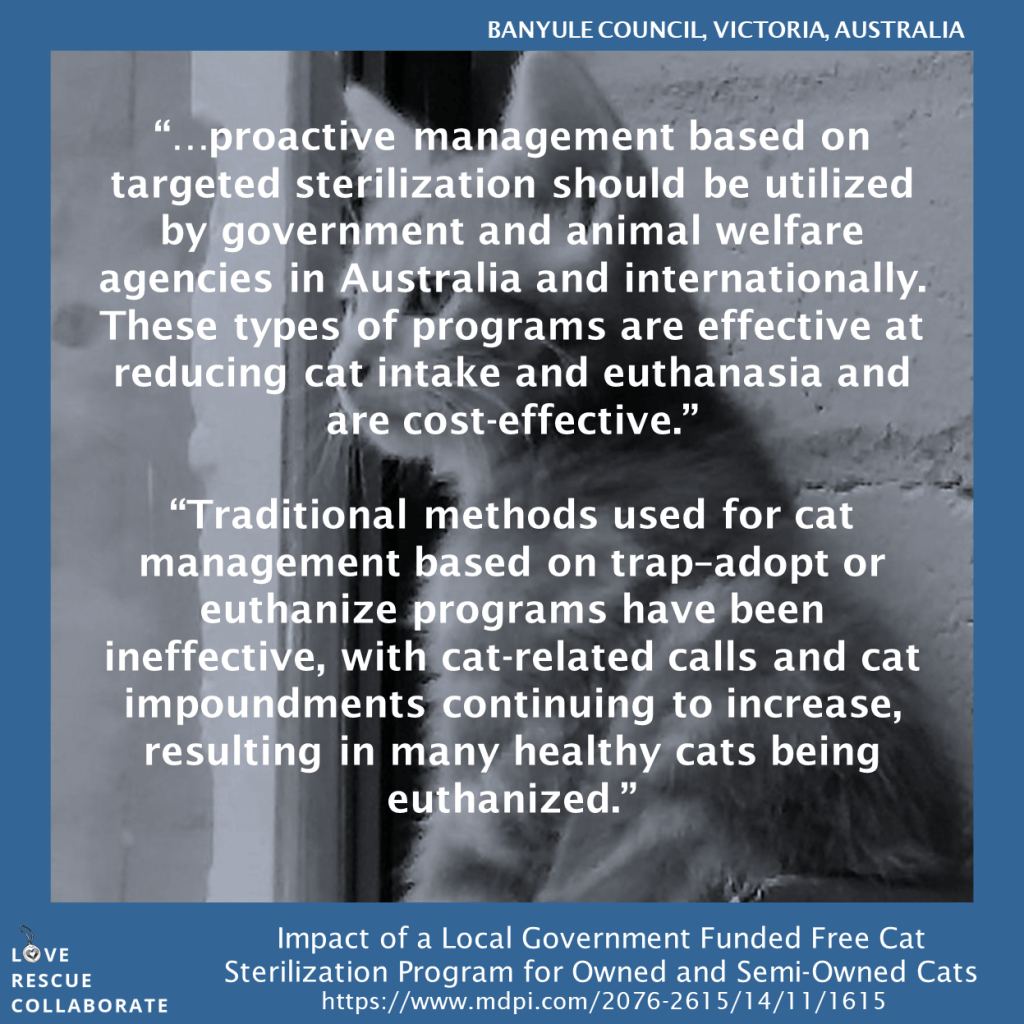
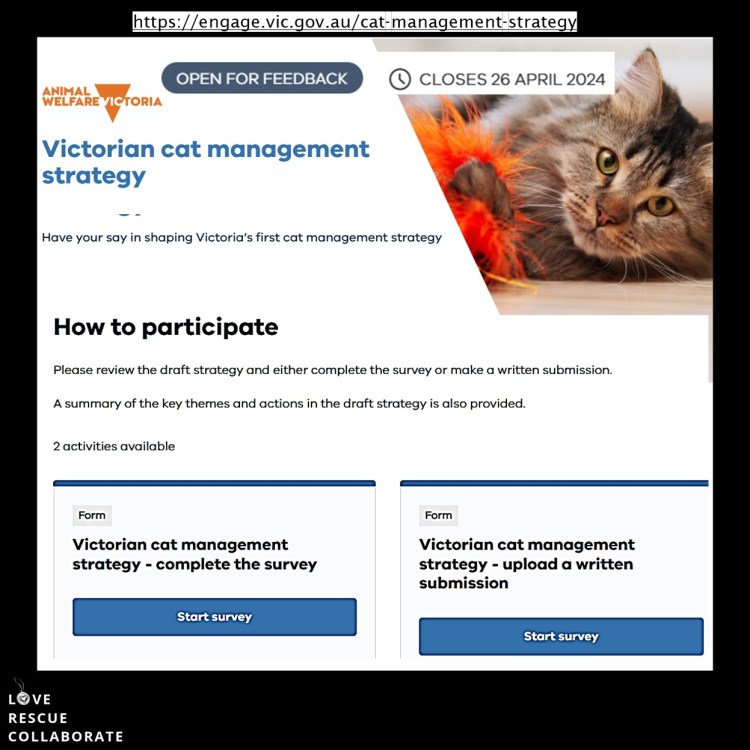
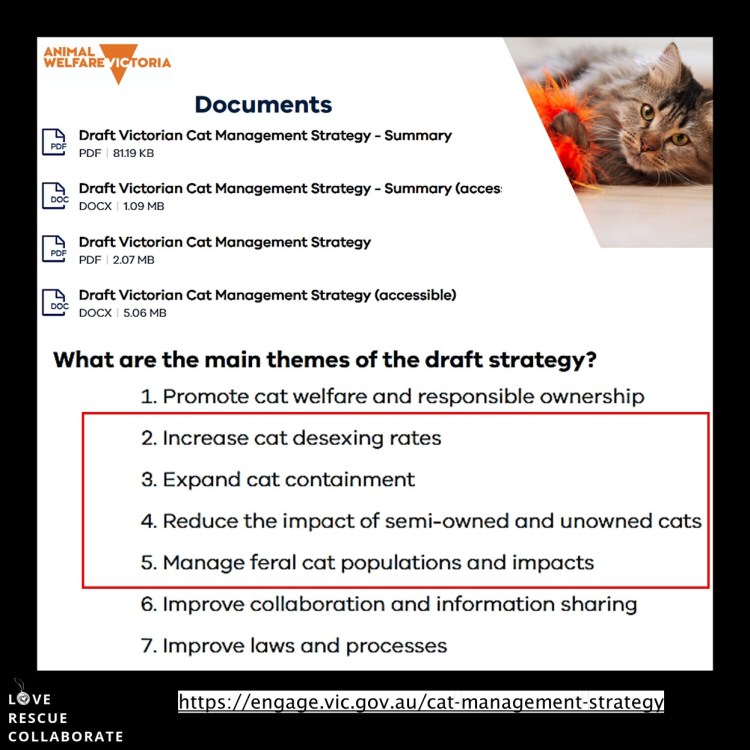
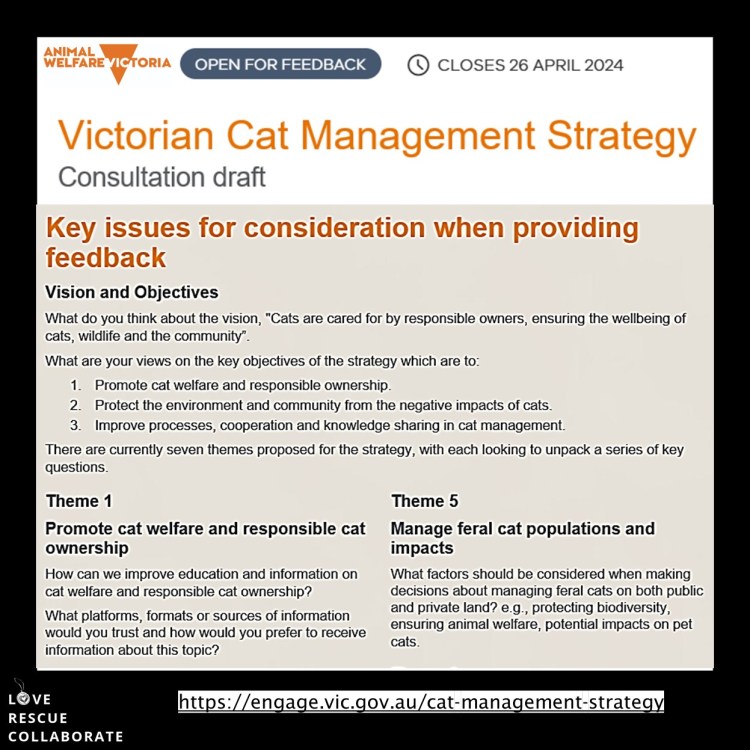
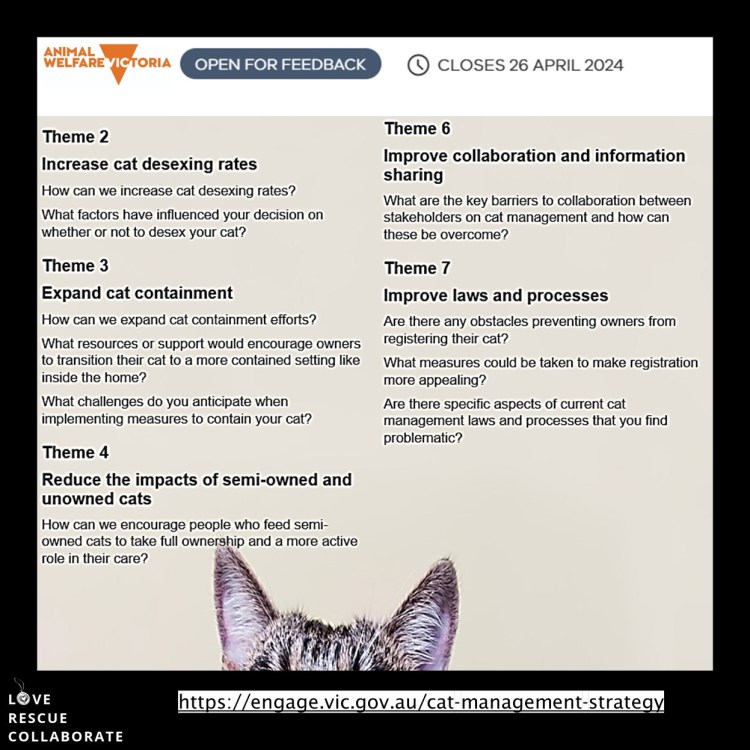
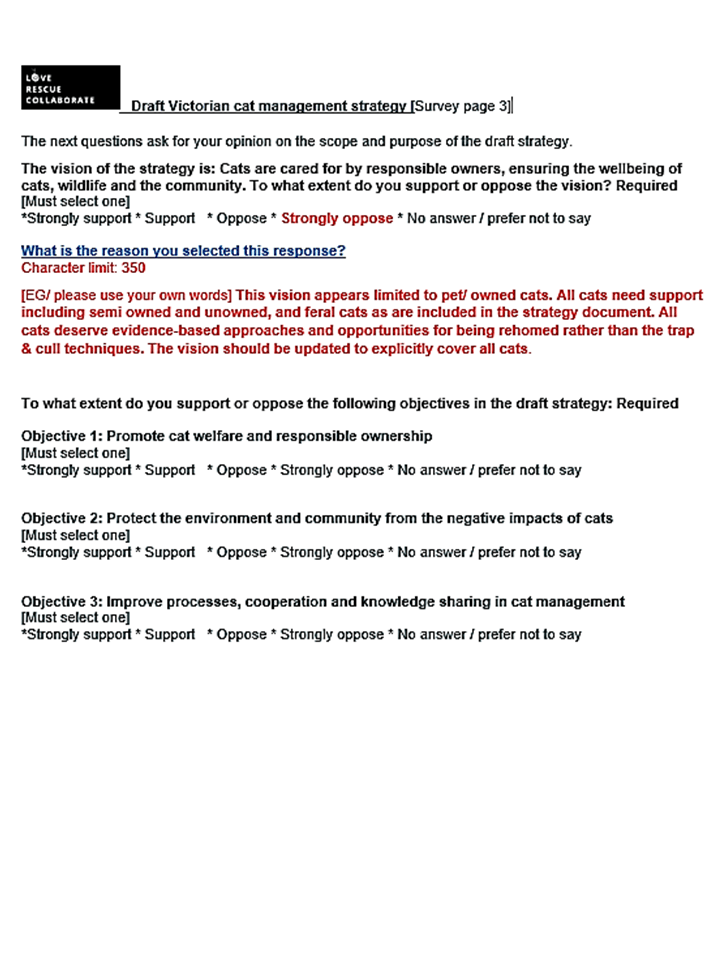
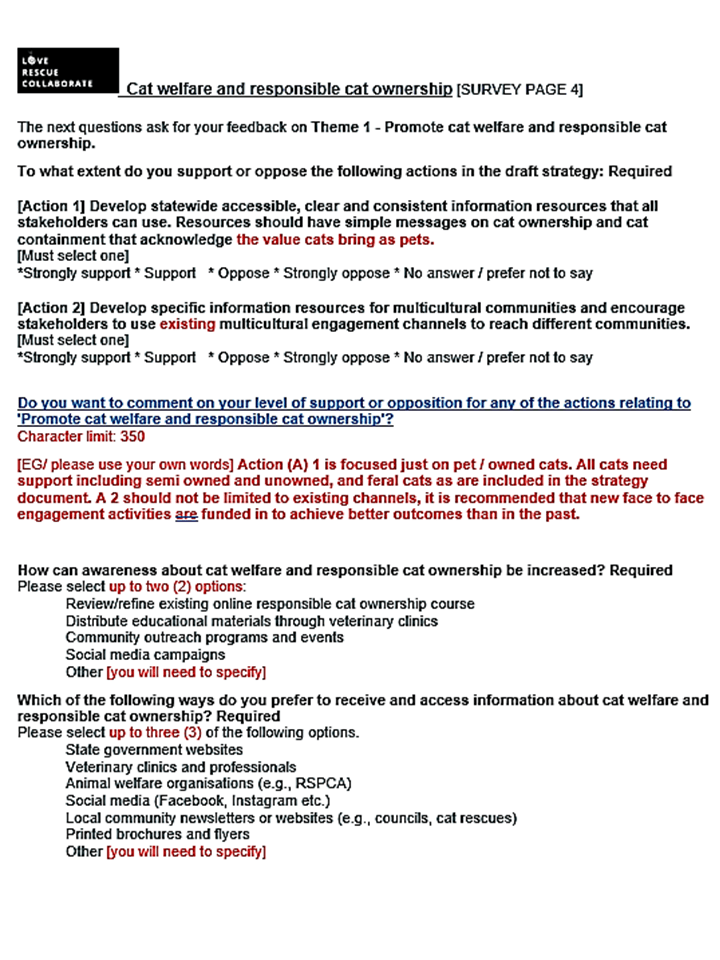
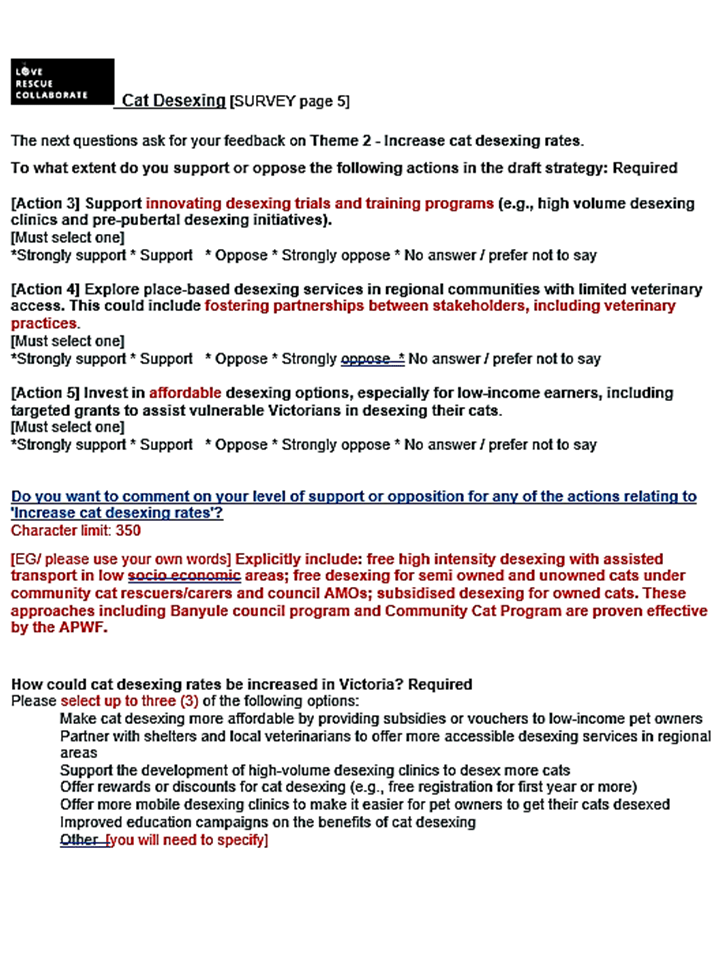

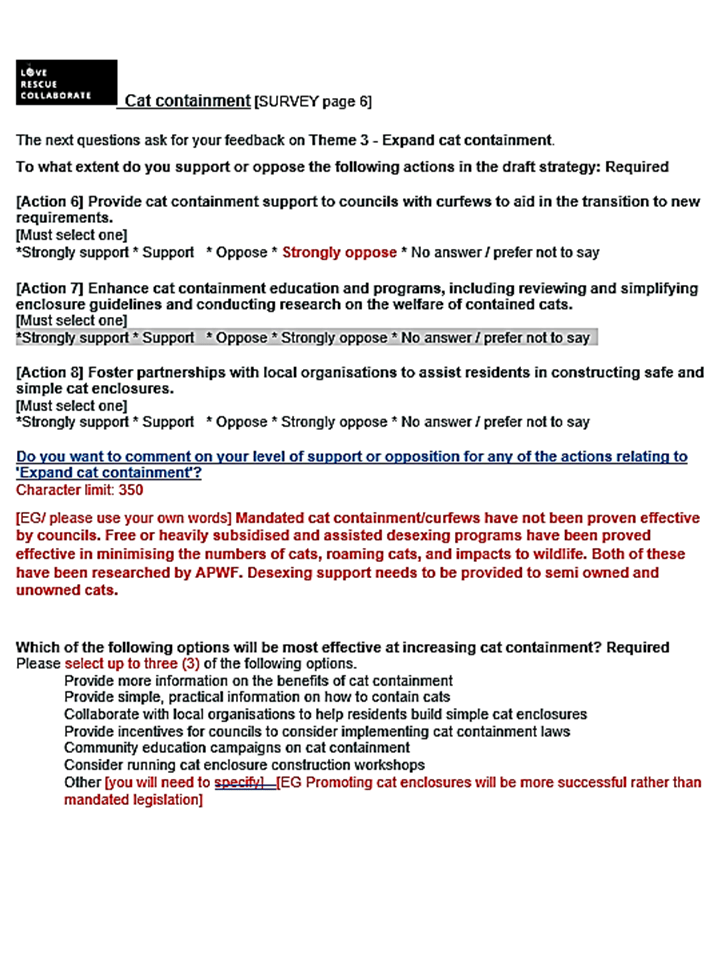
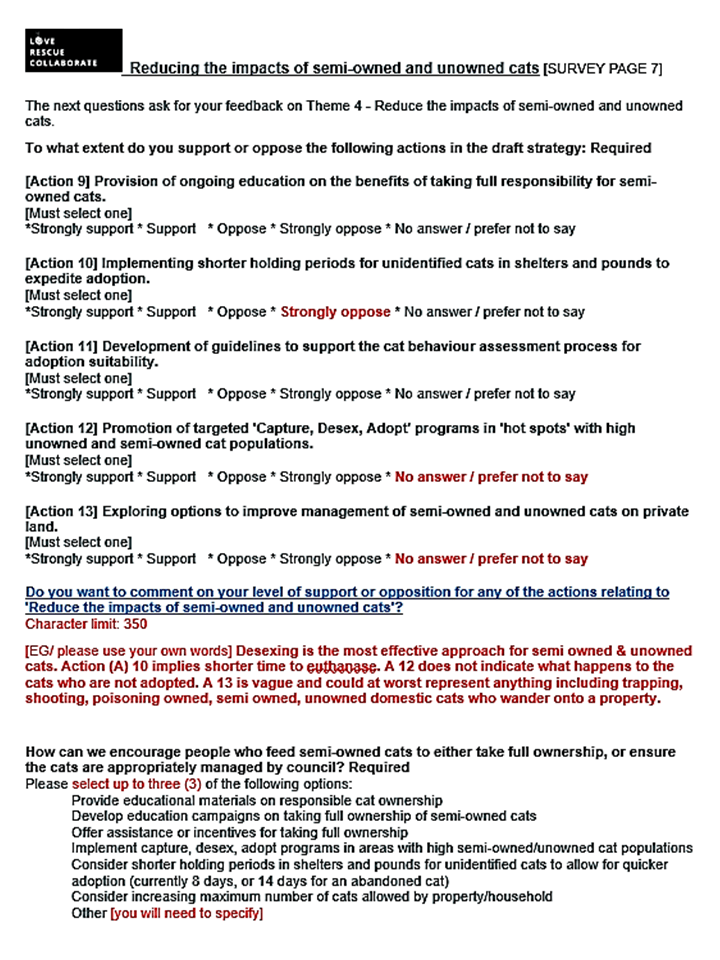
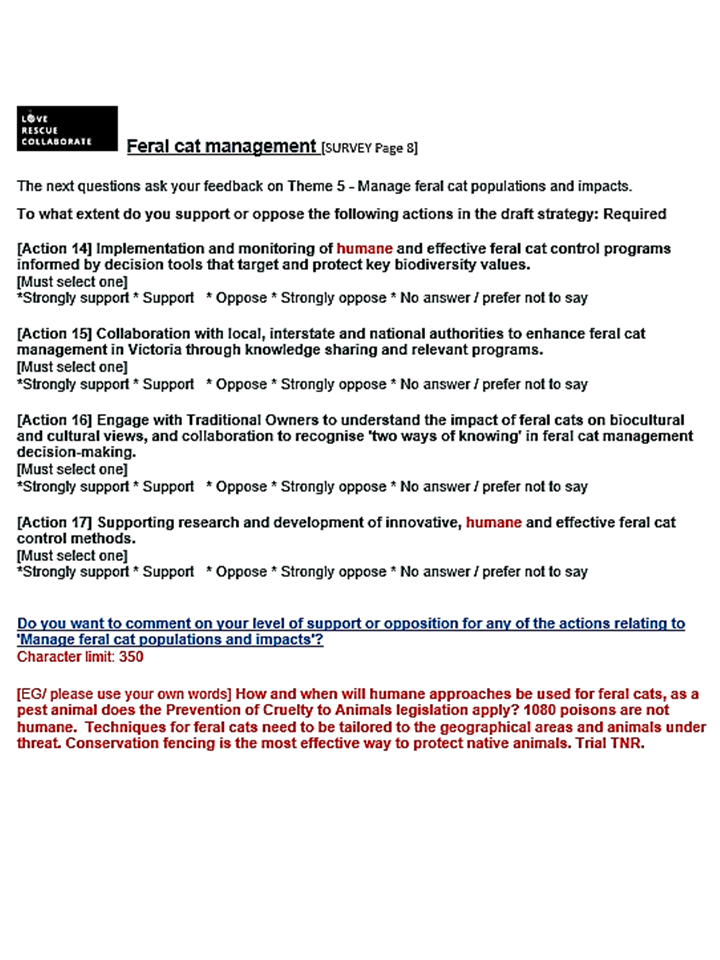
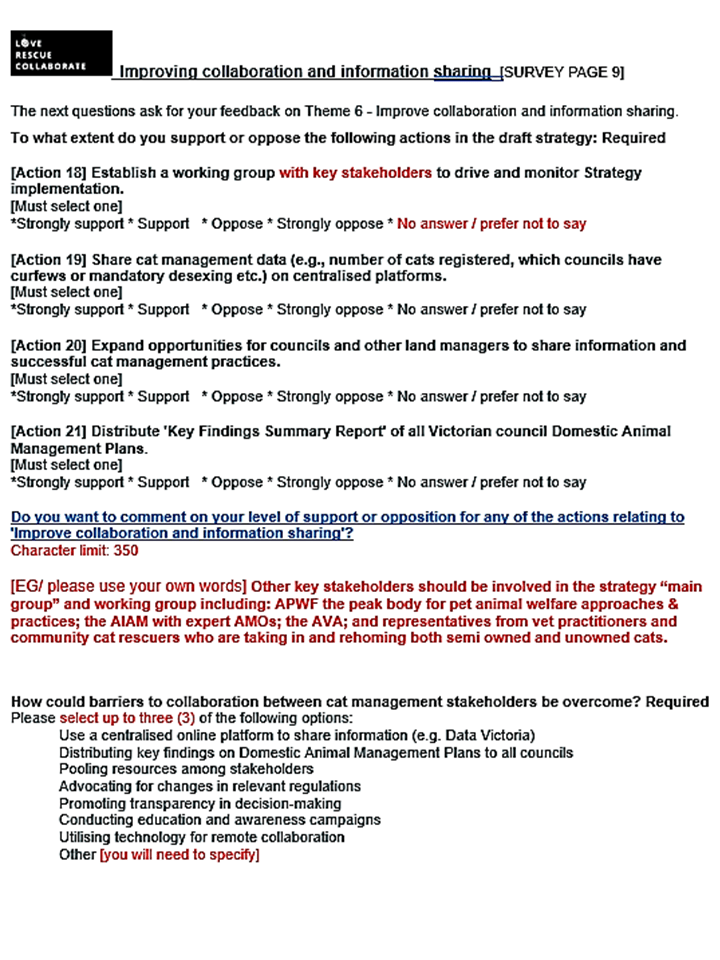
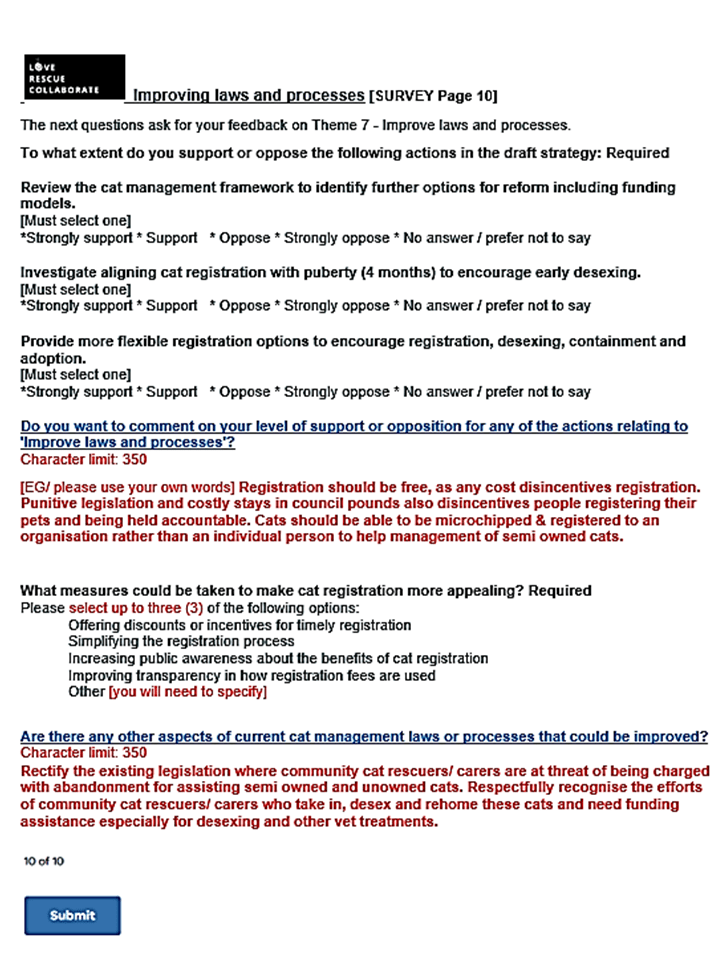
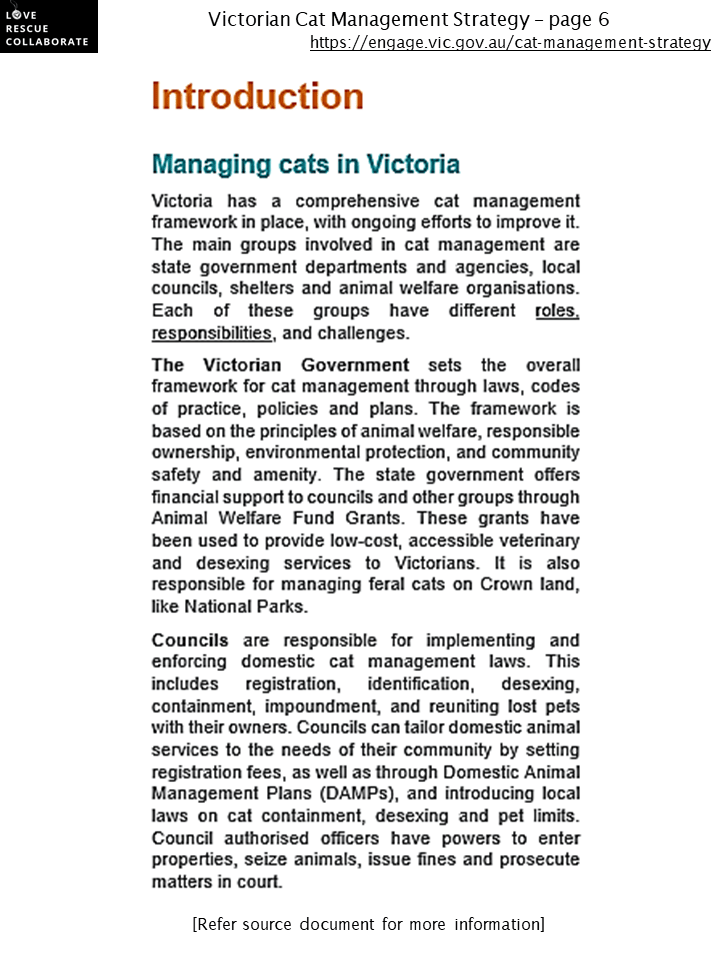
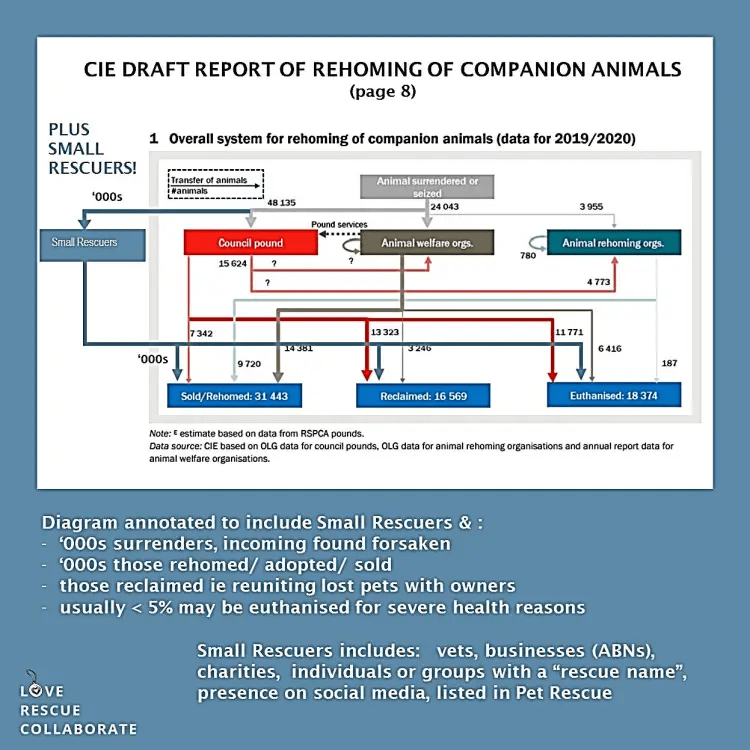
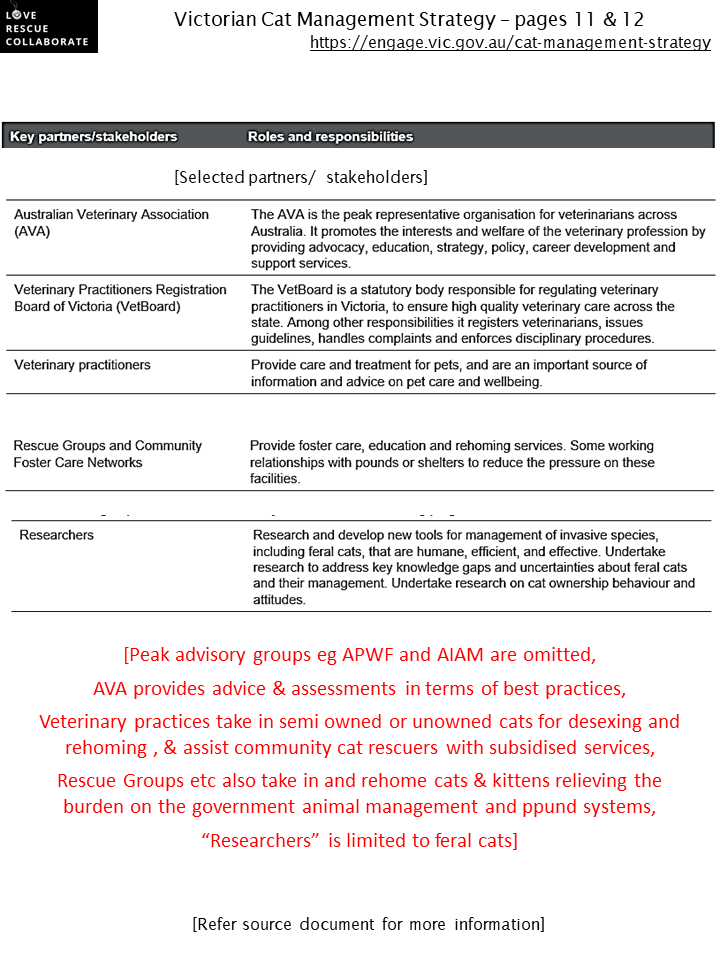
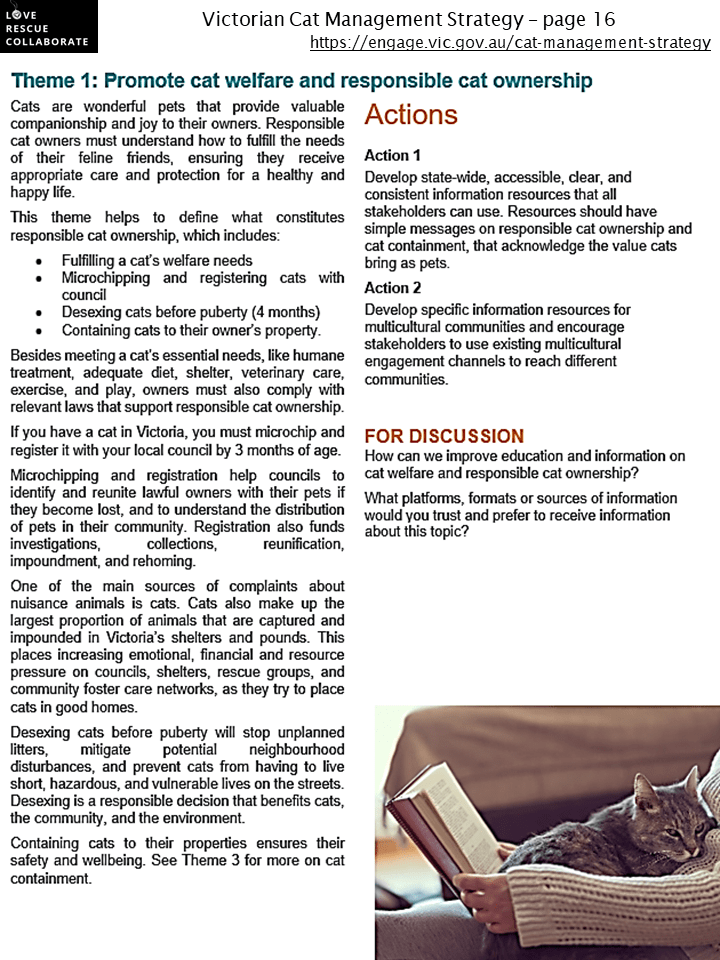
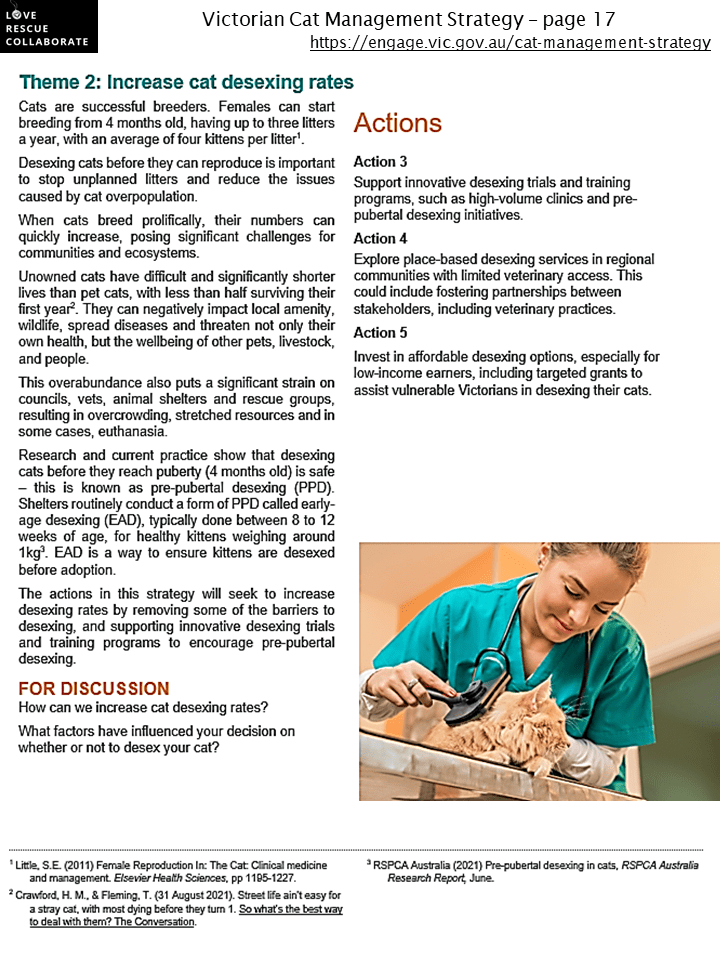
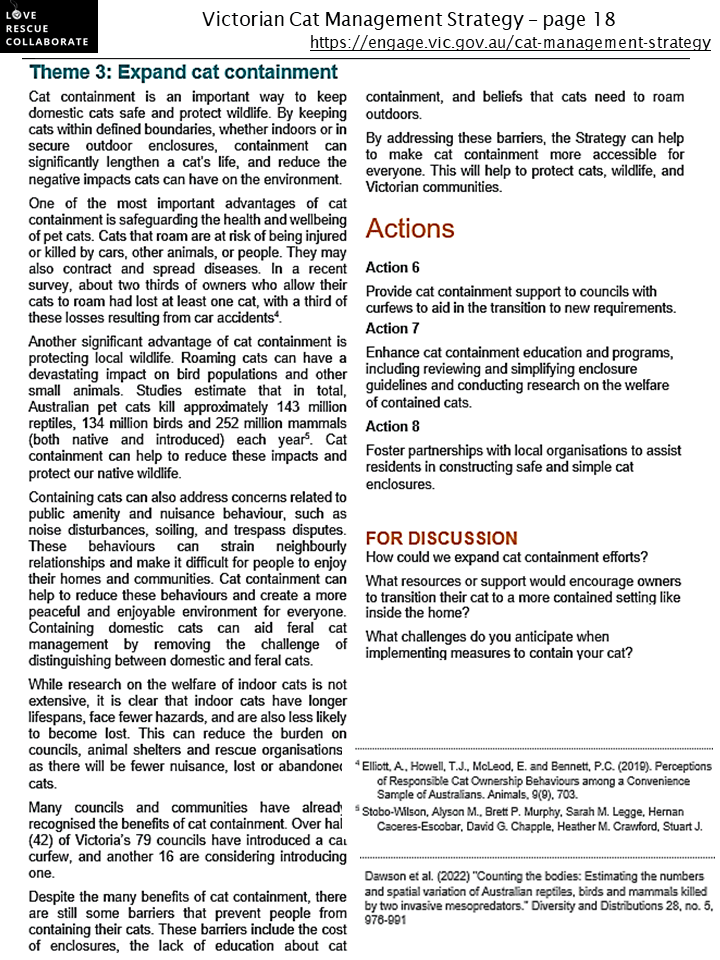
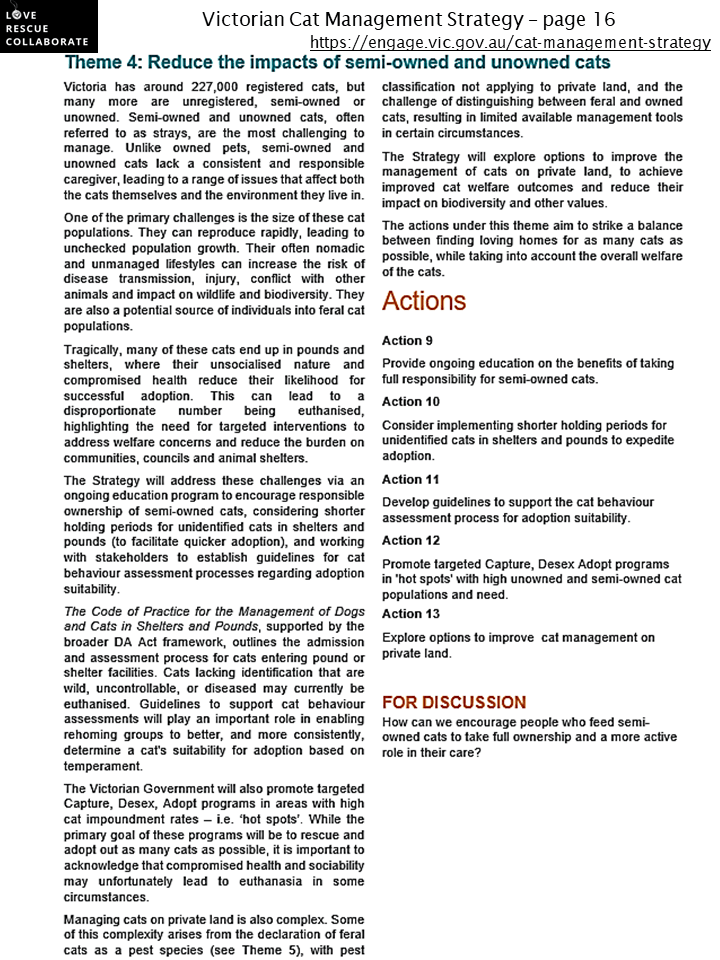
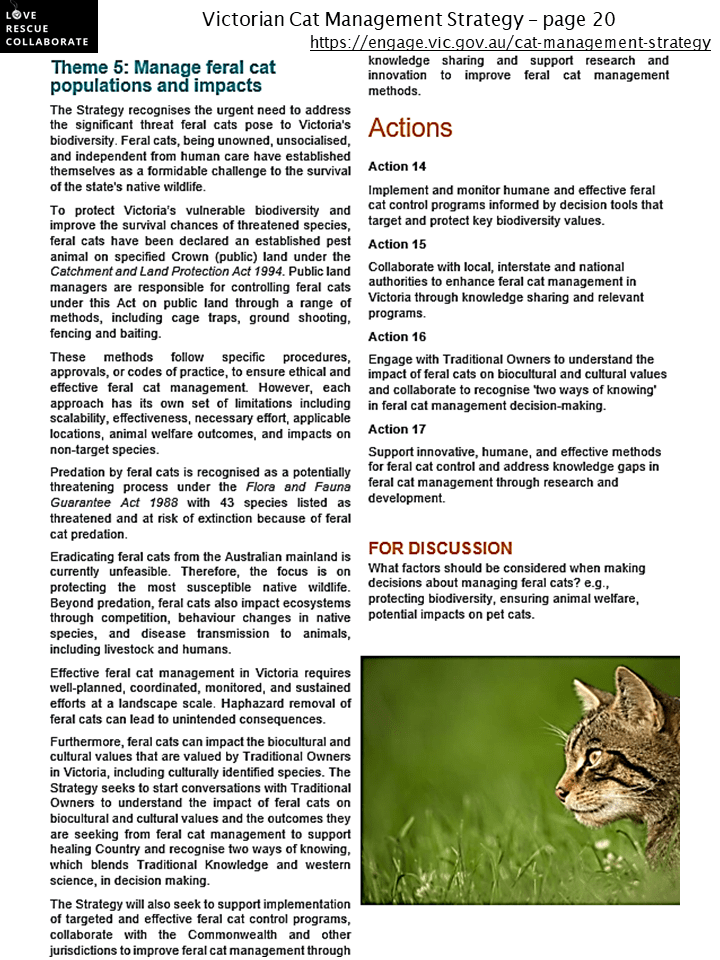

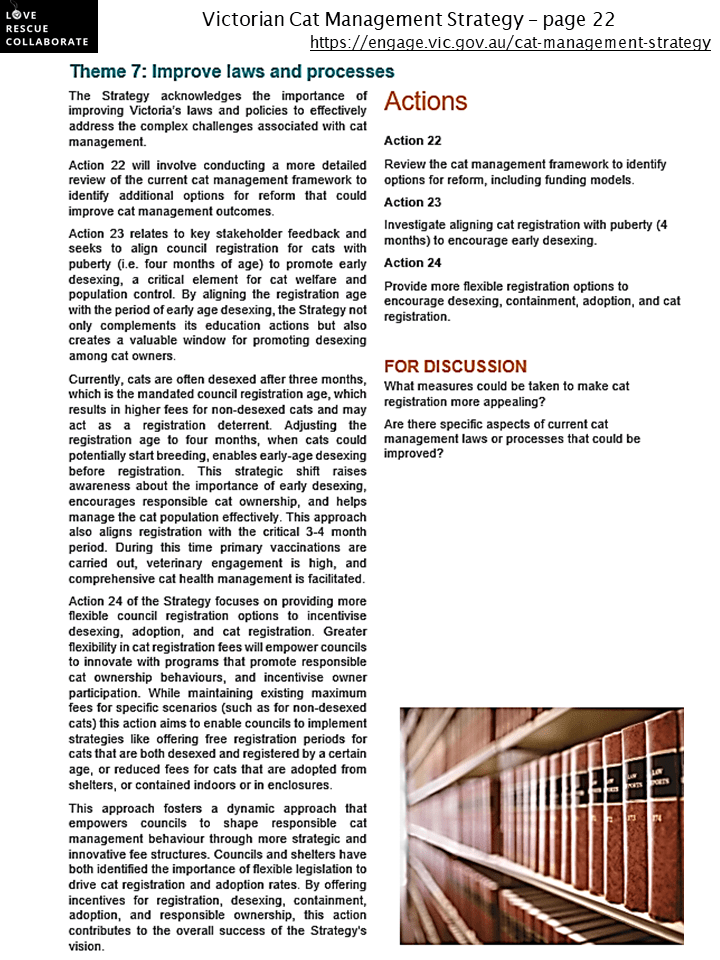

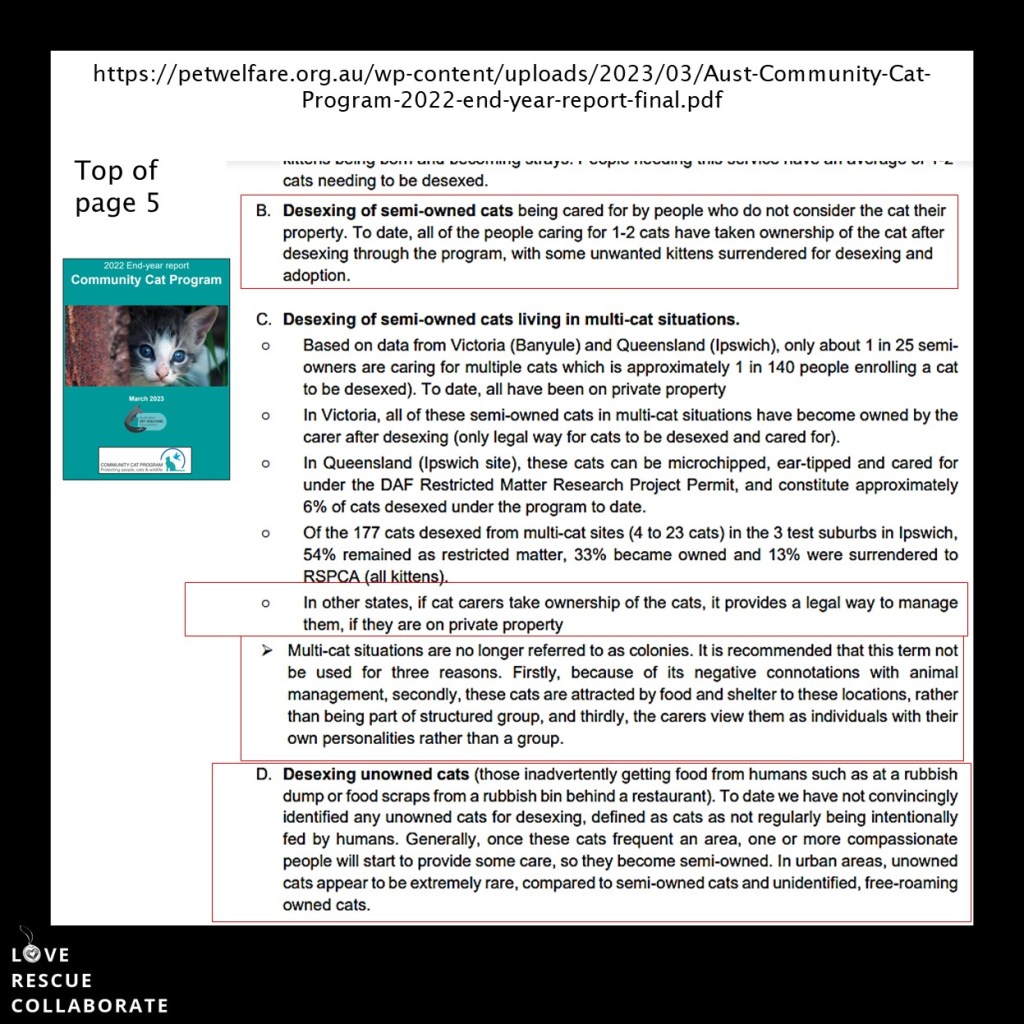

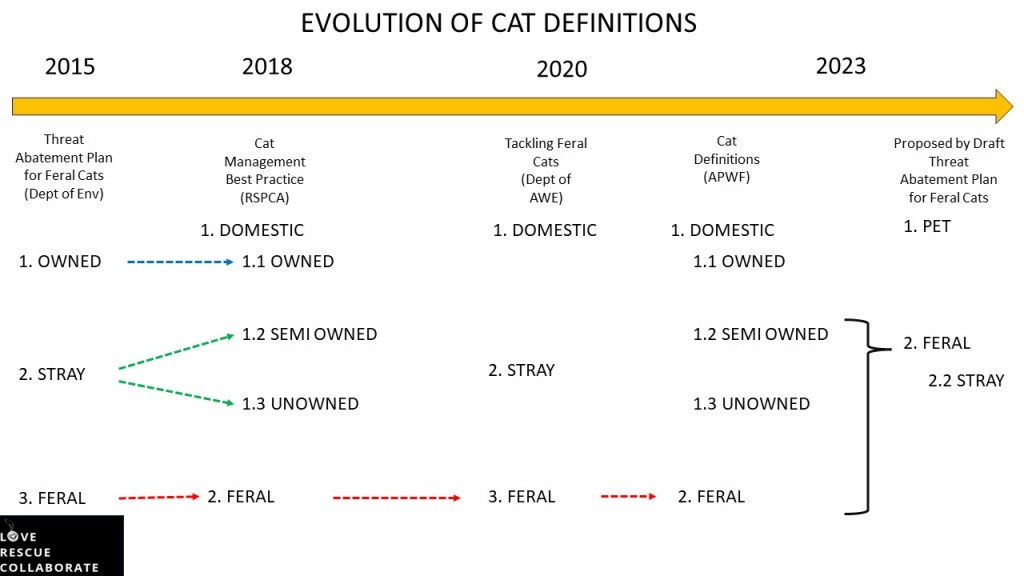
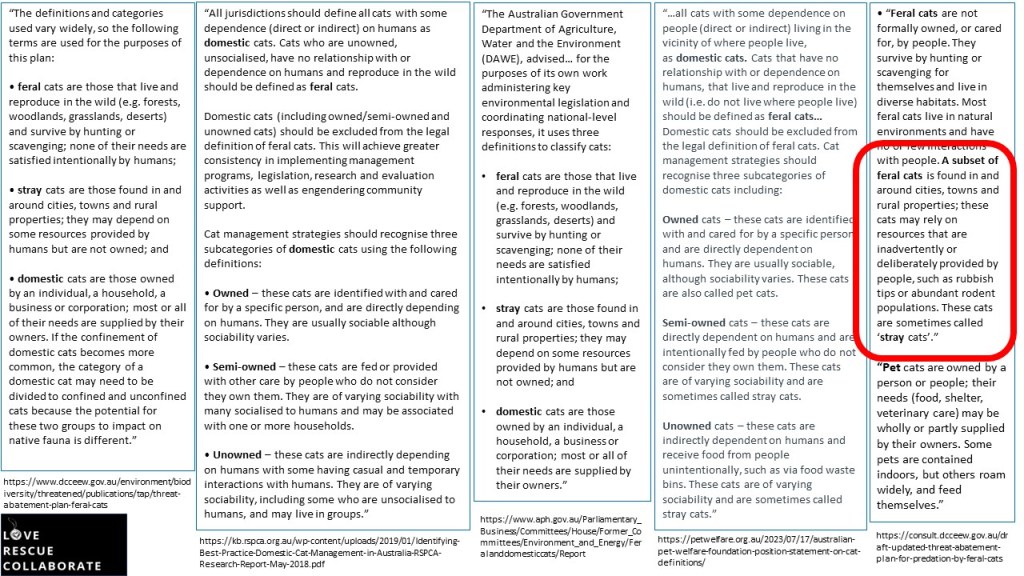

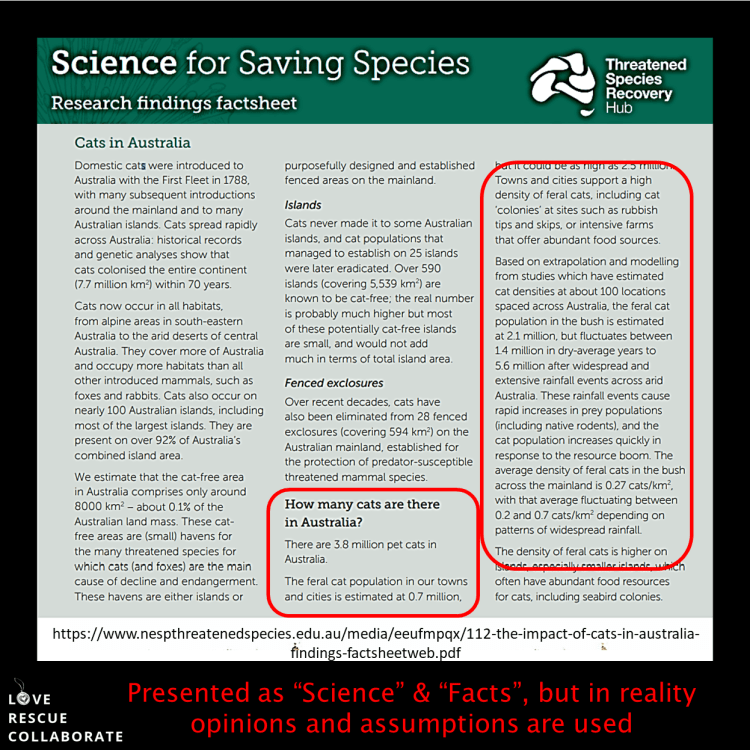
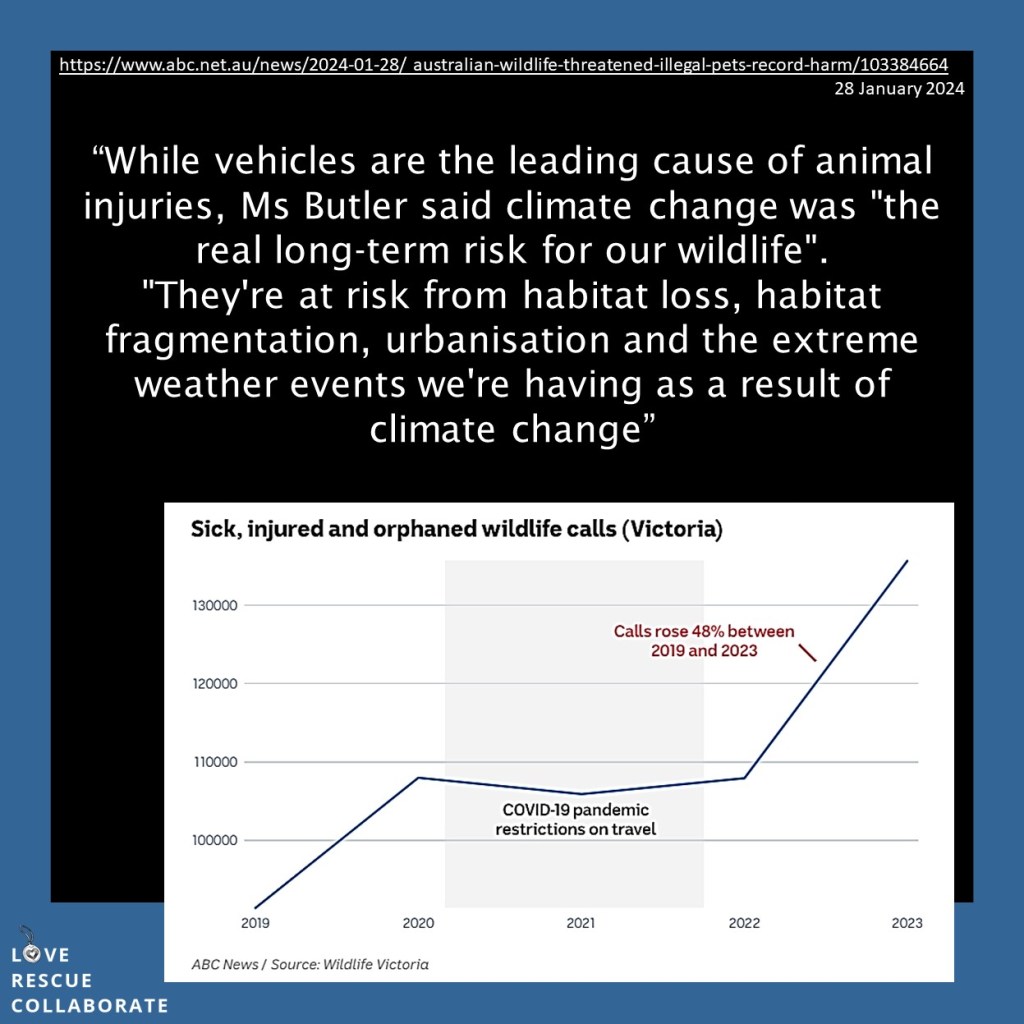

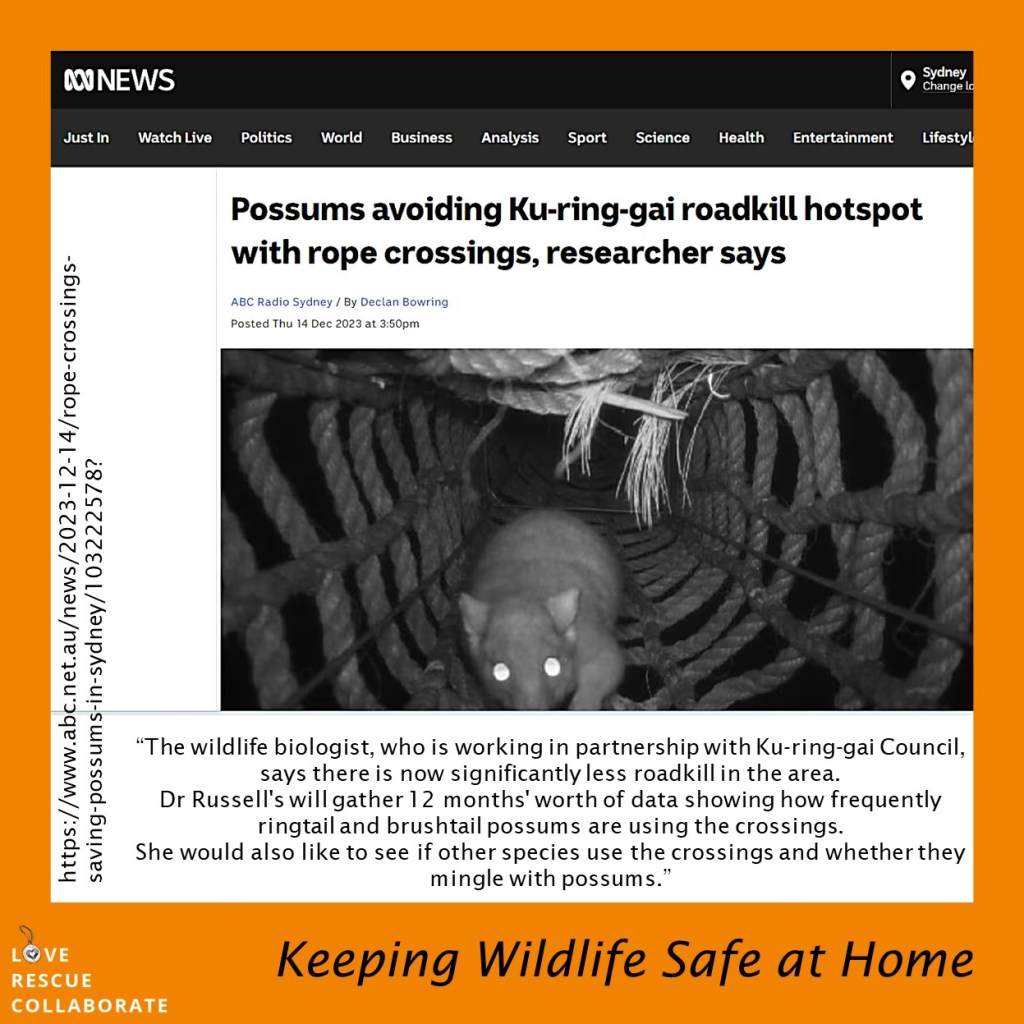

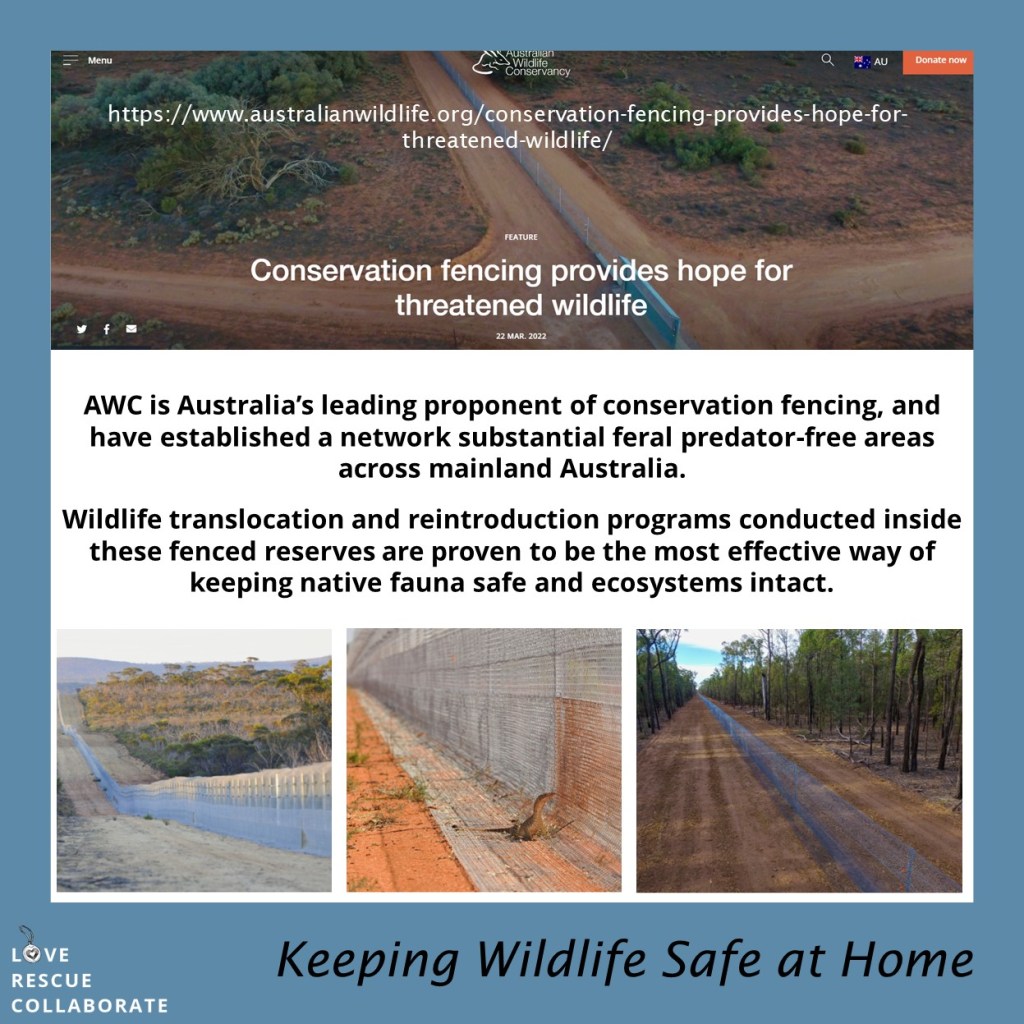
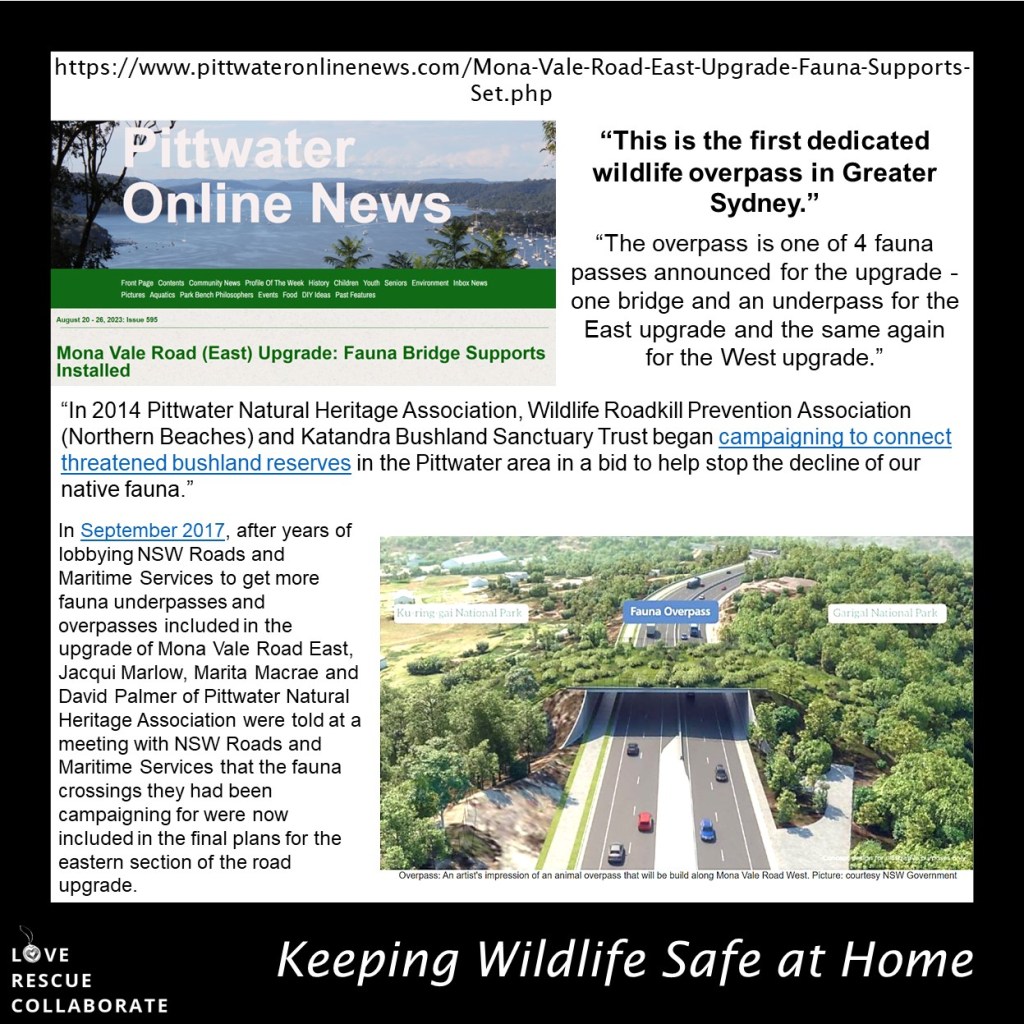


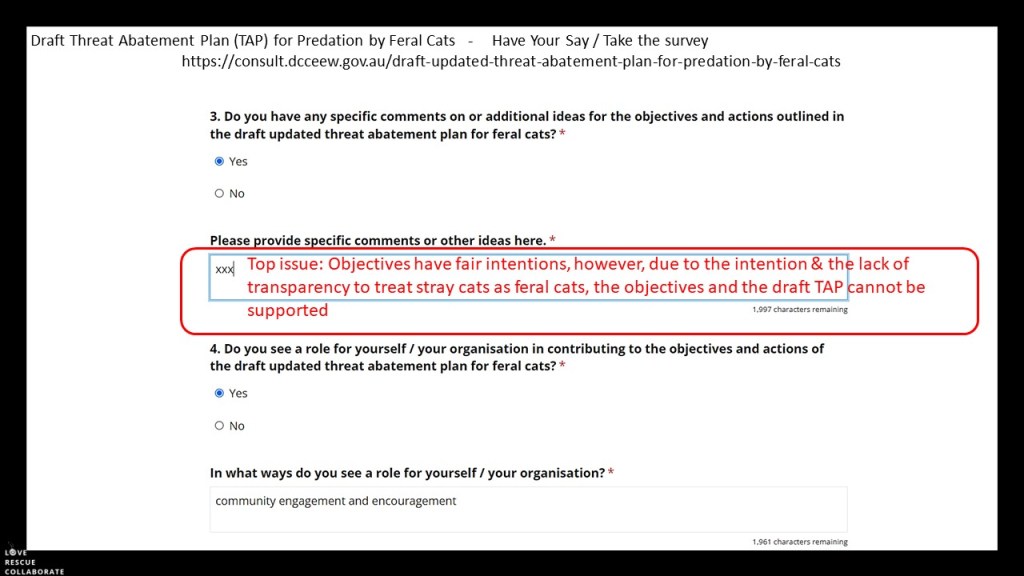
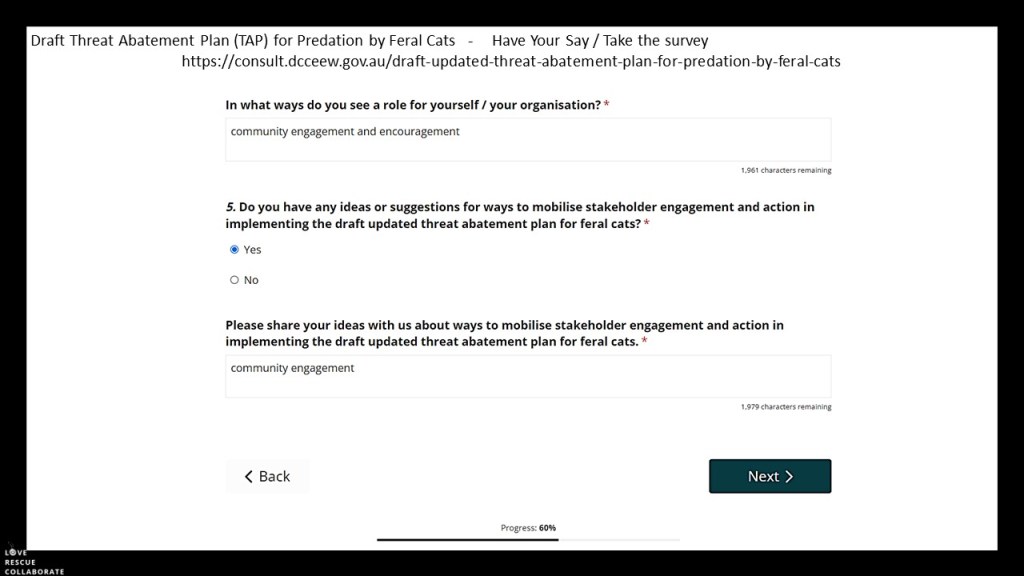


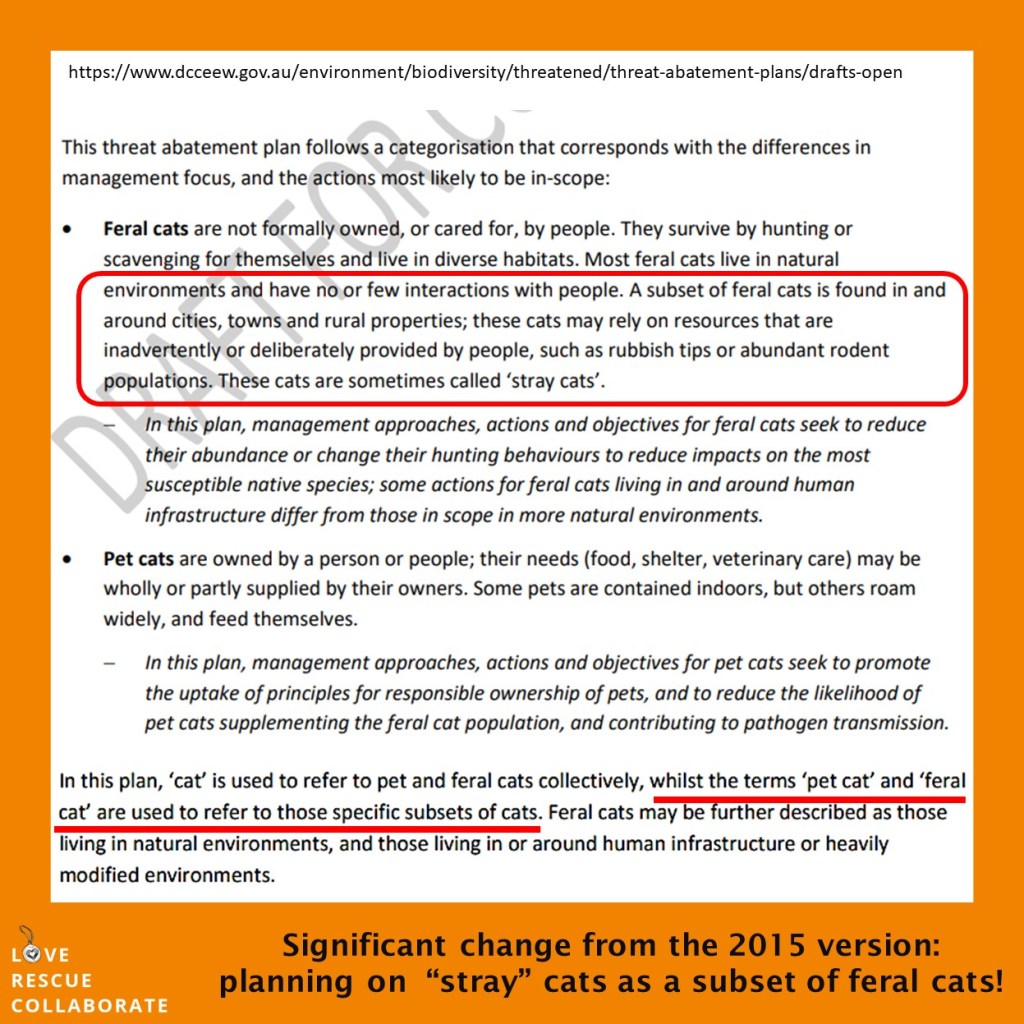
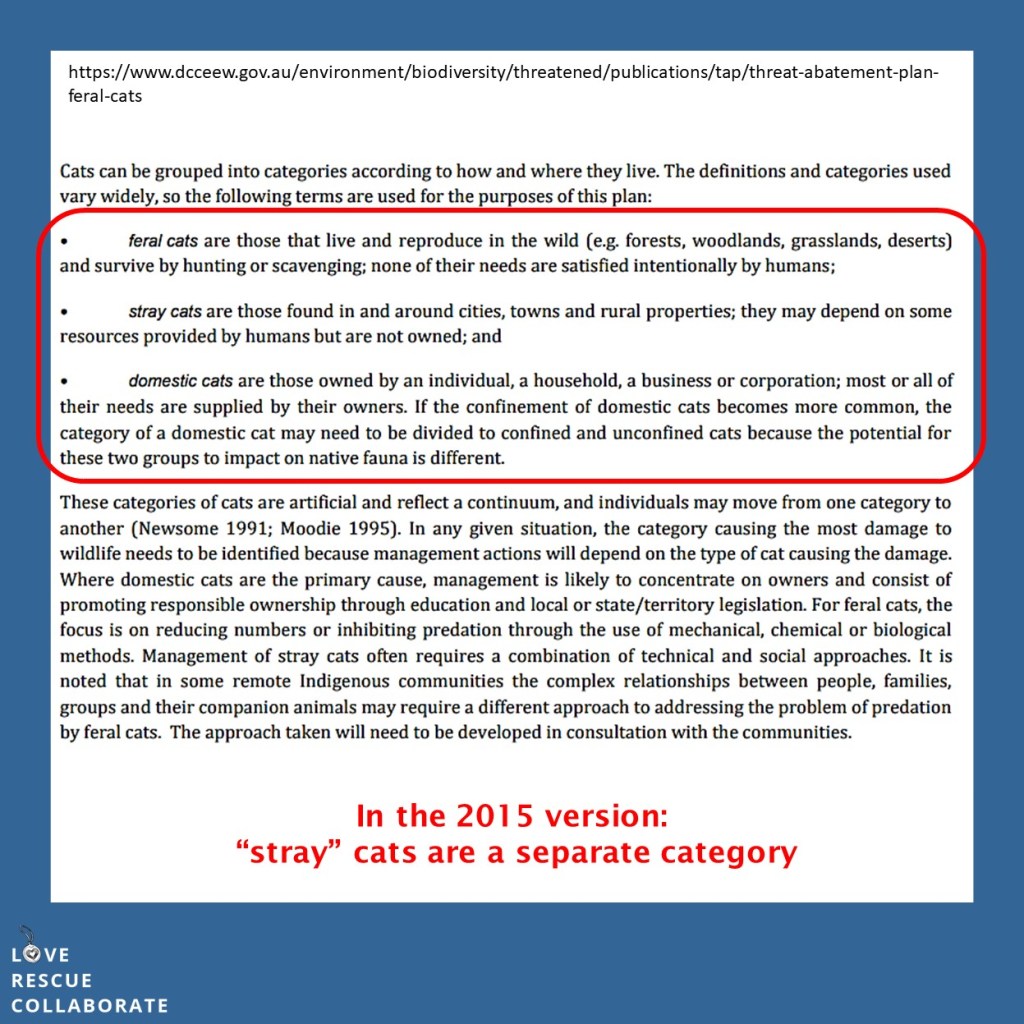
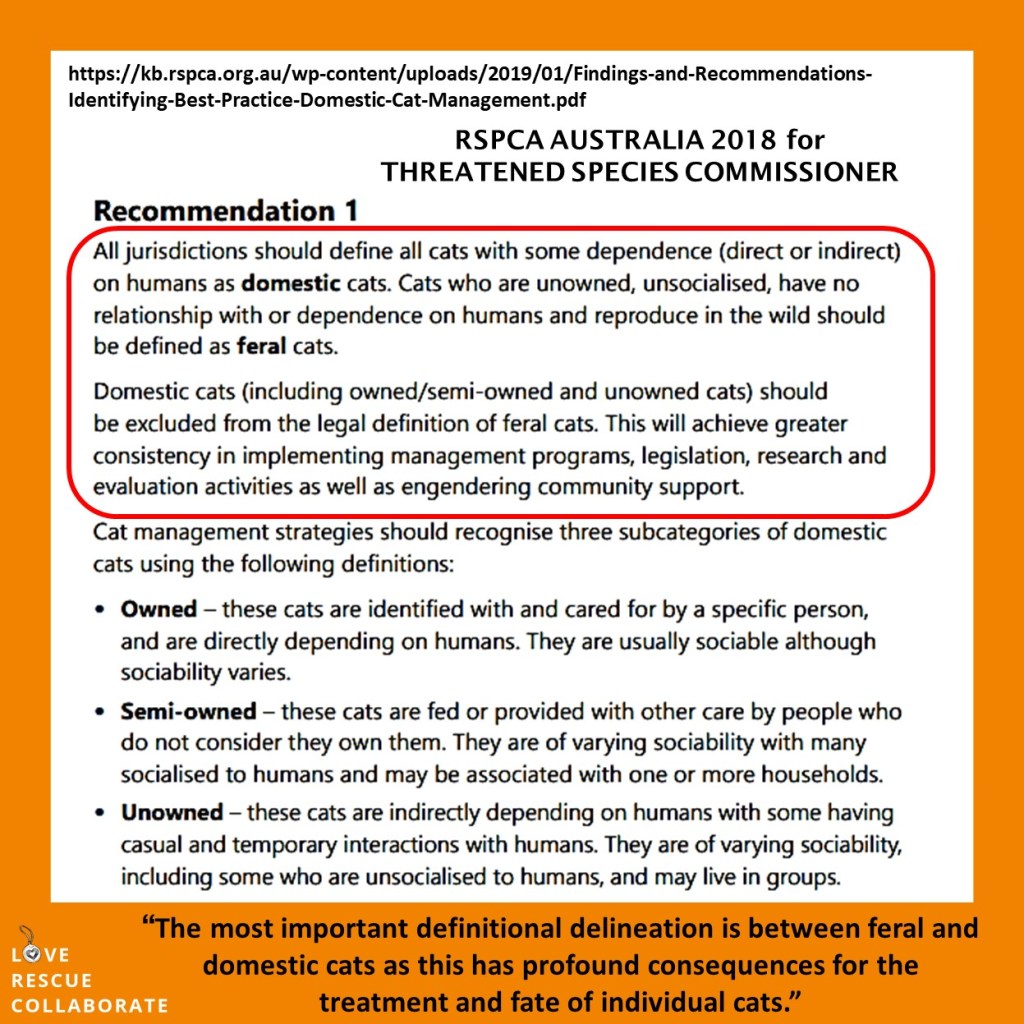
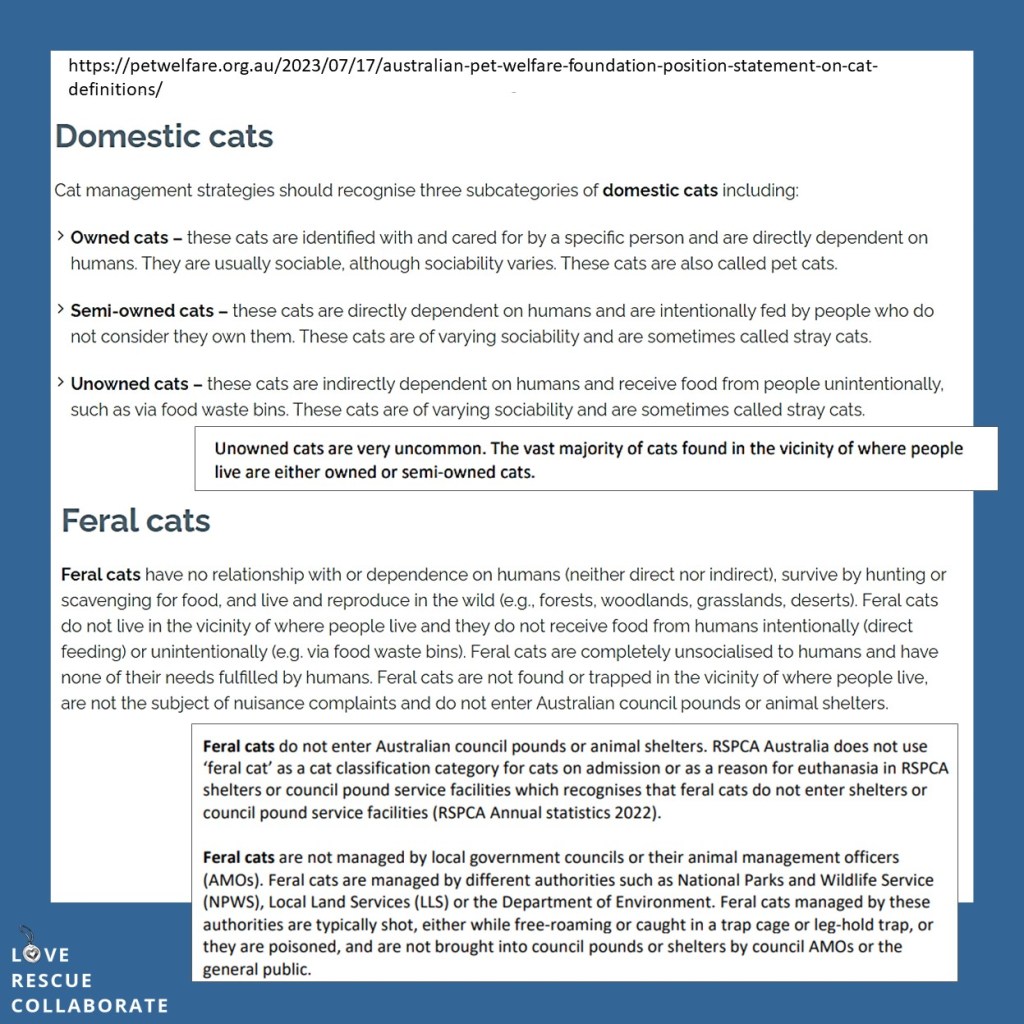
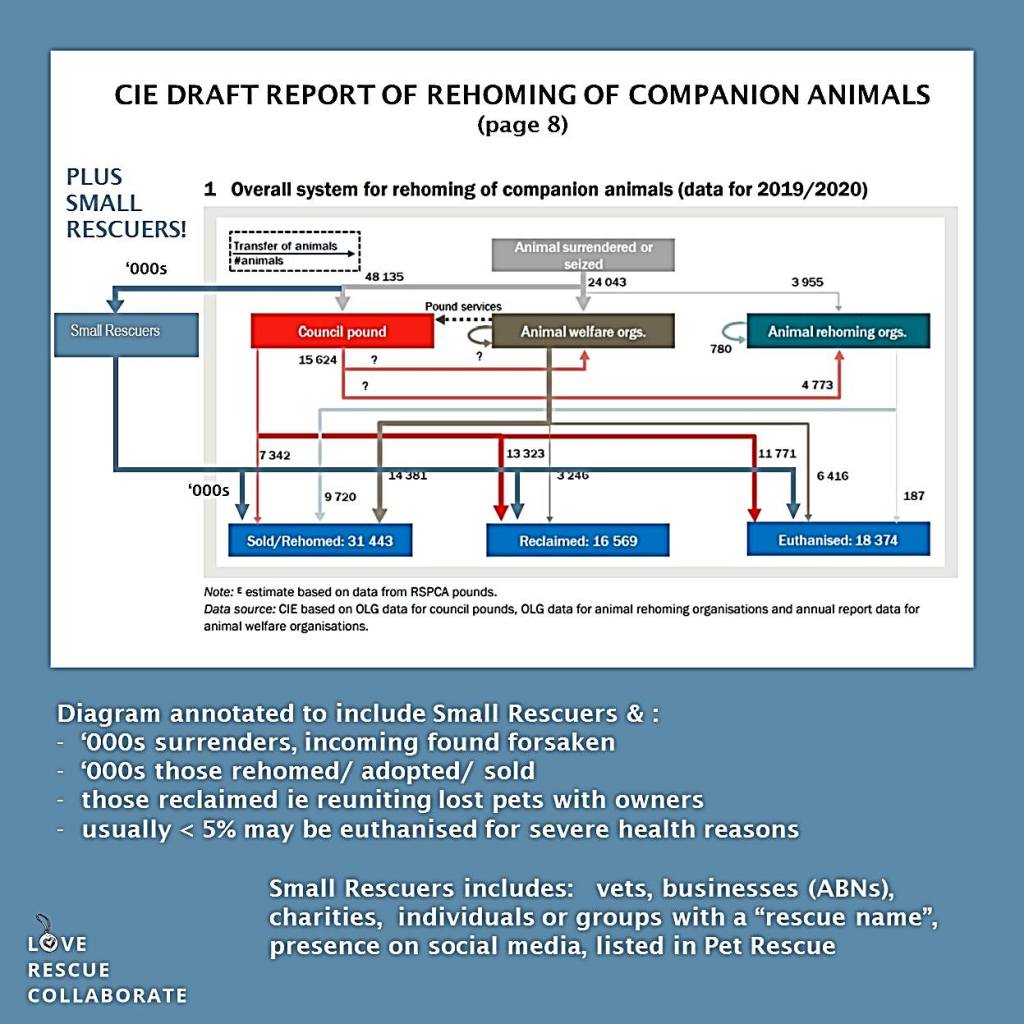
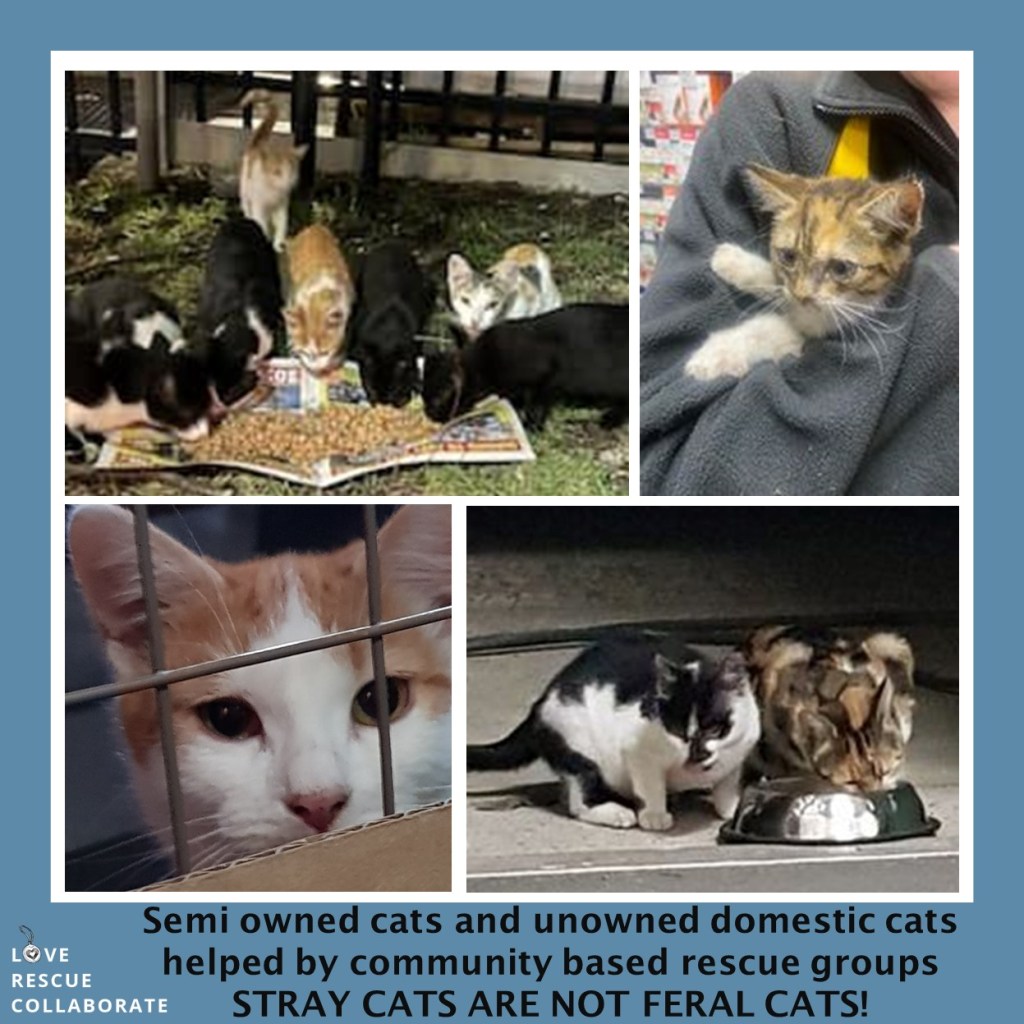

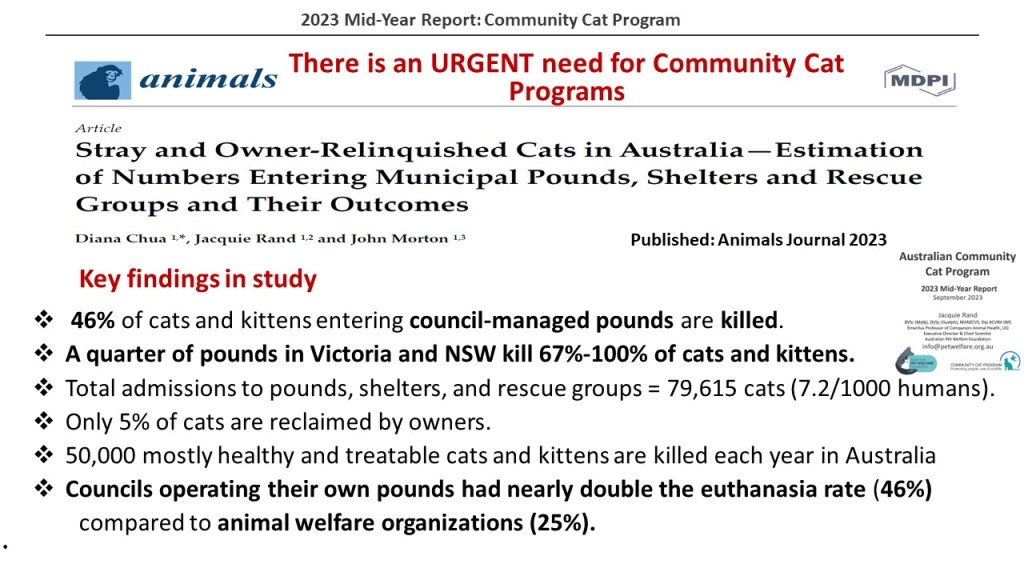
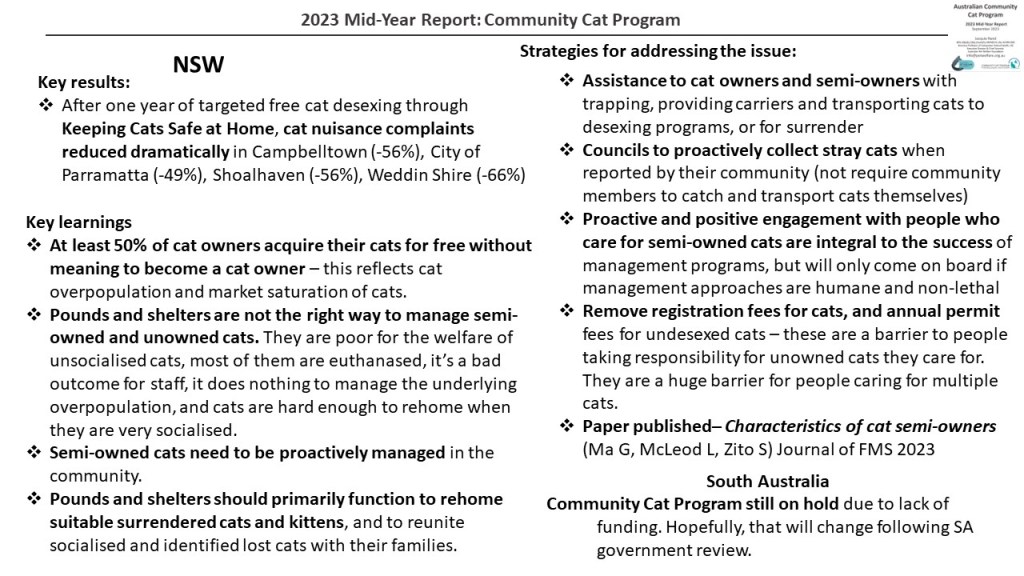
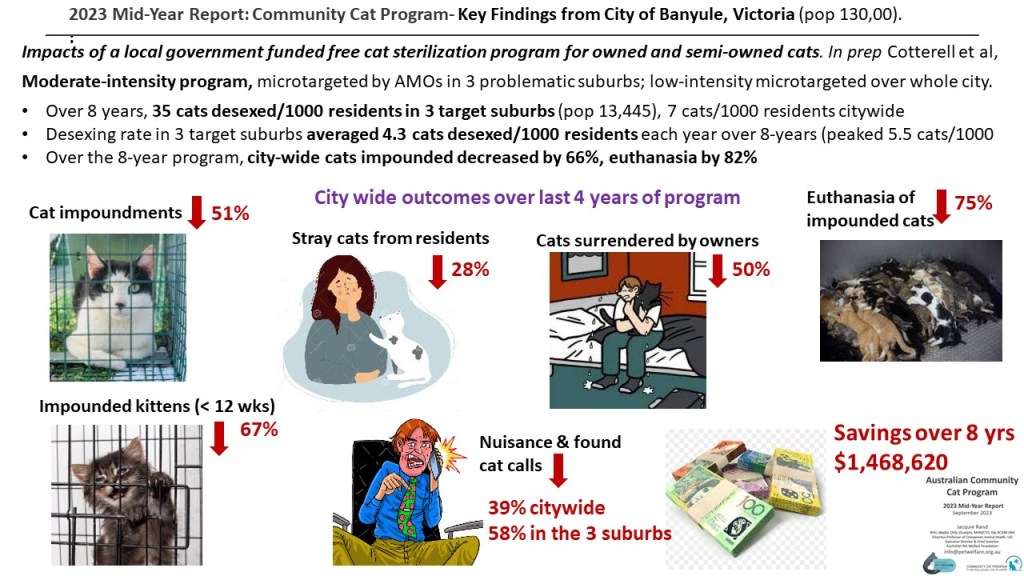

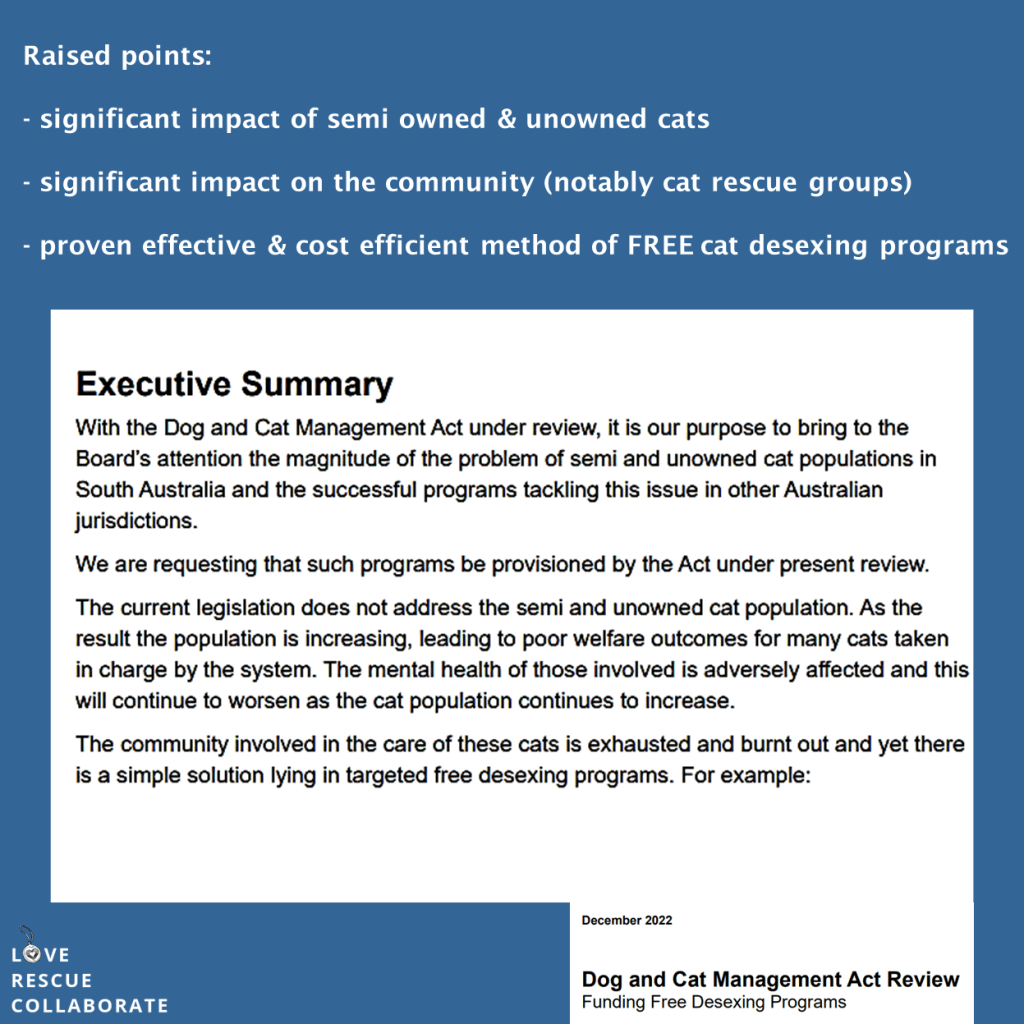
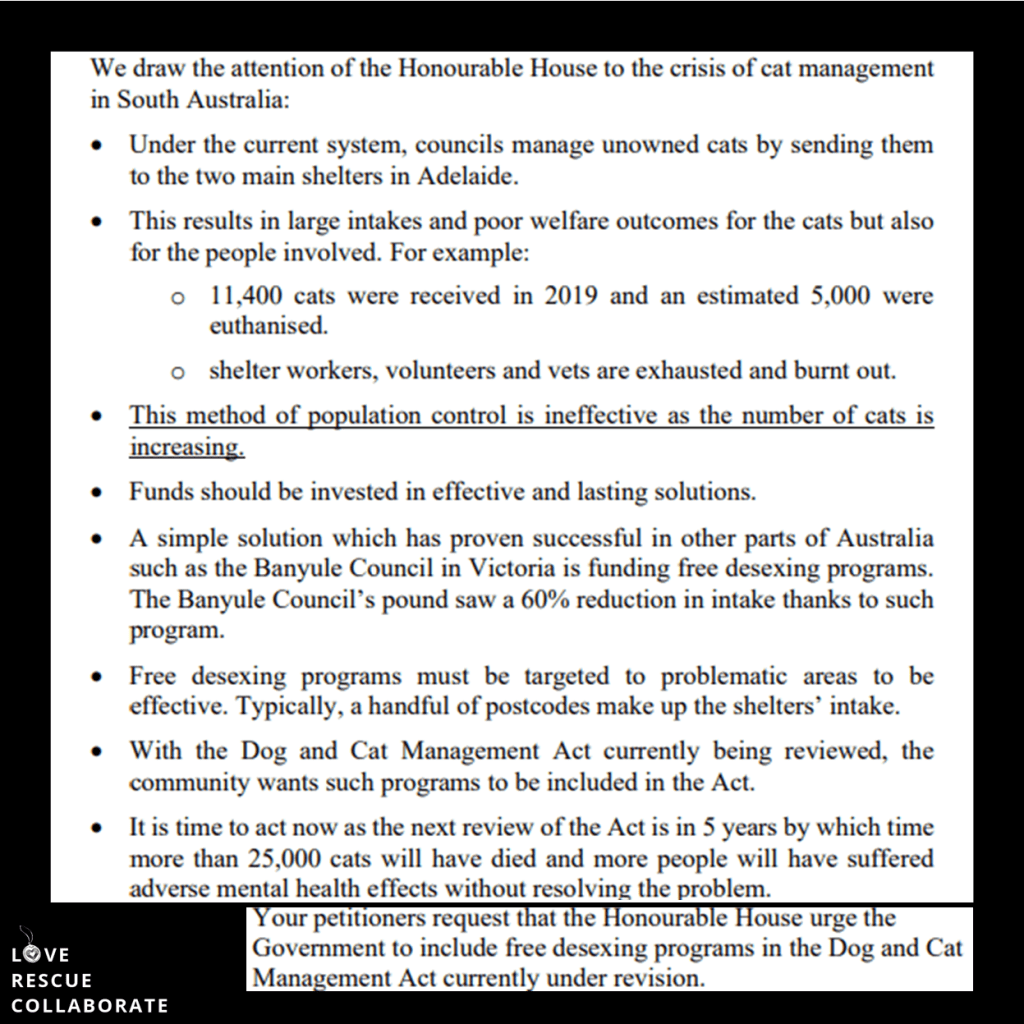
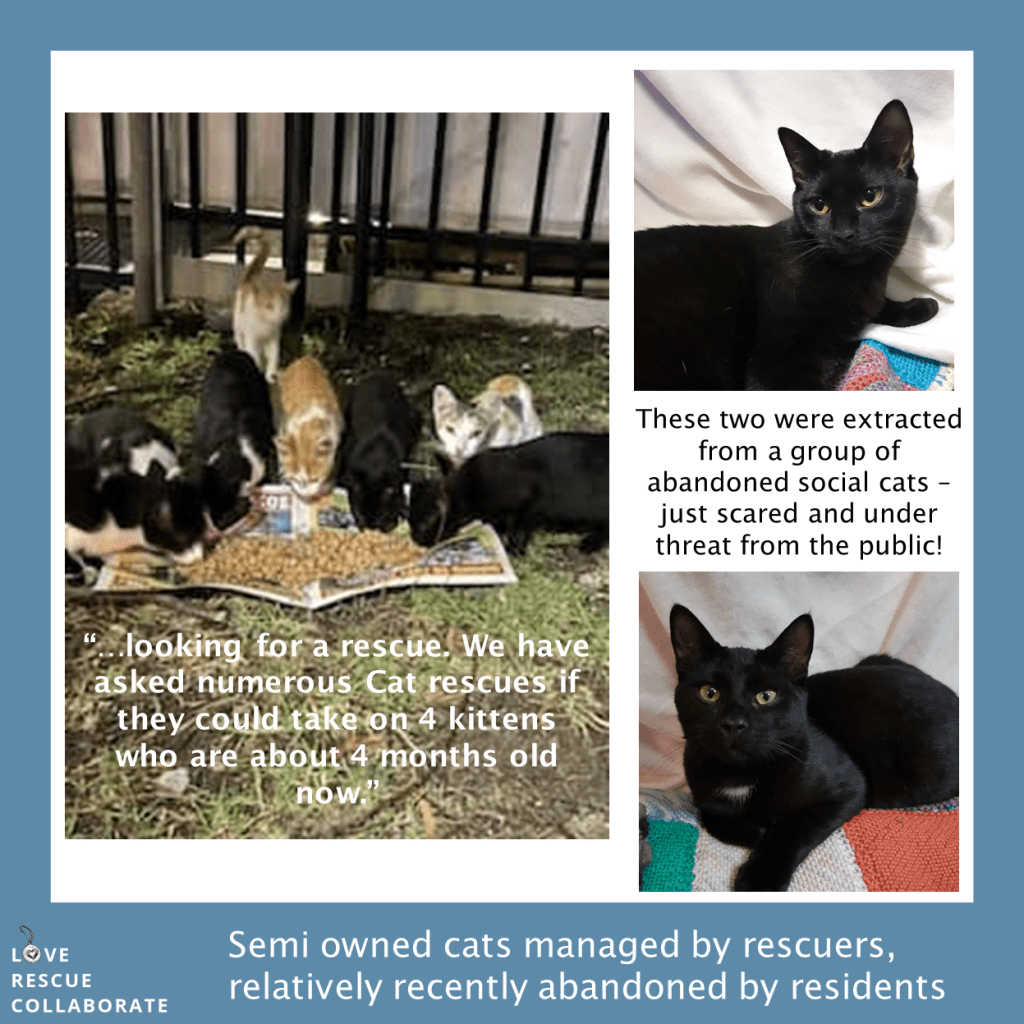
 LRC
LRC 