Are some only interested in applying the near same lethal techniques that apply to feral cats in arid areas and native parks to high volume trapping and culling domestic roaming cats in urban areas?
Why are some using intentionally emotionally “scary”, overstated estimates of the number of cats and impacts?
Is that to further demonise cats and use people’s cat hate based feelings for support for lethal actions ASAP?
Following the science in the best practices under the cat Inquiry it appears “bleeding obvious”, just based on rational and cost-efficient methods that these represent the way forward.
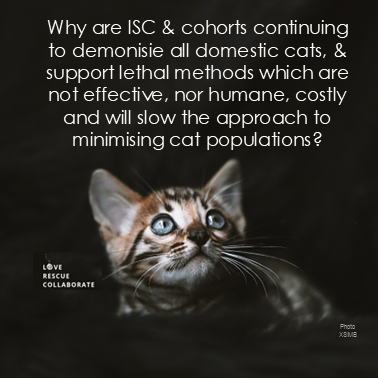
Why are ISC & cohorts continuing to demonise of all domestic cats, and lethal methods which are not effective, nor humane, costly and will slow the approach to minimising the cat populations?
The 2025 NSW Inquiry Management of Cat Populations represents world-leading domestic cat science from Australia.
More researched findings have been released since then.
But why are some staying in the Dark Ages with archaic techniques?
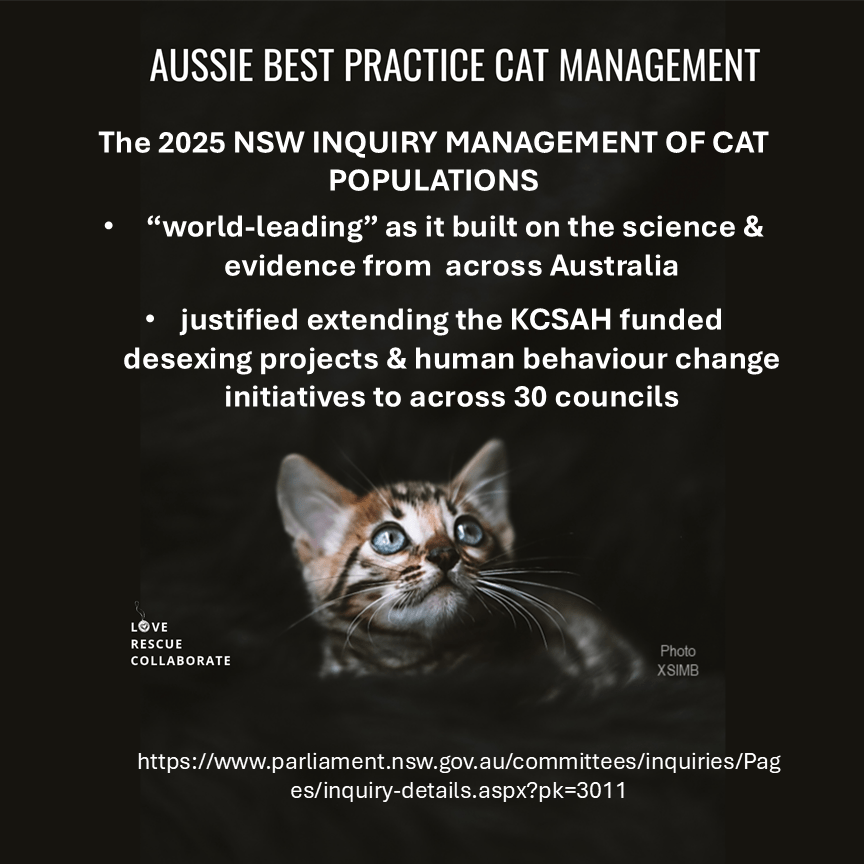
The cat Inquiry included advice, research and recommendations from a number of domestic cat scientists. There is a wealth of trusted information on the best techniques and One Welfare solutions to apply to the cat crisis.
The cat crisis is a crisis due to cost-of-living factors for owners and semi owners, and a lack of action for several years by our governments (state/ territory and local councils). Only a few councils and state funded trials have been completed.
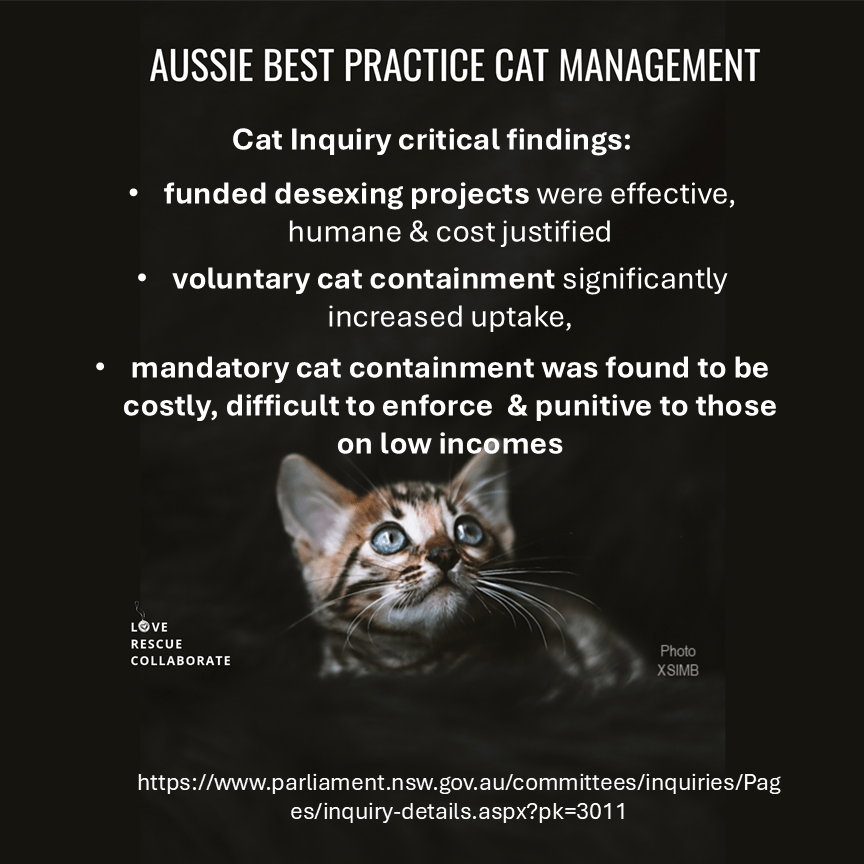
The cat Inquiry provided a number of findings and recommendations. These are just three key focus areas:
- funded desexing programs critical to limit further population growth as a humane, effective and cost justified action
- voluntary cat containment proven to increase uptake
- against mandatory containment as it is costly, inhumane and costly, and basically not effective as it does not treat root causes.
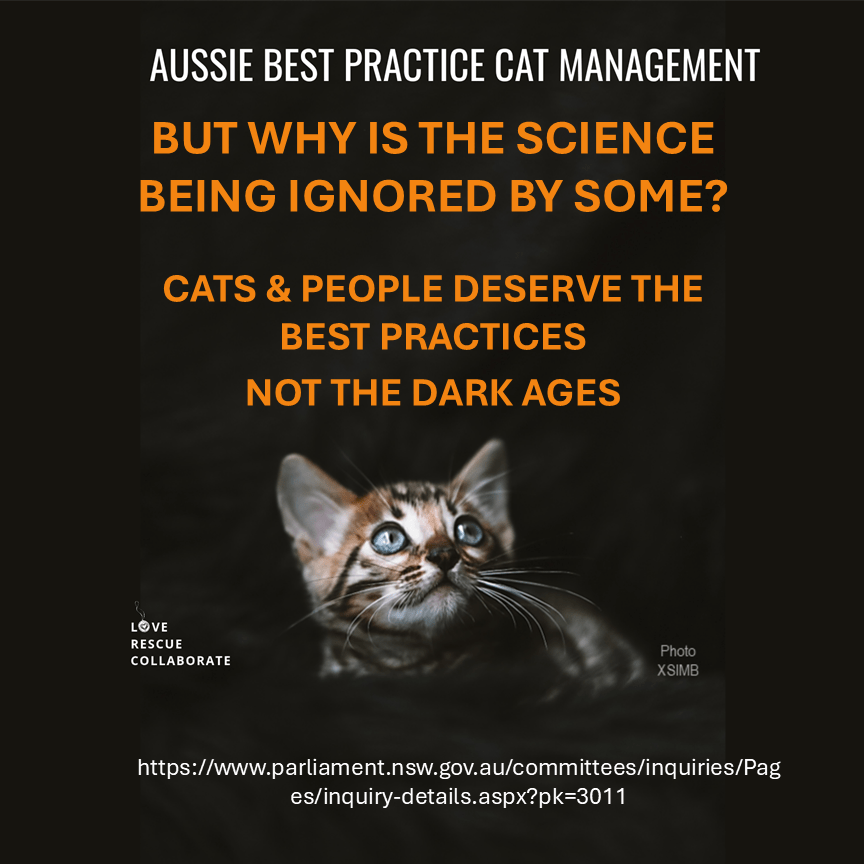
But why are there some who are ignoring the science?
Why ignore the most appropriate and rapid way to minimise domestic cat populations in urban areas?
Are some only interested in applying the near same lethal techniques that apply to feral cats in arid areas and native parks to trapping and culling domestic roaming cats in urban areas?
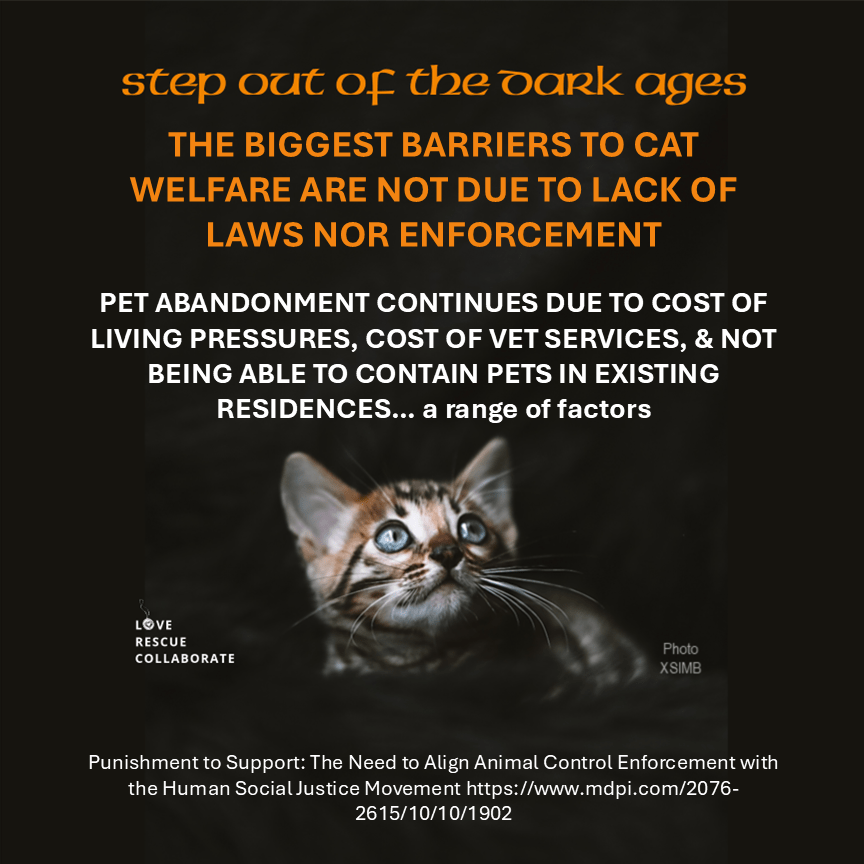
Across Australia and in other countries, it is well recognised that cost-of-living impacts are affecting pet owners very hard, as while food may be near affordable, vet services and government fees and penalties are not.
One of the worst set of costs comes if your pet is impounded as a daily fee (more on weekends and public holidays) is literally a “k*ller” choice. Some owners either avoid microchipping and registration, or quite often deny ownership indicating the pet was transferred to another.
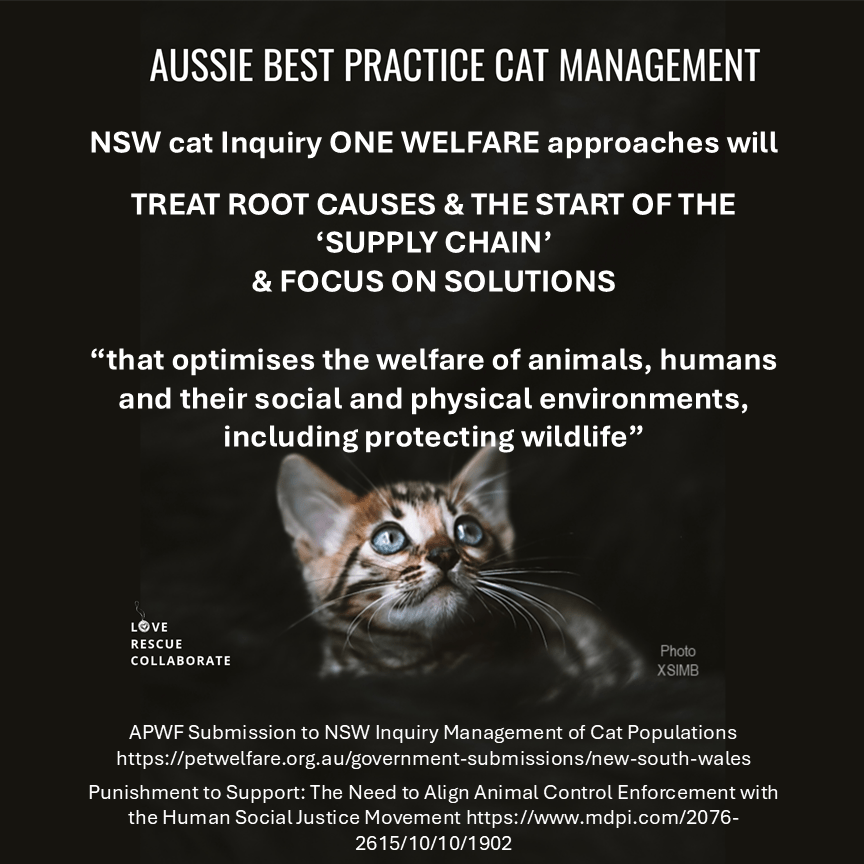
The cat Inquiry committee respected and supported the expert findings and the recommendations for One Welfare solutions.
These are focused on
- helping keep pets with owners – one source of abandoned pets
- desexing to stop the kittens and cat becoming “unwanted” without new family homes available.
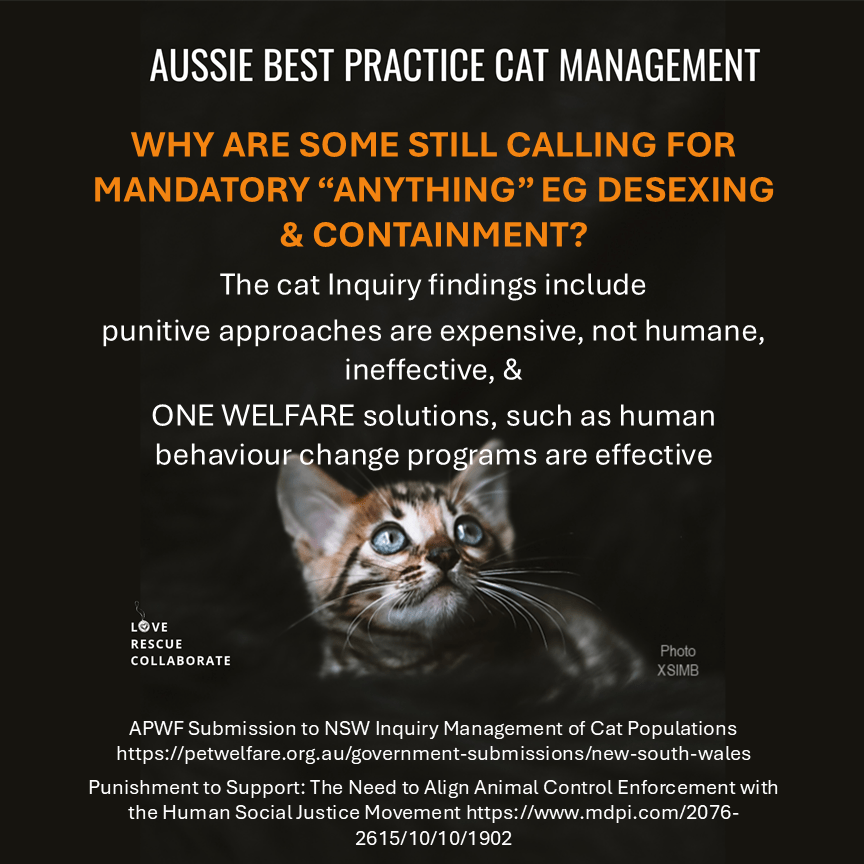
There appears substantial evidence that punitive legislation and regulations are difficult to enforce, costly in terms of labour and time with a major risk of not having substantial evidence, punitive to those on low incomes etc.
Obviously One Welfare solutions have been growing around the world as a cost effective and humane approaches to resolve issues.
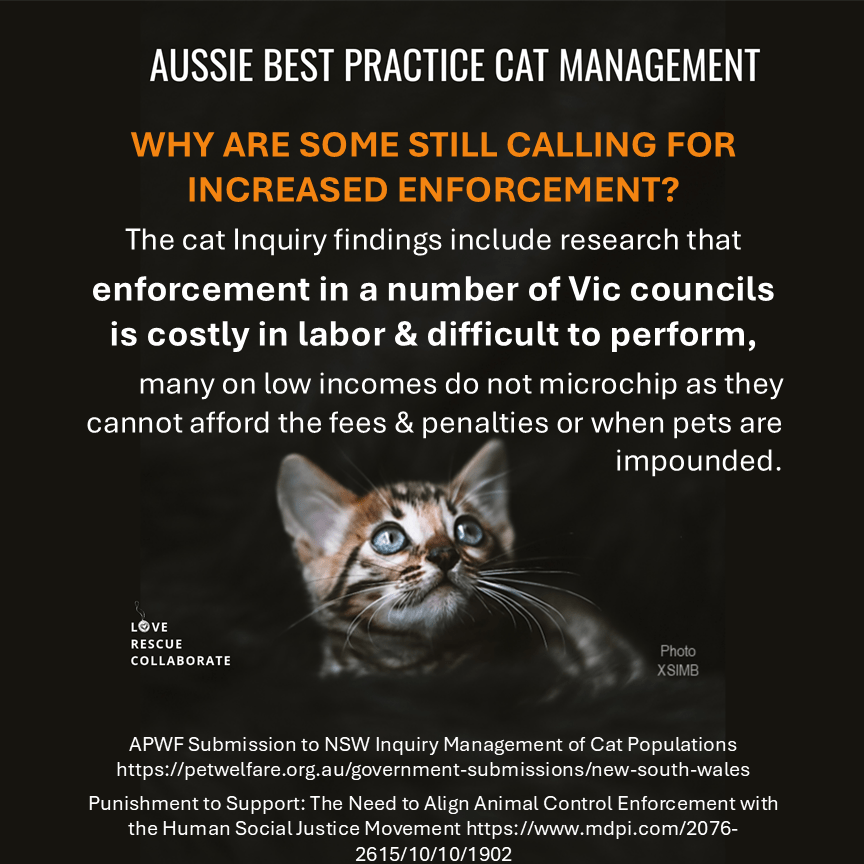
The state of Victoria and its councils are often quoted as a reason for NSW to follow for mandatory cat containment.
But this ignores that there are negative consequences such as this approach being difficult to successfully carry out, it is costly in labour and facilities, and usually not humane in separating cats from their owners who have not chipped and registered, and the many semi-owners caring for community cats.
The RSPCA NSW provided a summarised view on the benefits of voluntary cat containment and the negative consequences for mandated cat containment. The RSPCA findings & recommendations were provided in their submissions, hearing representations and several further document – all under the NSW Inquiry webpage.
Why are some ignoring the RSPCA NSW views or misleading the public that the RSPCA NSW supports mandatory cat containment?
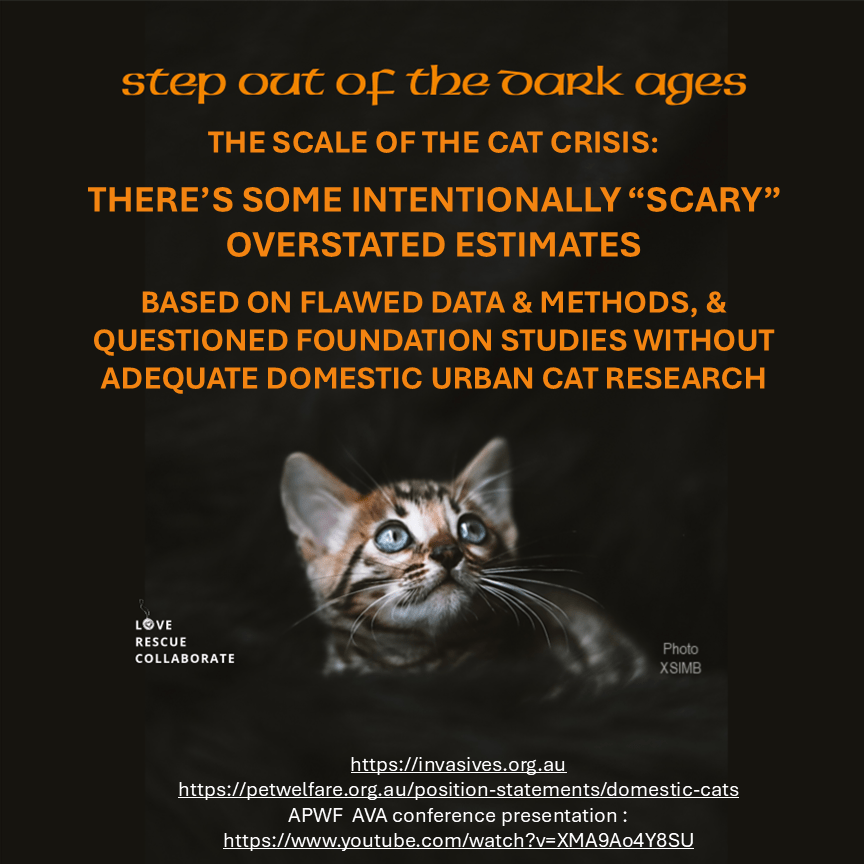
Why are some using intentionally emotionally “scary”, overstated estimates of the number of cats and impacts?
Is that to further demonise cats and use people’s cat hate based feelings for support for lethal actions ASAP?
The overstated estimates have been questioned by domestic cat experts.
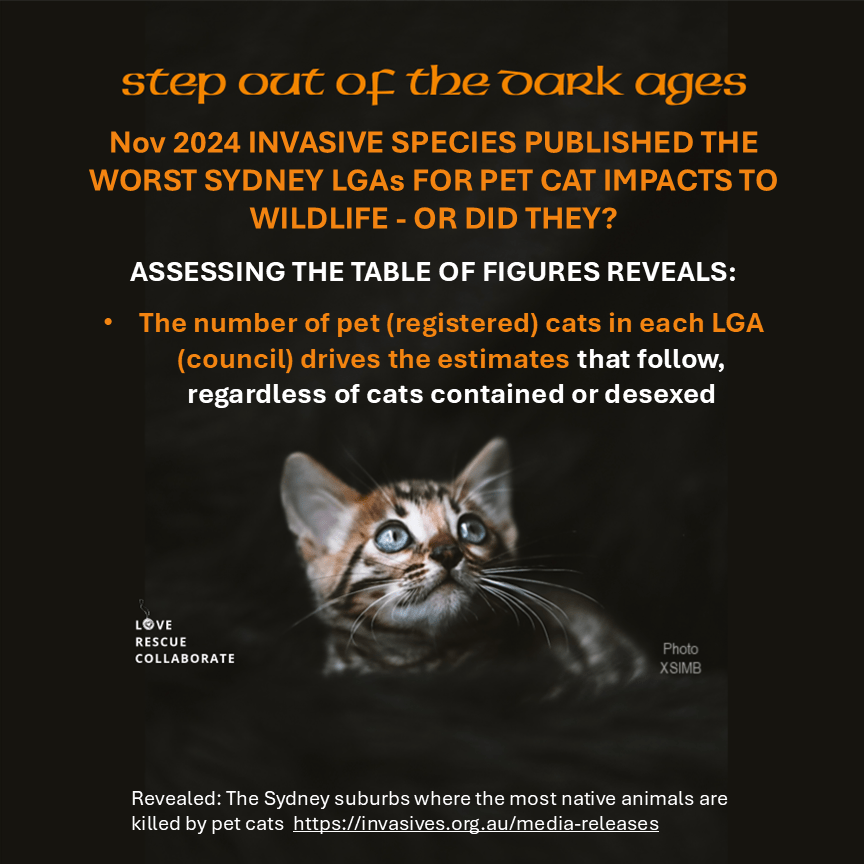
A simple example of how Invasive Species & cohorts calculate their estimate for stray cats and the total of all cats was shown on one of their webpages.
ISC start with the number of pet cats, most likely just those microchipped and registered as these numbers will be contained on the NSW Pet Registry.
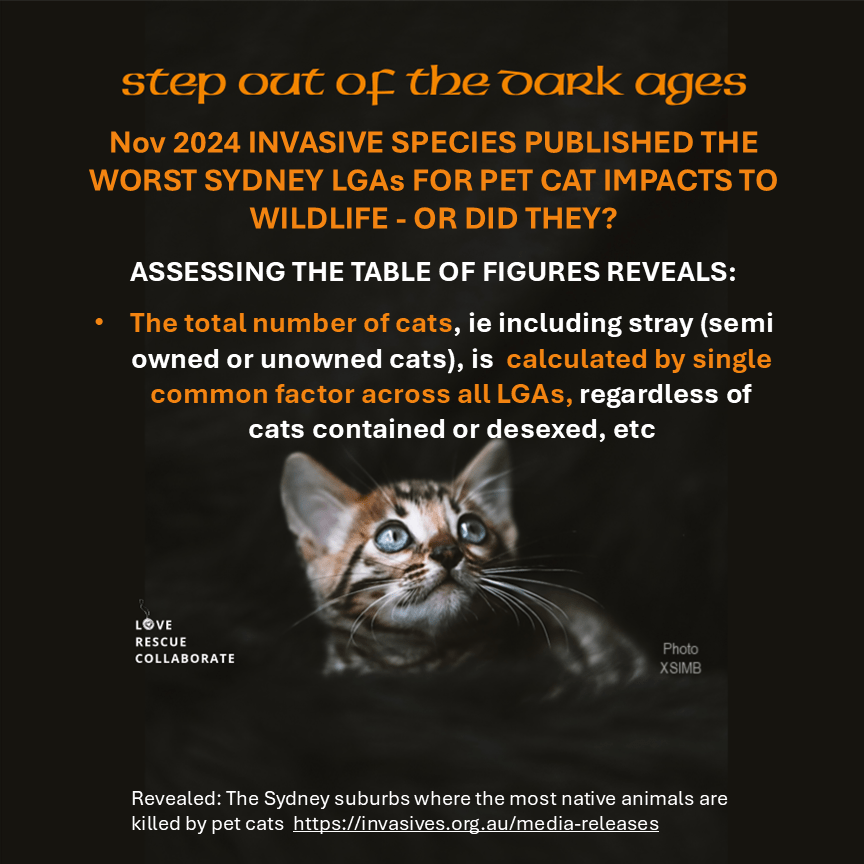
It appears that to calculate the estimate for stray cats (semi owned and unowned domestic cats in urban and peri urban areas). a single factor is applied to the number of pet cats.
This single factor has been provided through studies and we have not seen ISC etc research on domestic cats including stray cats.
This estimated stray cat numbers are then added to the owned chipped and registered cats to provide an estimated total number of cats.
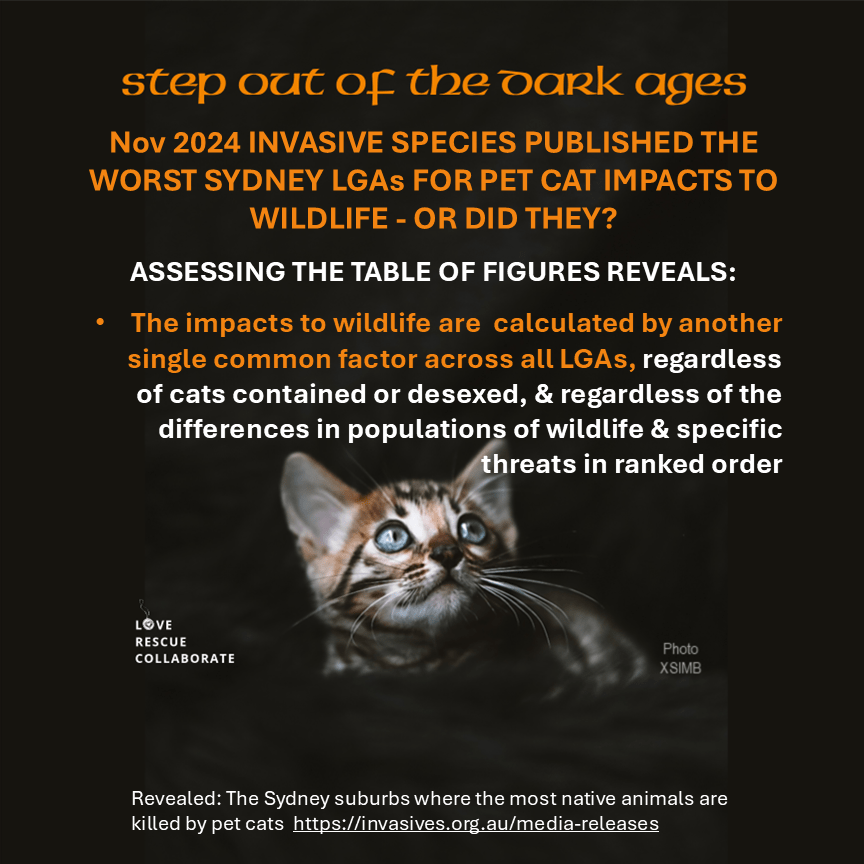
Similarly, ISC & cohorts use another estimated factor to calculate the estimated impact to wildlife in urban and peri urban areas.
These estimates are considered overstated due to flaws in data and methods of calculations, as has been assessed by the APWF and other scientists.
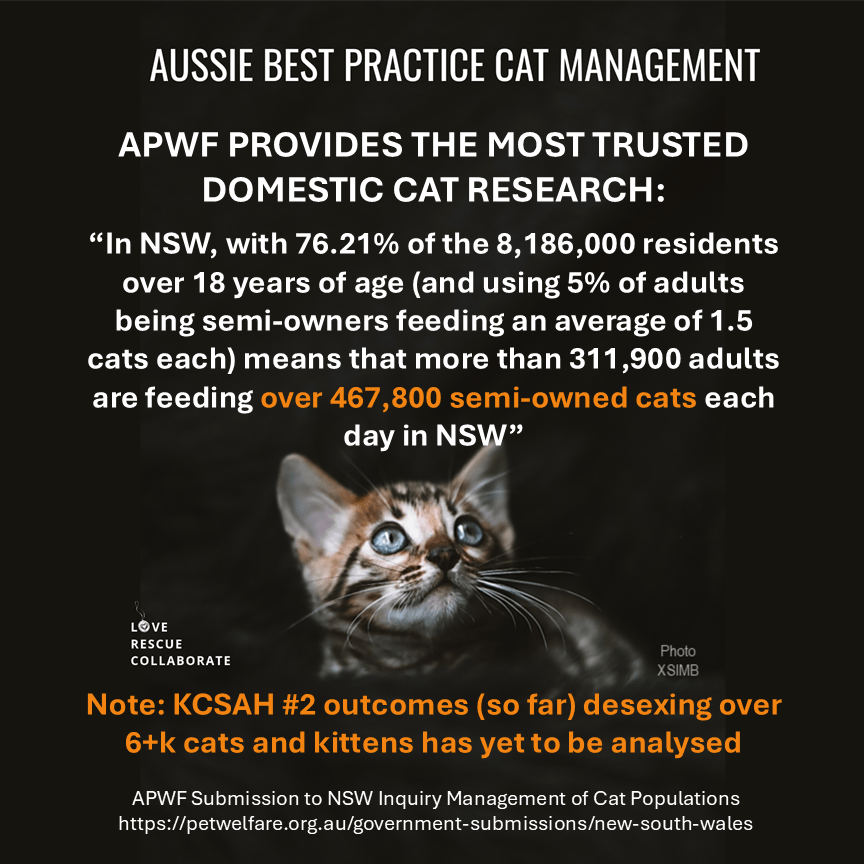
The APWF has provided estimated of the potential number of strays based on their research, and a wealth of information for their community cat programs. There appear several factors involved in this estimate.
The outcomes of the second round of the Keeping Cats Safe at Home program have yet to be published by the RSPCA NSW. It is expected that even this short trial will have improved outcomes for minimising cat populations for owned and semi owned cats.
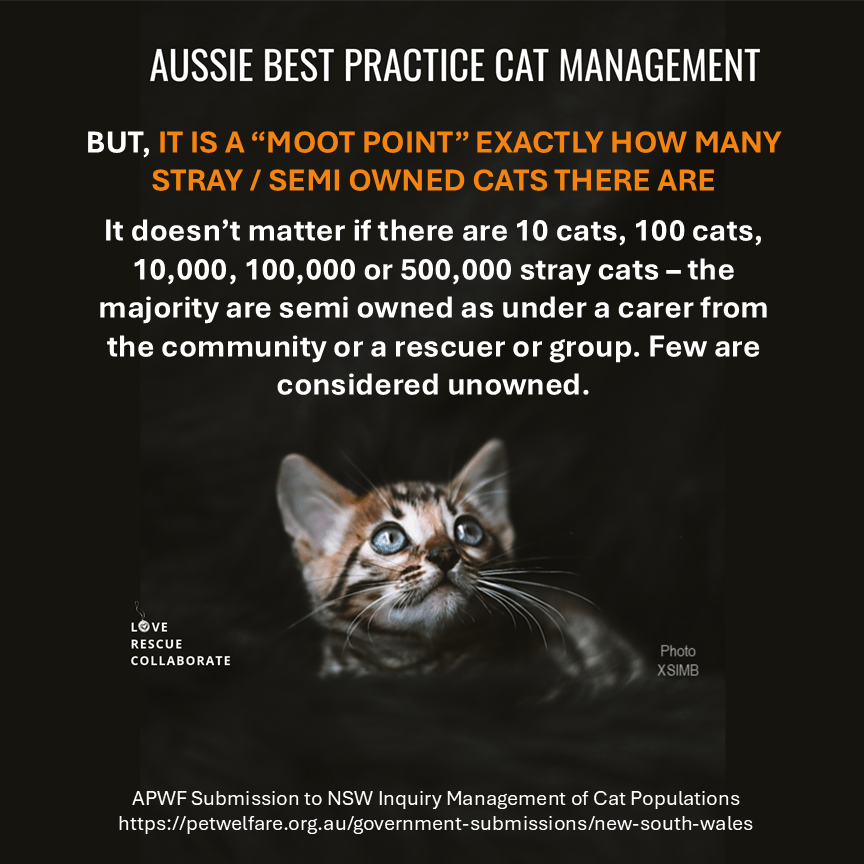
While some, like the ISC often quote their overstated estimates for the extent of the cat crisis in terms of number of cats across the state – this is actually a “moot point”.
What is critical is the best practice approaches being applied regardless of the number.
Having a larger number should NOT justify archaic lethal approaches which have proven costly and ineffective etc.
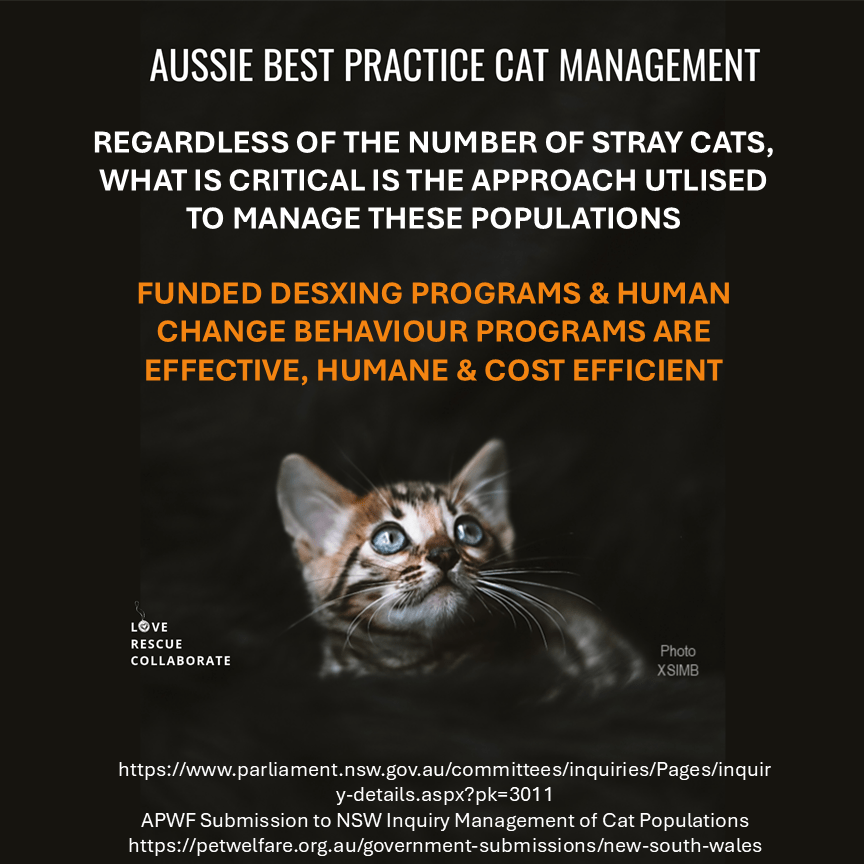
The Inquiry findings and recommendations focus on what works best!
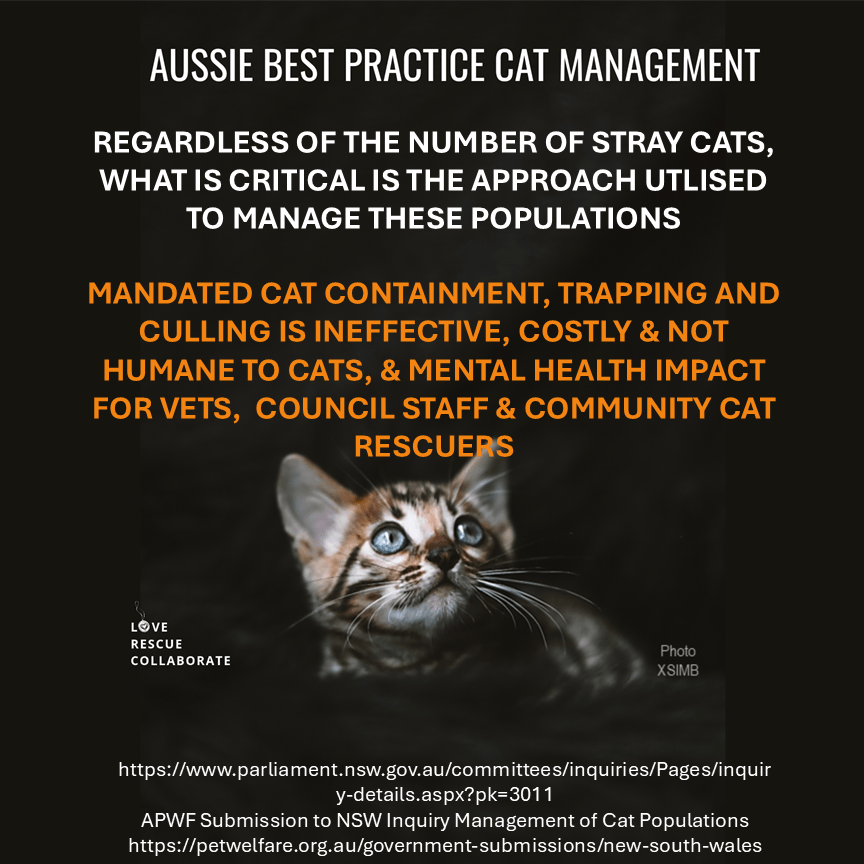
The Inquiry clearly indicated that “traditional” archaic, lethal methods are not the best way forward!
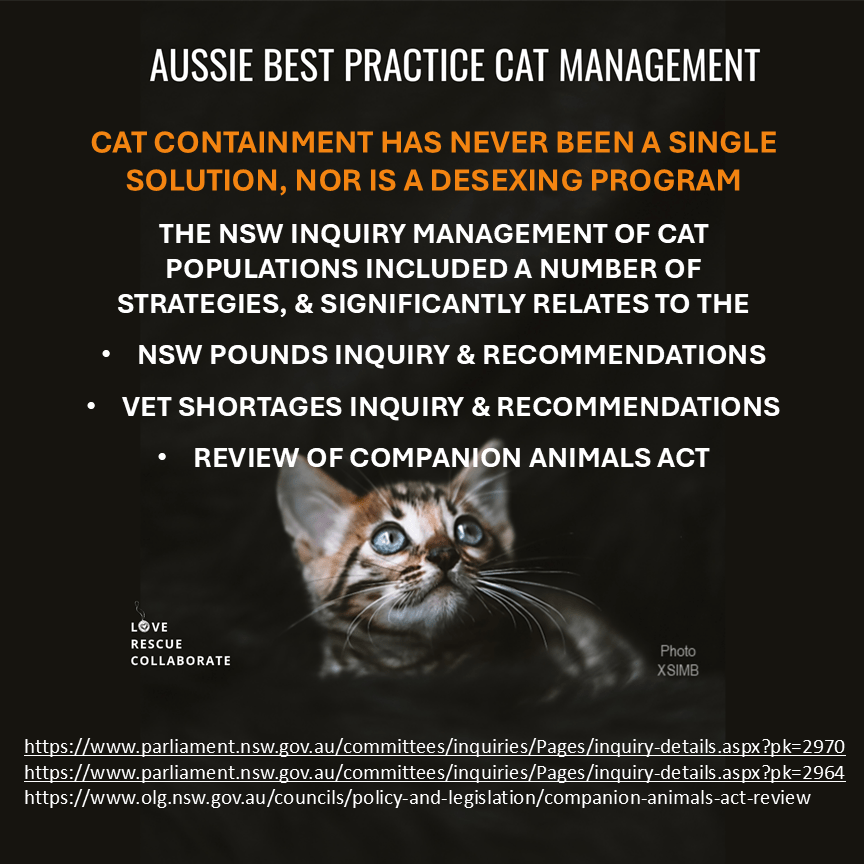
The cat Inquiry included a wealth of information, research and best practices. These findings and recommendations are relation to the other NSW government investigations for improvements:
- NSW Pounds Inquiry
- NSW Vet Shortages Inquiry
- Review of the Companion Animal Act
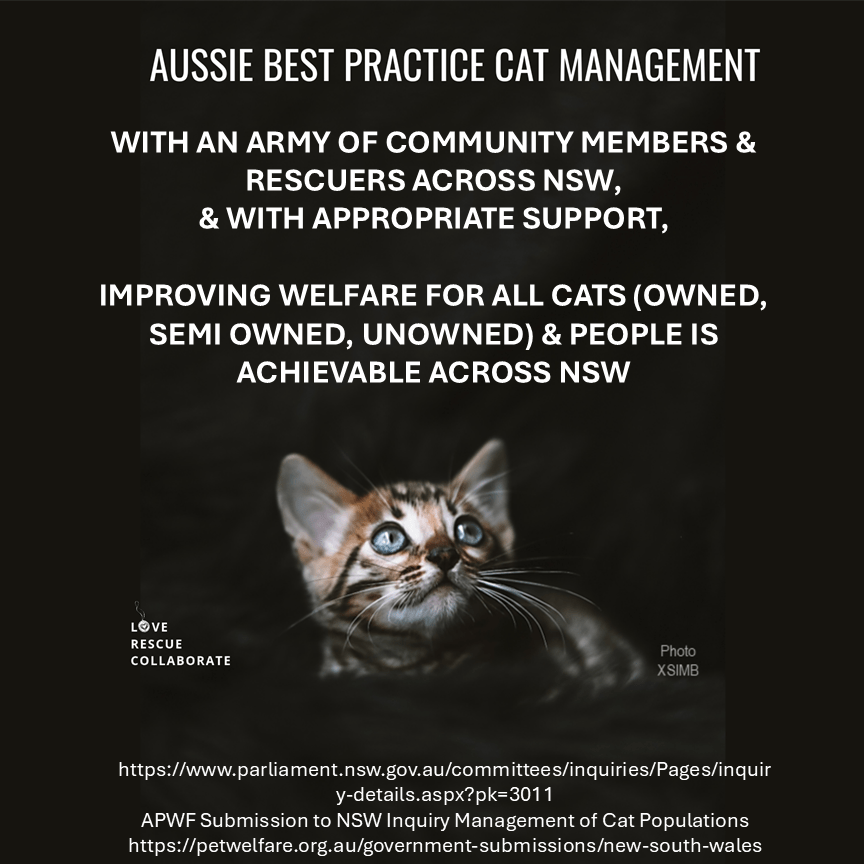
The actual number of cats and funding the best practice approaches should be based on the need for rapid improvements.
With an army of volunteers and community members currently caring for most stray cats, these efforts are achievable.
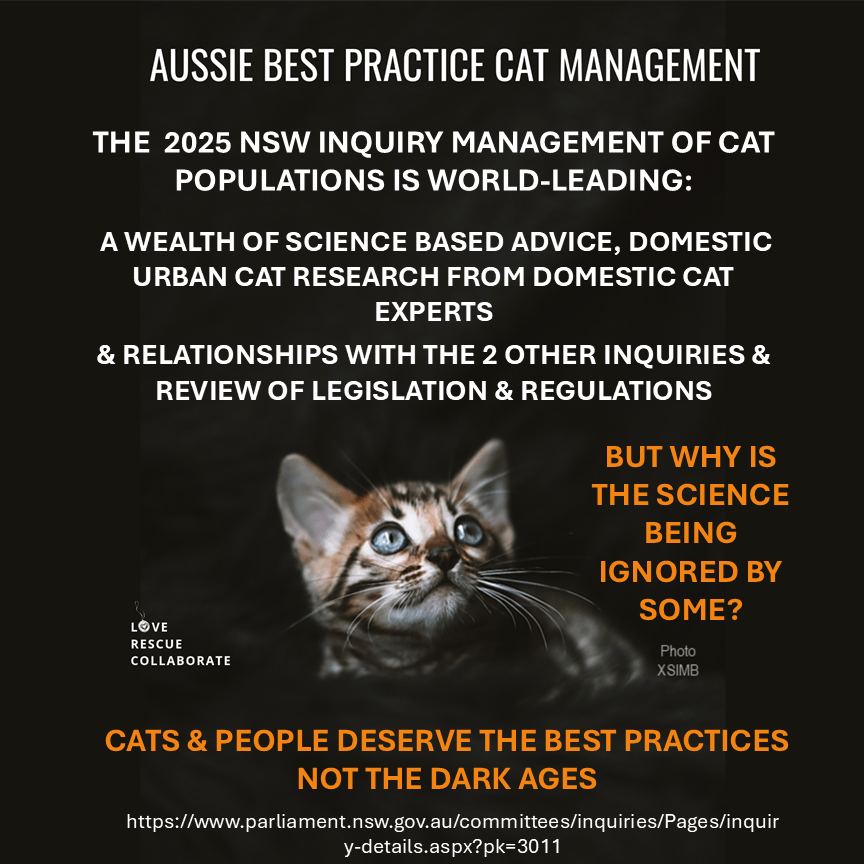
Following the science in the best practices under the cat Inquiry appears “bleeding obvious”, just based on rational and cost-efficient methods.
Why are ISC & cohorts continuing to chase the demonising of all cats, and lethal methods which are not effective, nor humane, costly and will slow the approach to minimising the cat populations?
Reference sources
New South Wales Government cat Inquiry https://www.parliament.nsw.gov.au/committees/inquiries/Pages/inquiry-details.aspx?pk=3011
Punishment to Support: The Need to Align Animal Control Enforcement with the Human Social Justice Movement https://www.mdpi.com/2076-2615/10/10/1902
Australian Pet Welfare Foundation Submission to NSW Inquiry Management of Cat Populations https://petwelfare.org.au/government-submissions/new-south-wales
Invasive Species Council Australia https://invasives.org.au
APWF Position Statement Cat Impacts to Wildlife https://petwelfare.org.au/position-statements/domestic-cats
APWF AVA conference presentation : https://www.youtube.com/watch?v=XMA9Ao4Y8SU
https://www.parliament.nsw.gov.au/committees/inquiries/Pages/inquiry-details.aspx?pk=2970
https://www.parliament.nsw.gov.au/committees/inquiries/Pages/inquiry-details.aspx?pk=2964
https://www.olg.nsw.gov.au/councils/policy-and-legislation/companion-animals-act-review
 LRC
LRC 