Why are narratives changing to target specific introduced species as primary drivers of extinction? We support the humane management of introduced animals for a few reasons, including minimising impacts to our precious wildlife, and seek holistic approaches which are customised to local areas.
For over a year, Invasive Species Council lobby group and cohorts have been repeating “foxes and cats” like a mantra for Aussie native animal extinctions.
However, native extinctions have generally been a combination of several factors with land clearing being a main culprit.
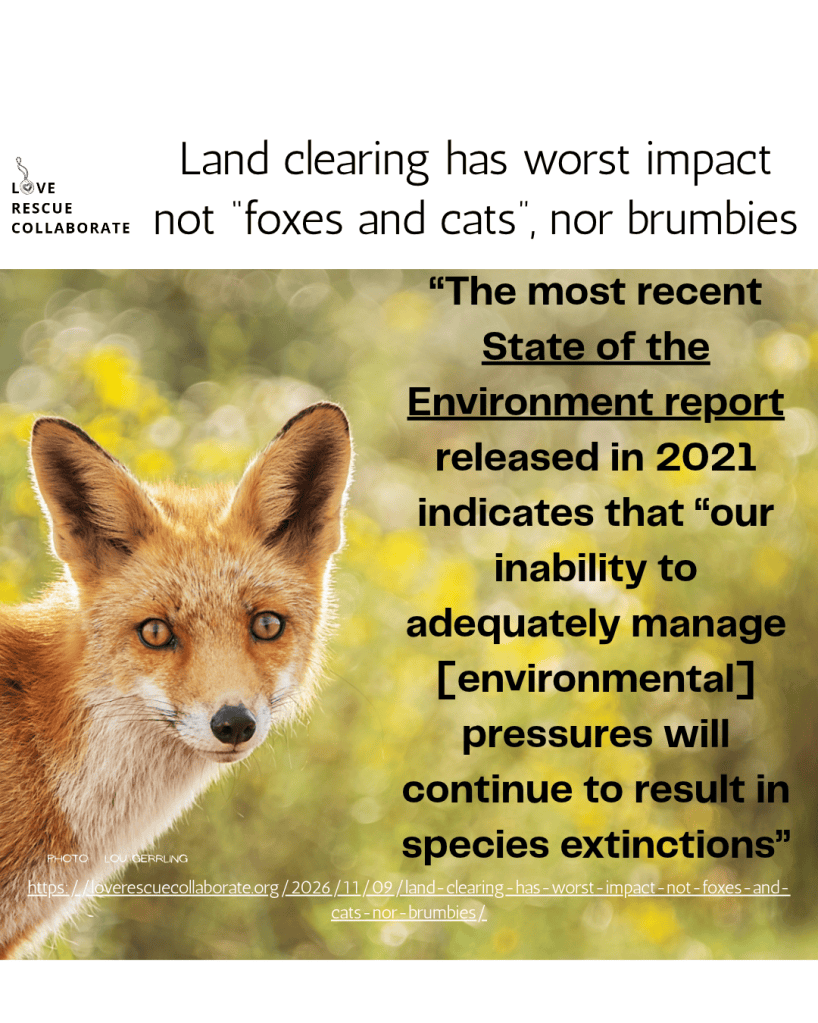
It has been recognised by our government that the biggest threat to wildlife is habitat loss most often due to land clearing for developments (Australia’s State of the Environment Report 2021). https://soe.dcceew.gov.au/biodiversity/key-findings
“Habitat loss and clearing has caused the extinction of 62 Australian terrestrial species since European colonisation” https://www.dcceew.gov.au/sites/default/files/documents/6.%20DCCEEW-SOE_factsheet_Habitat%20and%20Natural%20Capital.pdf
Earth’s Sixth Mass Extinction (warnings rom 2017)
“A “biological annihilation” of wildlife in recent decades means a sixth mass extinction in Earth’s history is under way and is more severe than previously feared”
“Wildlife is dying out due to habitat destruction, overhunting, toxic pollution, invasion by alien species and climate change.
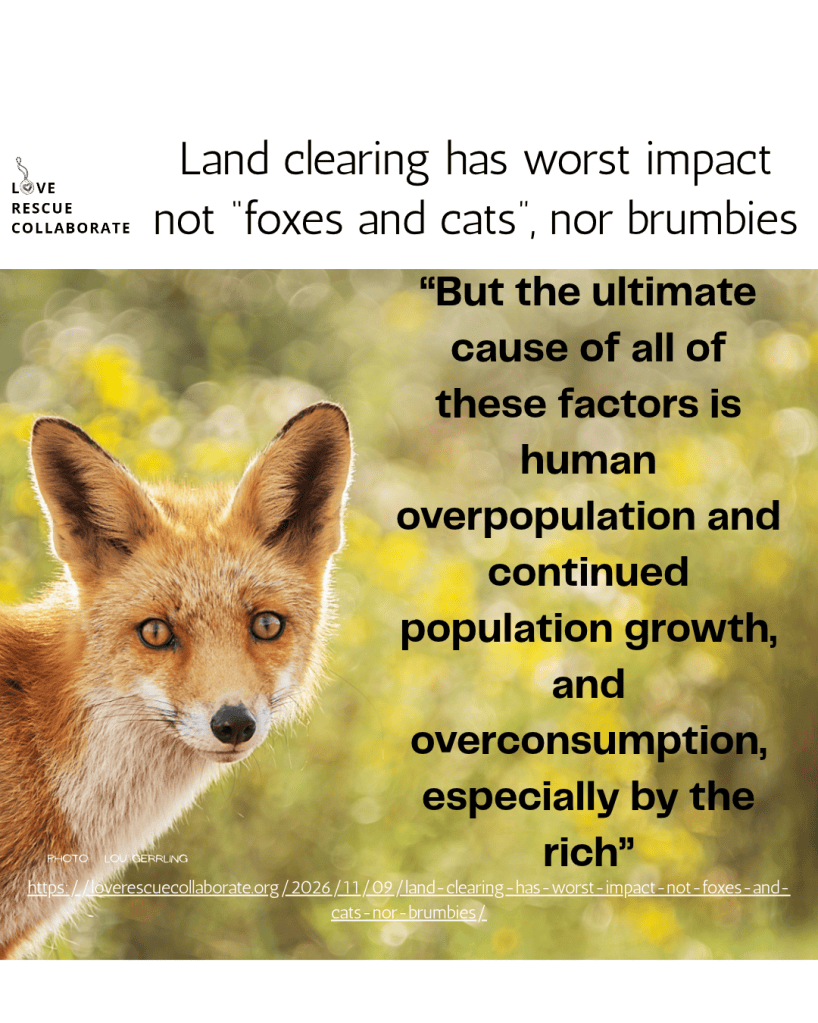
But the ultimate cause of all of these factors is “human overpopulation and continued population growth, and overconsumption, especially by the rich”
Australian Habitat Fragmentation Accelerates Due to Massive Livestock Pasture Clearing
“the core areas of native vegetation across Queensland… are rapidly shrinking and fragmenting, placing severe pressure on the region’s unique biodiversity”
“driven almost entirely by agricultural expansion, means that the remaining patches of forest and scrub are becoming too small and isolated to support viable populations of many species”
“fragmentation directly threatens the stability of terrestrial ecosystems across the state”
“Woody Vegetation Loss: 1.479 million hectares removed between 2018 and 2022… of native forest and scrub cleared, primarily in the Brigalow Belt and Mulga Lands bioregions”
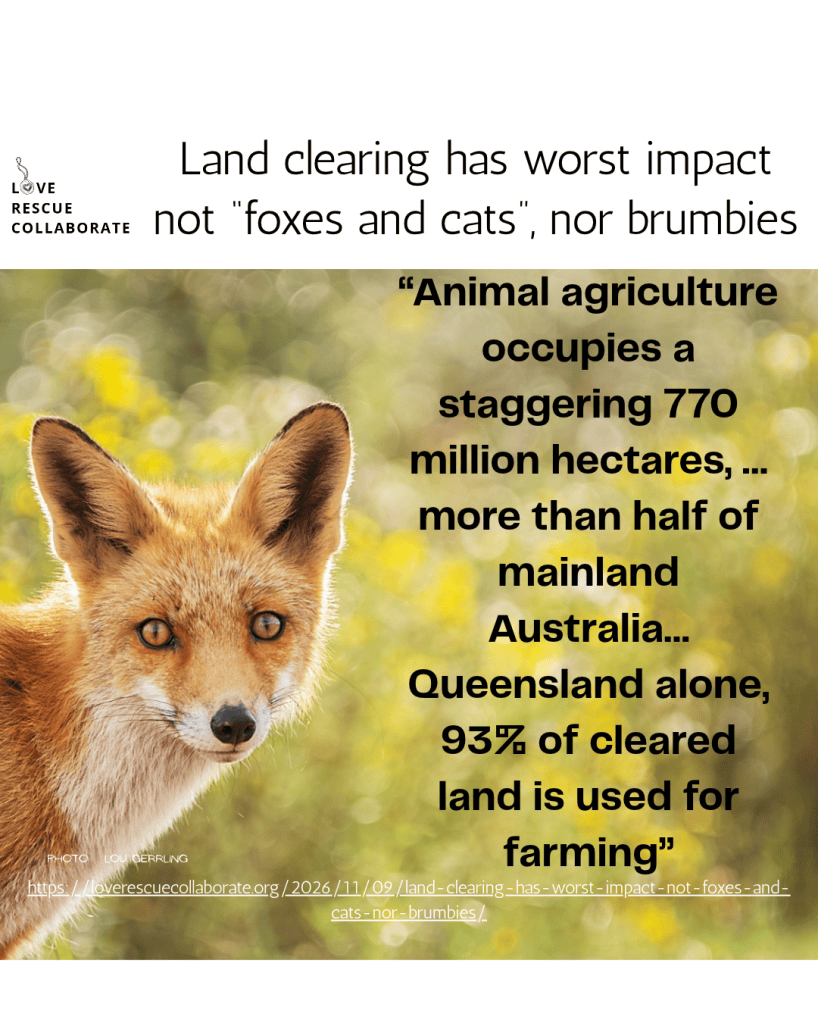
“Clearing Driver: 94% of all clearing was for land management and infrastructure associated with livestock production… the dominant human activity causing the ecological pressure”
“Fragmentation Trend: 12 out of 13 Queensland bioregions showed a declining average core area of remnant vegetation patches… remaining habitats are becoming smaller and more isolated”
“Regrowth Rate: Regrowth added only 133,300 hectares of new woody vegetation during the same period… the rate of natural recovery is significantly slower than the rate of loss.”