Created September 2025 – Last updated September 2026.
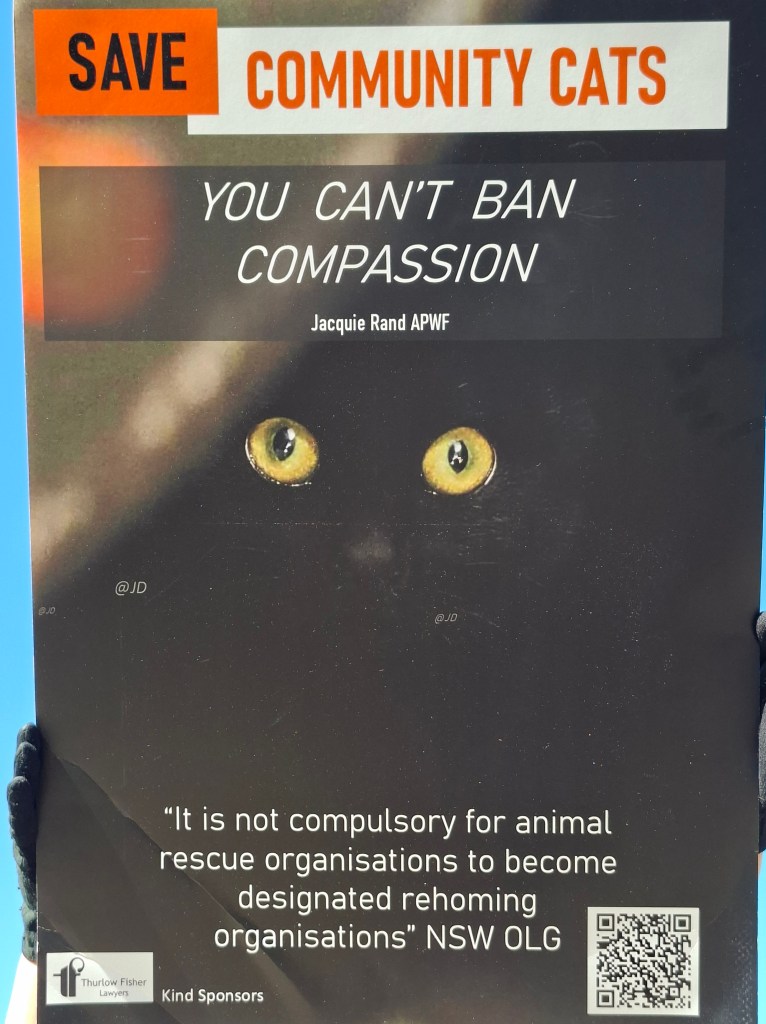
Currently we are waiting for the New South Wales government Ministers to declare the future intentions for managing cat populations amid the cat crisis.
While we see the potential for high intensity desexing in the “hardest” areas with significant numbers of undesexed cats, it is unknown how many councils will receive funding assistance, and the number who will not or what alternatives will be put in place.
We provide a brief guide to information that may assist residents of councils in approaching councils to self-fund and plan for their own initiatives.
Kickoff a conversation with your Mayor & Councillors
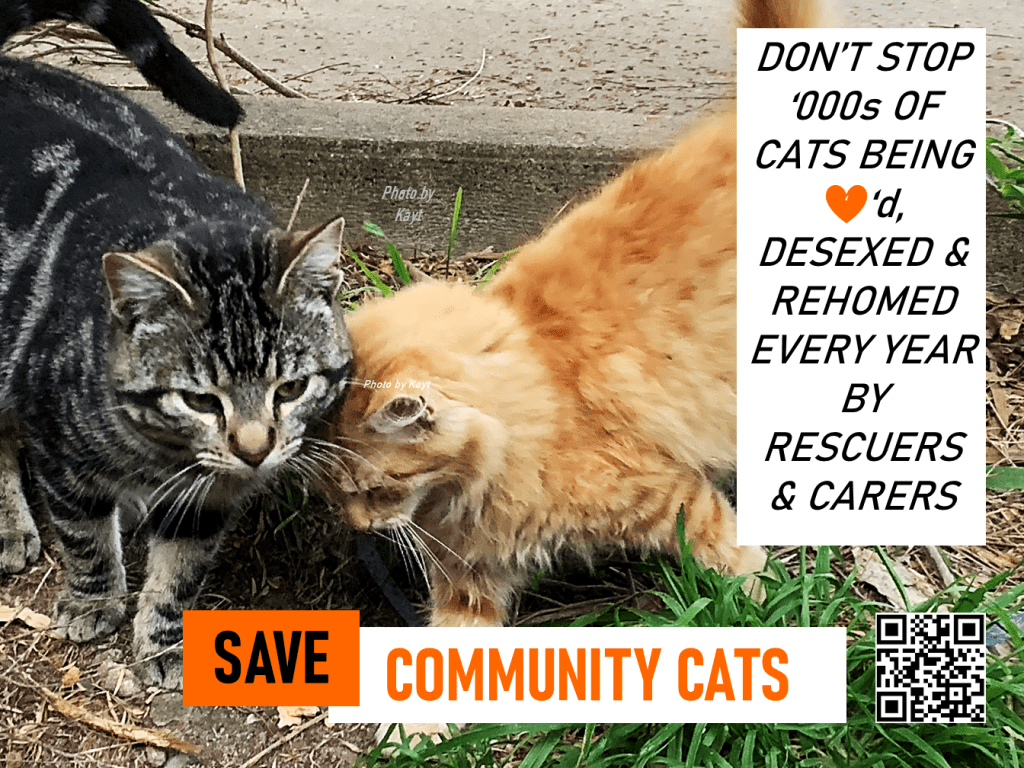
We strongly suggest you start at the top: your Mayor and Councillors. You will find their email contact information on your council webpage.
We suggest you get to know and follow your Mayor and local ward Councillors with events and on their social media and leverage any of their posts in relation to responsible pet ownership.
We also suggest you attach the LRC document on the compelling evidence on desexing programs in other Australia councils., and consider being prepared to discuss related topics.
- Does your council already have a cat management plan / strategy? It may be embedded in a companion animal management plan or a dog and cat management plan. What is also available on your council website re pets? What does it currently explain? Are there off leash dog parks? Has the council designated any cat parks? Search your council website for this information.
- What have been the reported statistics on the cats impounded and rehomed? All NSW councils’ pound data can be found under Animal Seizures – Pound Data from this webpage. Reported per year, a bit if a cumbersome document to access and read your council pound information, each year in a separate spreadsheet.
- We recommend you save these to a Excel Worksheet on your own device. https://www.olg.nsw.gov.au/public/dogs-cats/responsible-pet-ownership/pound-and-dog-attack-statistics/
- The LRC team have provided a subset of the most recent four years (draft a WIP) – refer subsection in this post.
- Are you aware of your council’s reports/findings on biodiversity, including
- which native animals that are most at risk and any specific council actions such as conservation fencing?
- are you aware of the NSW Native Parks and Wild Life Protection Areas (WLPAs) where cats are not allowed to roam? WLPAs are usually council parks which are predominantly for people recreation that may contain native vegetation that is designated important for local native wildlife.

Are you aware of the terms and definitions for feral versus domestic owned, semi owned and unowned cats? https://kb.rspca.org.au/wp-content/uploads/2019/01/Identifying-Best-Practice-Domestic-Cat-Management-in-Australia-RSPCA-Research-Report-May-2018.pdf
Are you aware of the following NSW government assessments, and did you and/or your council make submissions? ie are you aware of your council’s views on managing cats?
- focus on vet shortages https://www.parliament.nsw.gov.au/committees/inquiries/Pages/inquiry-details.aspx?pk=2964#tab-reportsandgovernmentresponses
- the pound inquiry https://www.parliament.nsw.gov.au/committees/inquiries/Pages/inquiry-details.aspx?pk=2970#tab-reportsandgovernmentresponses
- management of cat populations https://www.parliament.nsw.gov.au/committees/inquiries/Pages/inquiry-details.aspx?pk=3011#tab-reportsandgovernmentresponses
- review of the Companion Animal Act https://www.olg.nsw.gov.au/companion-animals-act-review/
LRC Compelling Evidence of Australian Desexing Initiatives
LRC SUMMARY
The following summary of a number and range if Australian desexing initiatives is provided to be downloaded and attached to communications with Australian councils. We believe this provides:
We will appreciate if this document is sent as an attachment to your communications with your own council, and please highlight in your communication the councils and programs which will align with the characteristics / aspects of your council.
NSW KCSAH 2022 – 2024 Outcomes – PARAMMATTA Council
Aussie Research: StrayCare Metro: Evaluation of a Targeted Cat Desexing Program to Manage Free-Roaming Cats
“Free-roaming cats in Australian cities contribute to wildlife impacts, community concerns, and high shelter intake. We used an observational pre–post evaluation study design of a targeted cat desexing program (“StrayCare Metro”) delivered with councils and community partners in four local government areas (LGAs) of Greater Sydney (2022–2024). Methods: Program records documented cat enrolments and services; council and state databases supplied annual shelter intake, euthanasia, and cat-related complaints; and transect drives in two LGAs (2021 and 2024) estimated cat encounter rates and population density. The analysis did not include control LGAs. Results: The program desexed 1225 cats; among enrolled cats not already microchipped, 72% received a microchip and 28% declined despite this being offered for free. Compared with pre-program baselines, annual council shelter intake decreased by 49–73% within LGAs (61% overall), with concurrent reductions in euthanasia. Cat-related complaints declined in three LGAs (47–64%) but increased in one. Transect drives indicated substantial declines in cat encounter rates in Blue Mountains (51%) and Campbelltown (35%) and lower density estimates in both surveyed LGAs. Conclusions: A collaborative targeted desexing approach was associated with large reductions in council pound intake, euthanasia, and, in most areas, nuisance complaints, alongside independent indications of reduced free-roaming cat density.”
https://www.mdpi.com/2076-2615/16/8/1216
BANYULE COUNCIL VIC

- compelling evidence of the success of desexing programs
- the underlying research of these programs indicates that the desexing programs are cost effective (achieving greater savings over costs), and
- desexing programs are significantly less cost than traditional and ineffective culling approaches.
LRC Combined Councils’ Pound Cat Stats Reporting
The LRC team provide this combined spreadsheet for the most recent four years. This is a WIP and currently incorporating formatting from the original spreadsheets. Further tailoring and analysis is intended. The first file an Excel spreadsheet, the second is a PDF view.
NSW report from inquiry management of cat populations
The committee report was published 18 August 2025 and contains Findings and Recommendations. The recommendations in relation to desexing programs include the following. It is not yet known if the NSW state government is supporting and funding these recommendations. However, this will be of interest to local government/ councils and their cat management initiatives.
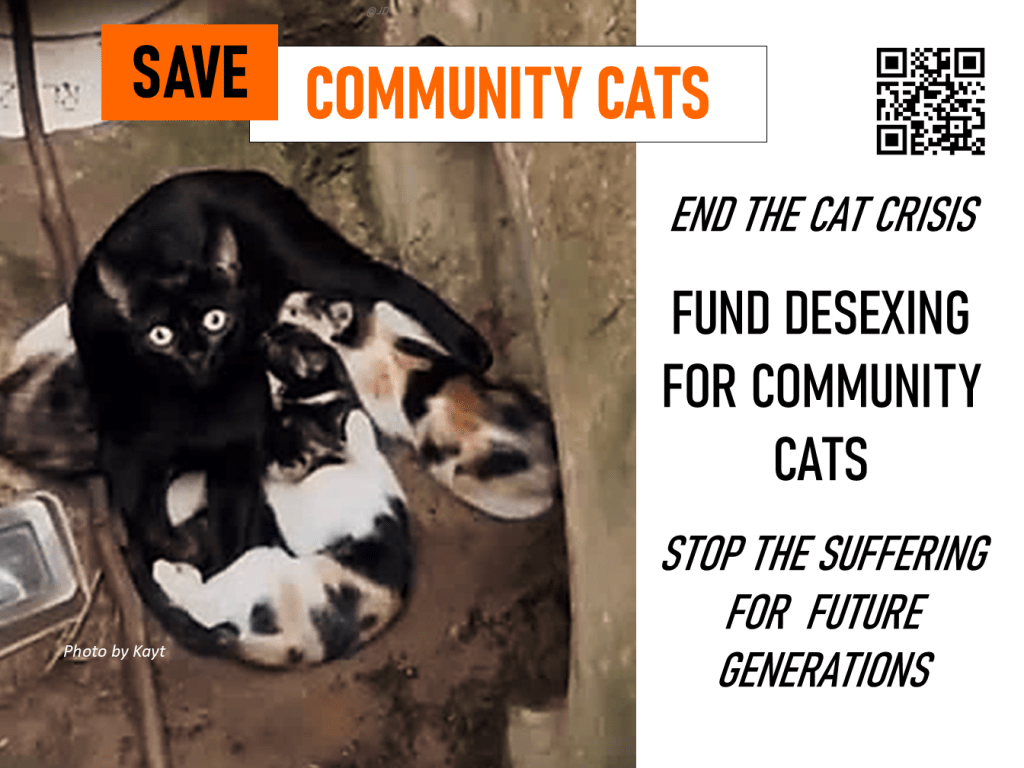
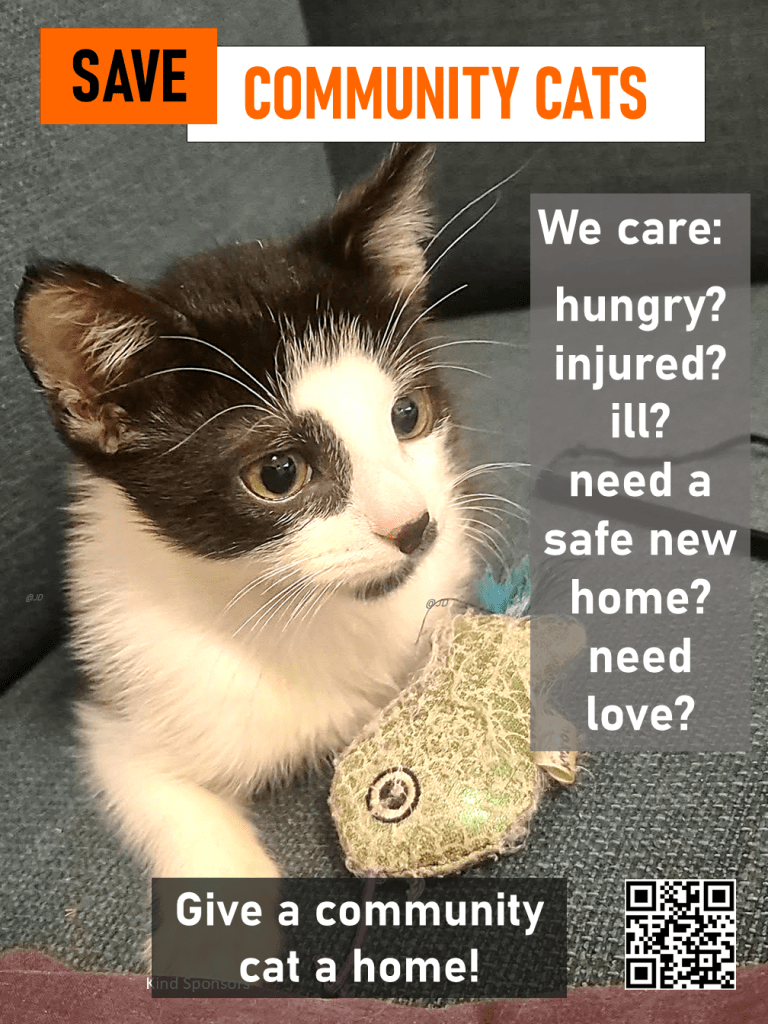
Recommendation 2 page 53
That the Government provide grants to councils and rescue and rehoming organisations to carry out free and subsidised desexing programs throughout the state, including desexing of ‘owned’ cats for those on lower incomes, and large-scale, targeted community cat desexing programs.
Recommendation 3 page 53
That the Government expand the capacity for high-volume desexing in New South Wales through animal welfare agencies, veterinary schools, and private veterinary practices.
Recommendation 4 page 53
To assist rural and regional councils with desexing programs, the NSW Government should investigate ways to provide additional support including but not limited to encouraging metropolitan veterinarians and mobile desexing programs to regularly visit rural and regional areas, providing this does not have a negative impact on local service providers.
Recommendation 5 page 53
That the Government, as part of its review of the Companion Animals Act 1998, consider legislative, regulatory and policy changes necessary to support the effectiveness and operation of community cat desexing programs.
Recommendation 6 page 54
That the Government provide funding to cat rescue and rehoming organisations to support
desexing, care and rehoming costs.
The report may be downloaded from the NSW webpage: https://www.parliament.nsw.gov.au/committees/inquiries/Pages/inquiry-details.aspx?pk=3011#tab-reportsandgovernmentresponses
A copy is also provided here:
Sydney Save Community Cats Rally 23 August 2025
On a cool windy Saturday morning in Martin Place near Parliament House, a group of like-minded cat rescuers and carers attended a rally to raise recognition of community cats, the burden that is currently carried by these volunteers across the state, and to seek to be integrated with state and local government initiatives, all for better outcomes for domestic cats
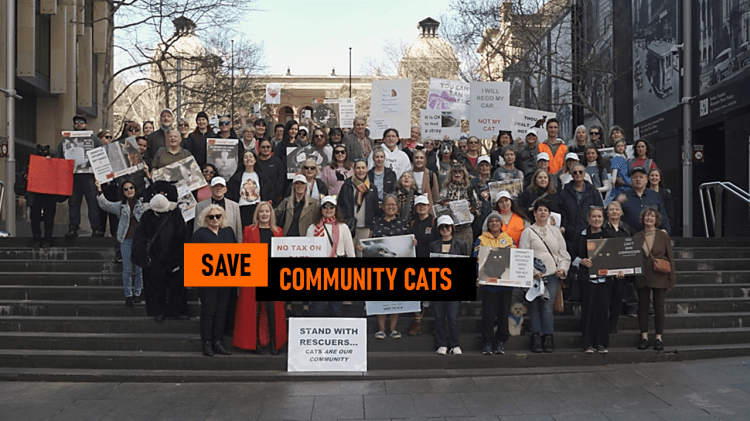
If you are communicating with your local councils, then please feel welcome to reference this rally event which has been raised with Minister Ron Hoenig.
The rally included messages of support from Emma Hurst AJP NSW, Jacquie Rand APWF, Kristina Vesk CPS NSW and Gemma Ma RSPCA NSW. Phots and videos are available, and more.
Save Community Cats Petition
A petition was raised with the rally – this petition expresses the purpose and aims of the rally and initiative.
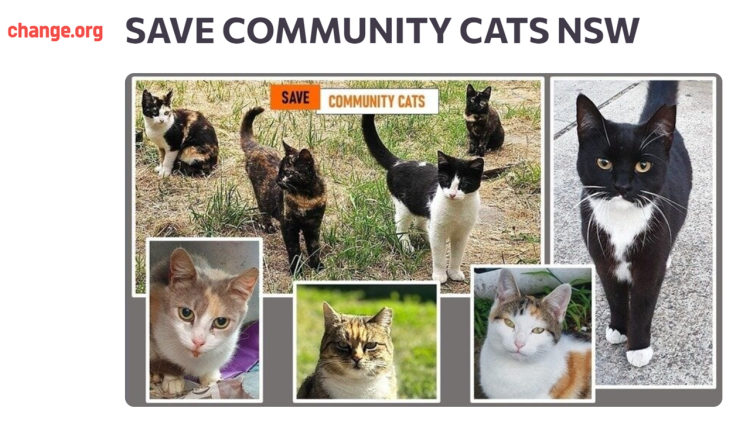
Feel welcome to sign and share the petition (link follows), and to reference in your communications with your councils.

