The South Australia (SA) government has a Dog and Cat Management Board. Their “responsibilities include planning for, promoting and providing advice on dog and cat management practices” & “oversees the administration and enforcement of the state’s dog and cat management laws”.
At this time in SA, there is a review of the legislation.
Championed by a volunteer at the Cat Adoption Foundation, 14 rescue groups collaboratively worked with authorities to raise:

- a proposal/ plan for free desexing programs
- a supporting petition to parliament.
Their work also raised recognition of the valuable work by rescue groups and the strain these people are under!!
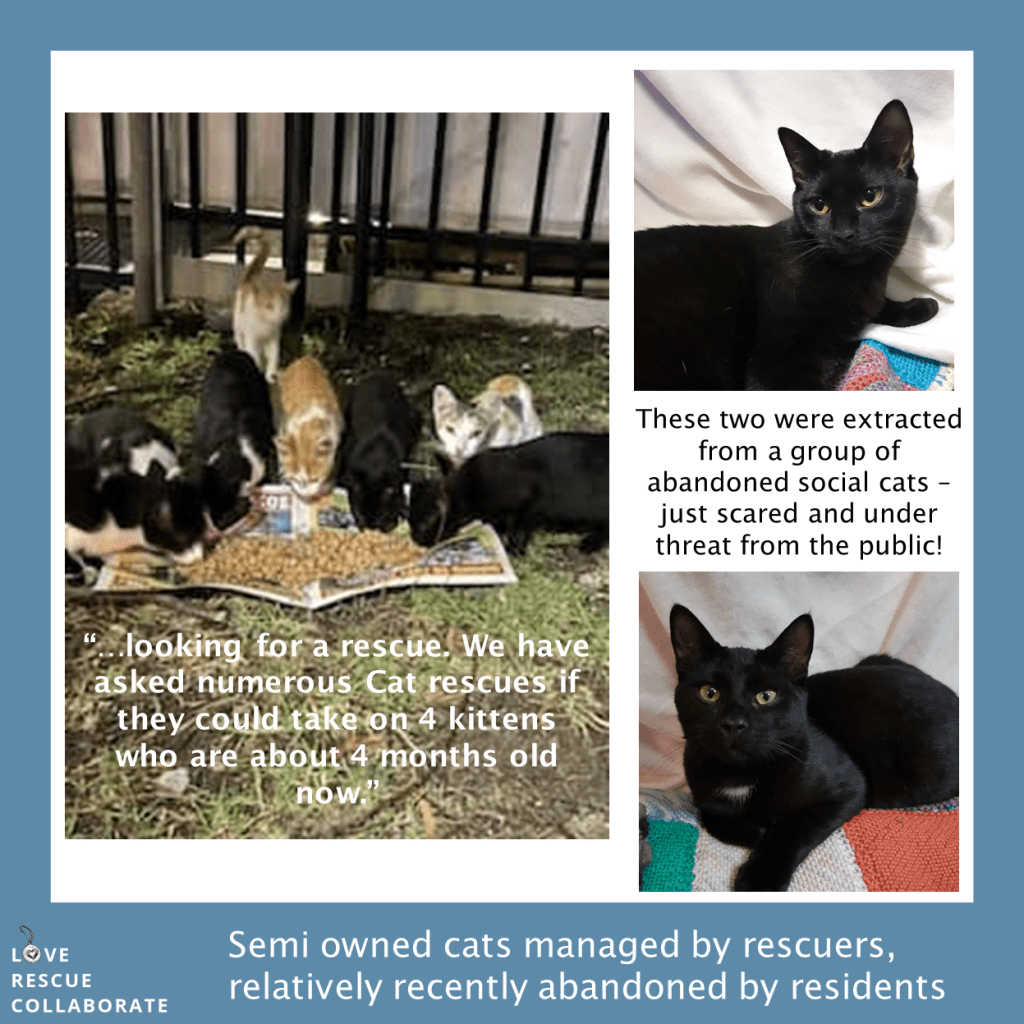
The proposed / plan for free desexing included highlighting the semi owned and unowned cats, ie abandoned social cats, street cats, groups of cats, community cats, colony cats... (these are NOT feral cats).
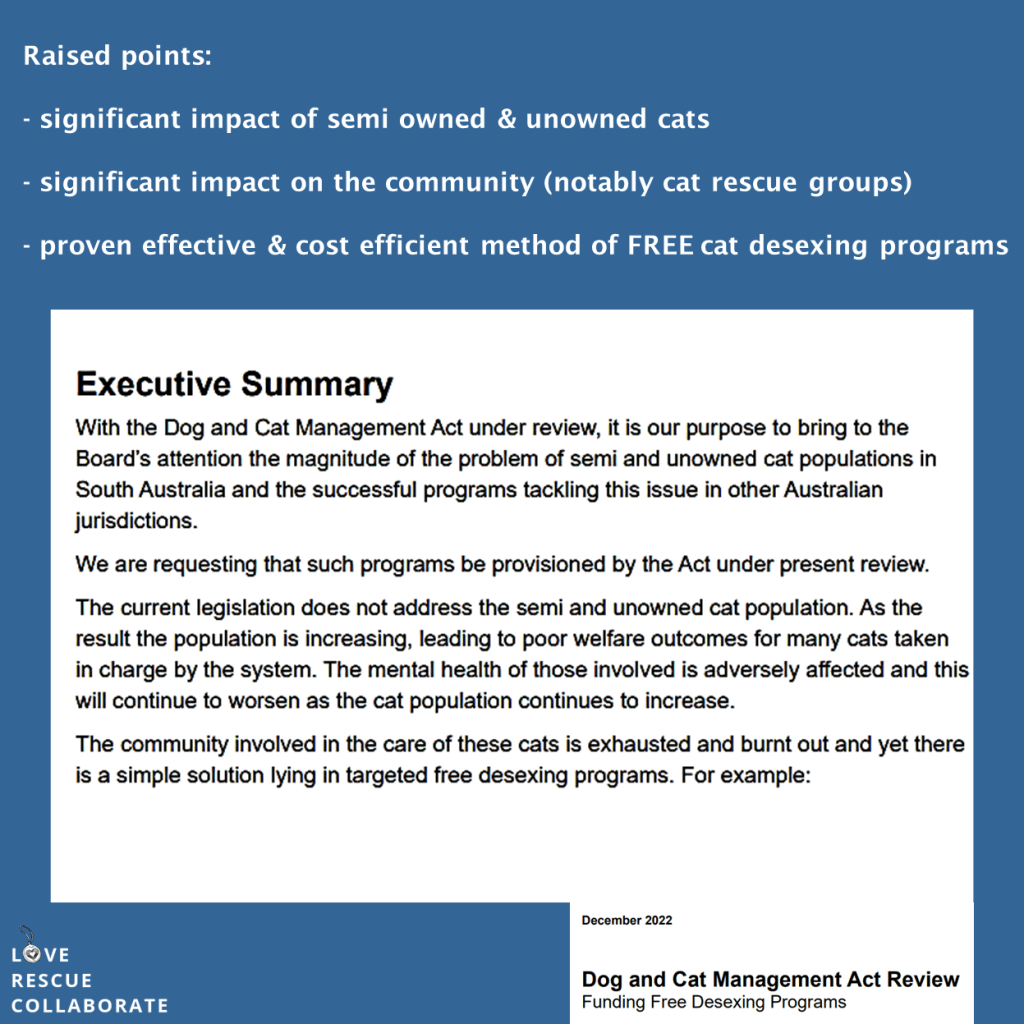
The petition includes the key recommendation:
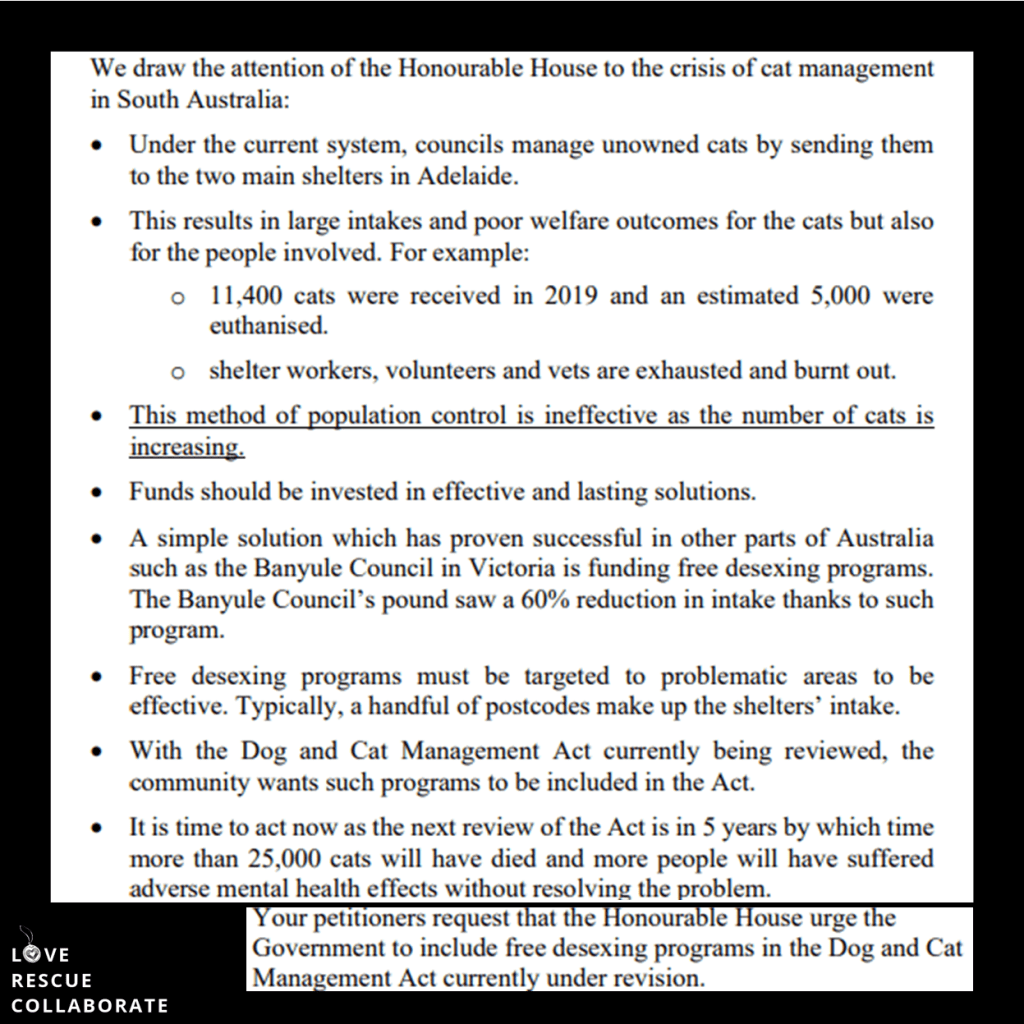
Note, the petition includes:
what doesn’t work (council pound killing)
&
what does work: TARGETED FREE DESEXING!
“A simple solution which has proven successful in other parts of Australia
such as the Banyule Council in Victoria is funding free desexing programs.
The Banyule Council’s pound saw a 60% reduction in intake thanks to such
program.
Free desexing programs must be targeted to problematic areas to be
effective. Typically, a handful of postcodes make up the shelters’ intake.“
On May 17 2023, the issues and recommendations were raised in SA parliament by Hon Tammy Franks, for which a video & transcript may be viewed.
This includes raising:
“The funding also needs to be targeted to the areas of highest need. It is clearly an unsustainable situation for organisations such as the RSPCA and the AWL and the many rescues who rely predominantly on community goodwill and community donations. One of the main contributing factors in the continued growth of the unwanted cat population and subsequent intake into rescues and shelters is likely to be the failure to desex cats in low income households and semi-owned and unowned cats.
Targeted, low-cost desexing programs have been shown to be effective in increasing desexing rates, and they also receive strong community support. Ongoing low-cost desexing programs have helped achieve what is called zero euthanasia of all healthy and treatable stray and surrendered cats and dogs in places like the Gold Coast, the second largest council in our country.
Our community have made it clear that they want to see parliaments take action regarding wandering cats and the first step to solving that problem is of course desexing. Desexing not only helps to ensure fewer unwanted animals but also helps to reduce their desire to roam in search of a mate or get into fights. Desexed animals can also live longer and healthier lives. It is time for our government to work with councils and provide leadership and also to invest in our shelters and rescues and fund free desexing programs for cats right across the state.“
Another benefit of this work by the SA rescues is that they have raised the significant workload and funding crisis rescuers are under, in providing a community service alongside the large animal welfare organisations and council pounds/ shelters.
REFERENCED SOURCES
SA Dog and Cat Management Board
https://dogandcatboard.com.au/
Cat Adoption Foundation
Dog and Cat Management Act Review, Funding Free Desexing Programs [Proposal/Plan]
SA Parliament Committee
Select Petition, then select Cat Desexing Program for all related files
Hon. Tammy Franks raising Cat Management
 LRC
LRC 