There
- is support for desexing,
- is not support for mandatory desexing in legislation,
- are better ways to approach improving desexing rates and reduce the number of abandoned animals, animals allowed to roam and the number surrendered and euthanased in council pounds and shelters, by vets and rescue groups.
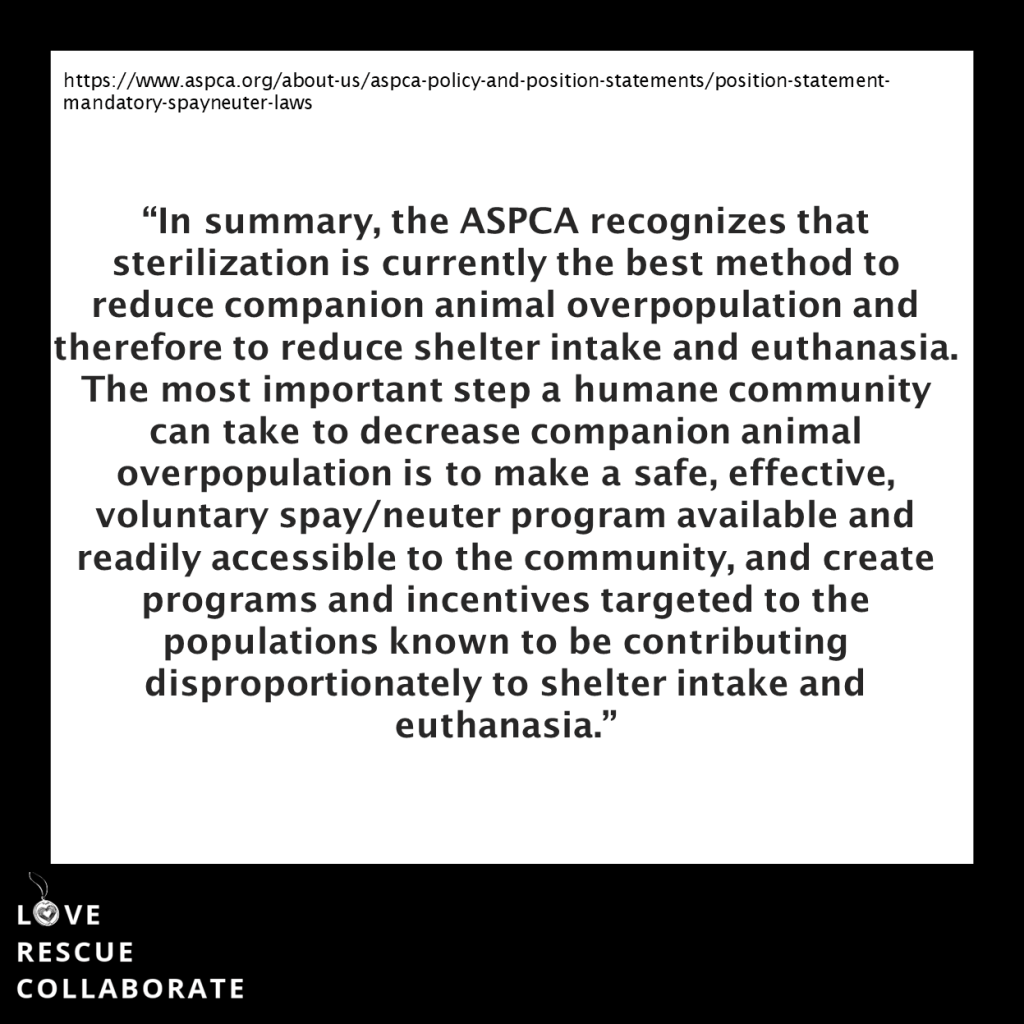
The ASPCA supports desexing, however explains that to justify mandatory desexing, an authority needs to be gathering performance measurements for years before and after these rules come into effect to show benefits, but where is this evidence?
Mandatory desexing has been implemented in a number of Australian states and the ACT, and councils, where is there proof of success? When will a council provide evidence before and after these approaches are implemented?
SUPPORT FOR DESEXING (NEUTURING & SPAYING) COMPANION ANIMALS
Many organisations and ourselves support desexing for companion animals (cats and dogs), and we recommend that
- desexing should be free for those in financial need and low socio economic areas,
- it is critical that free desexing is provided in hot spot urban areas (targeted areas) where there is a significant number of cats breeding.
However, there are issues with making desexing mandatory under legislation, as this approach fails to deliver the expected outcomes.
IS MANDATORY DESEXING EFFECTIVE?
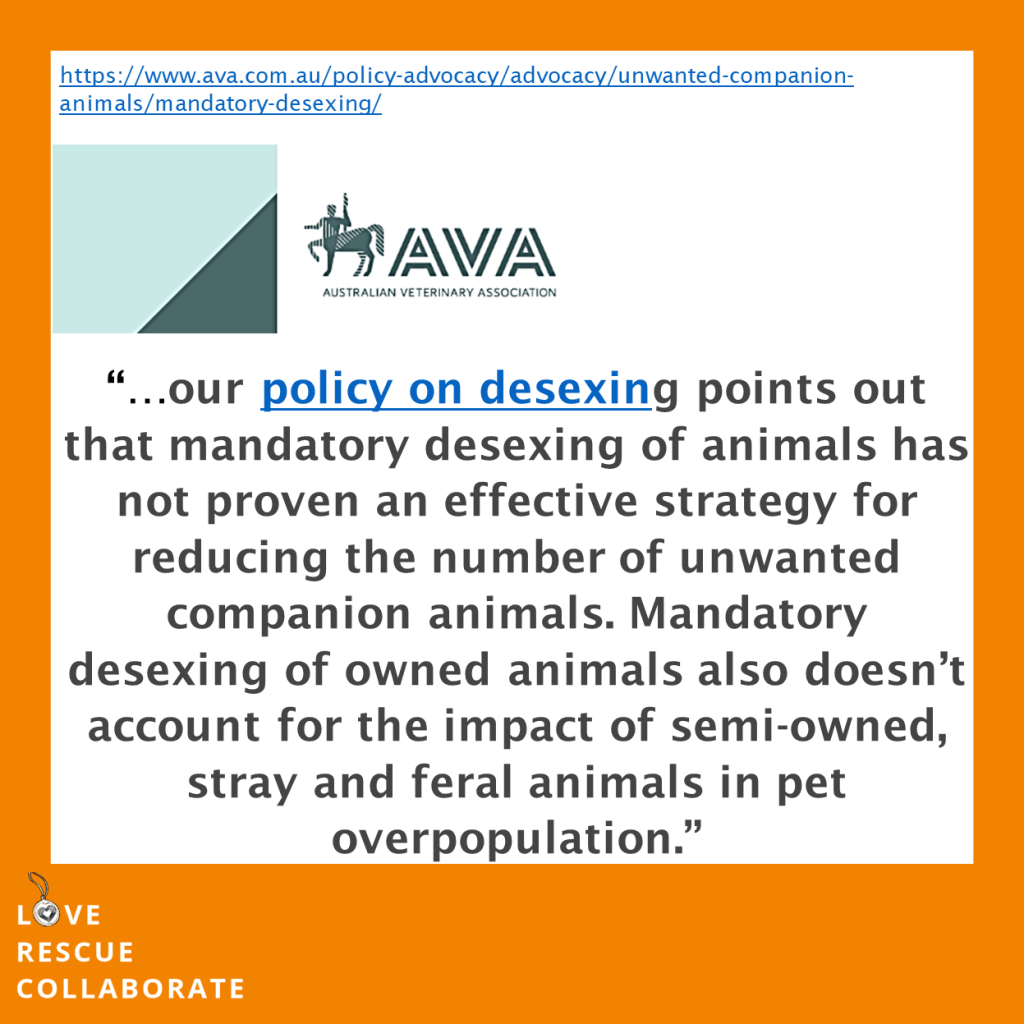
NO from the Australian Veterinary Association (AVA)
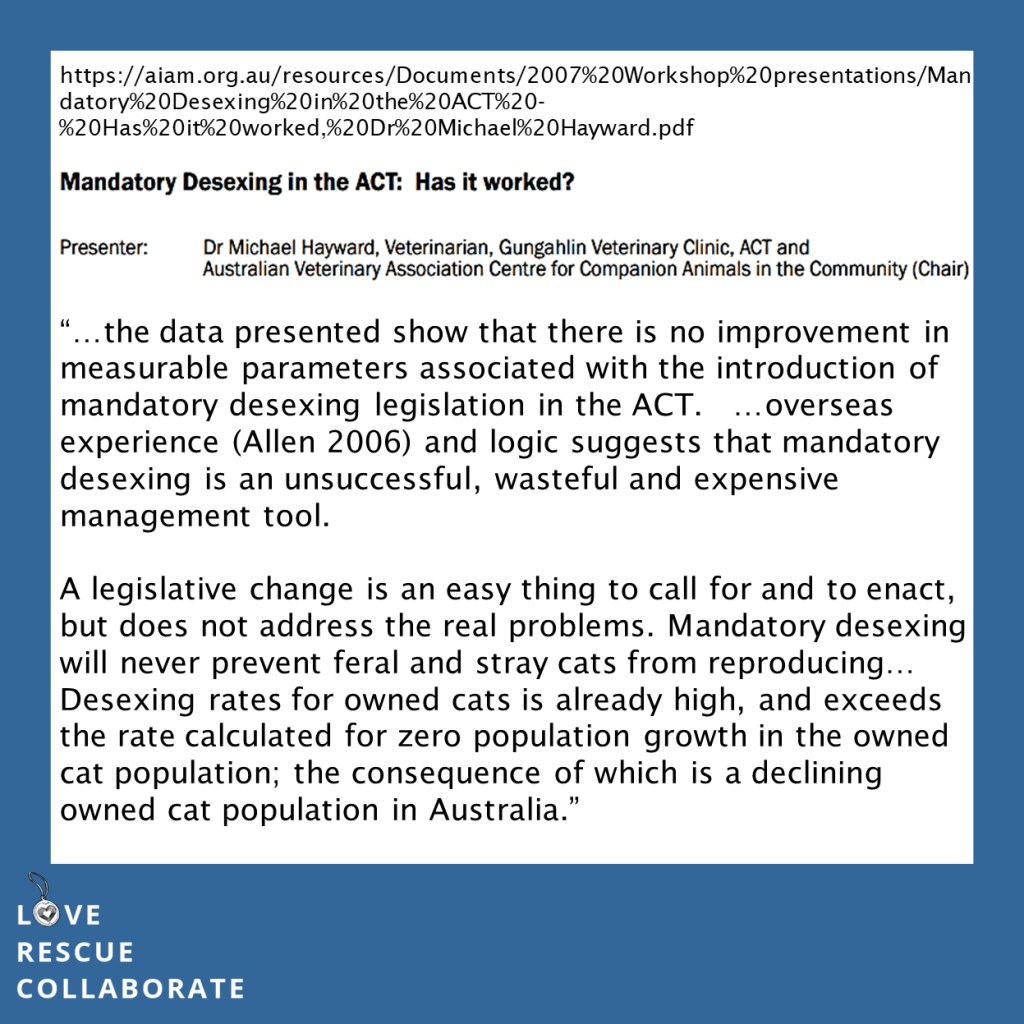
NO from Dr Michael Hayward, Veterinarian, Gungahlin Veterinary Clinic, ACT and Australian Veterinary Association Centre for Companion Animals in the Community (Chair)
NO from American Society for the Protection of Cruelty to Animals (ASPCA)

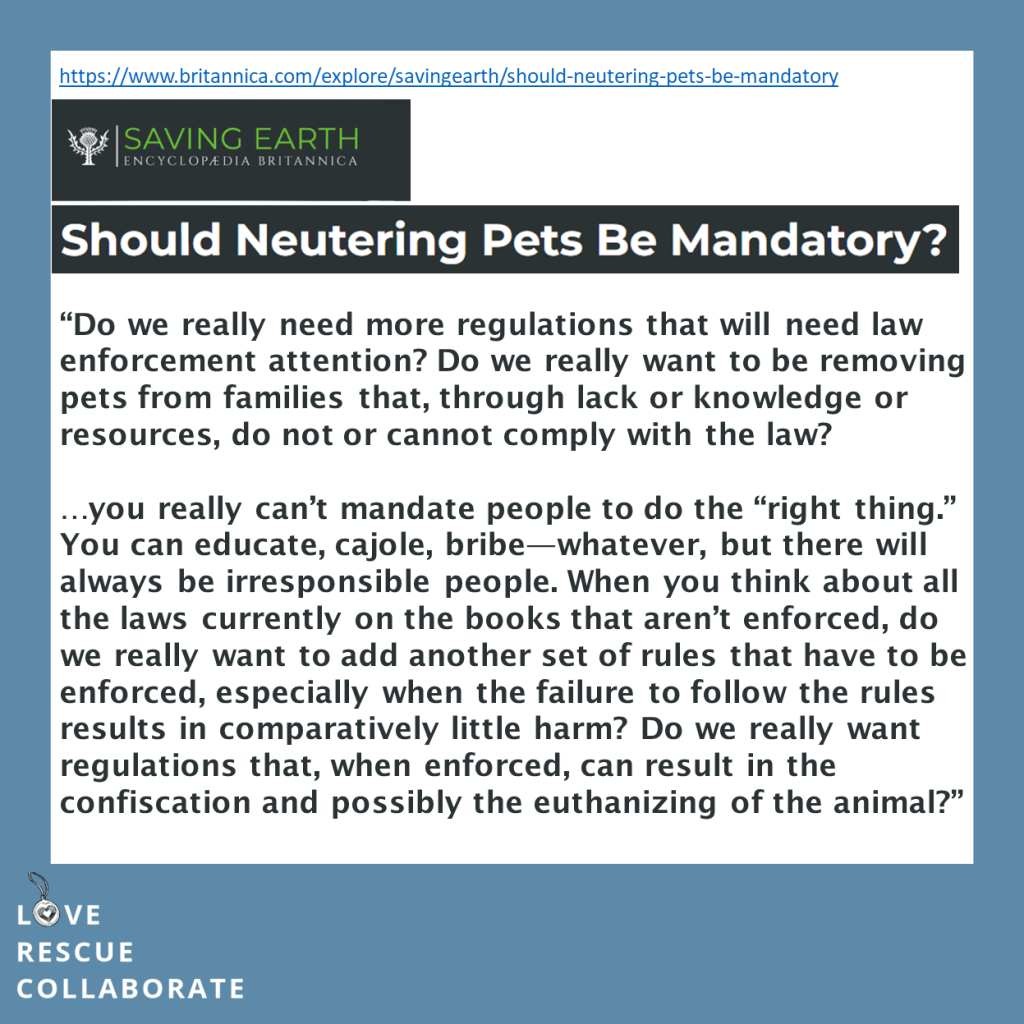
NO from Encyclopedia Britannica Saving Earth, Andrea Toback on Should Neutering Pets Be Mandatory?
NO from PAWS4CHANGE
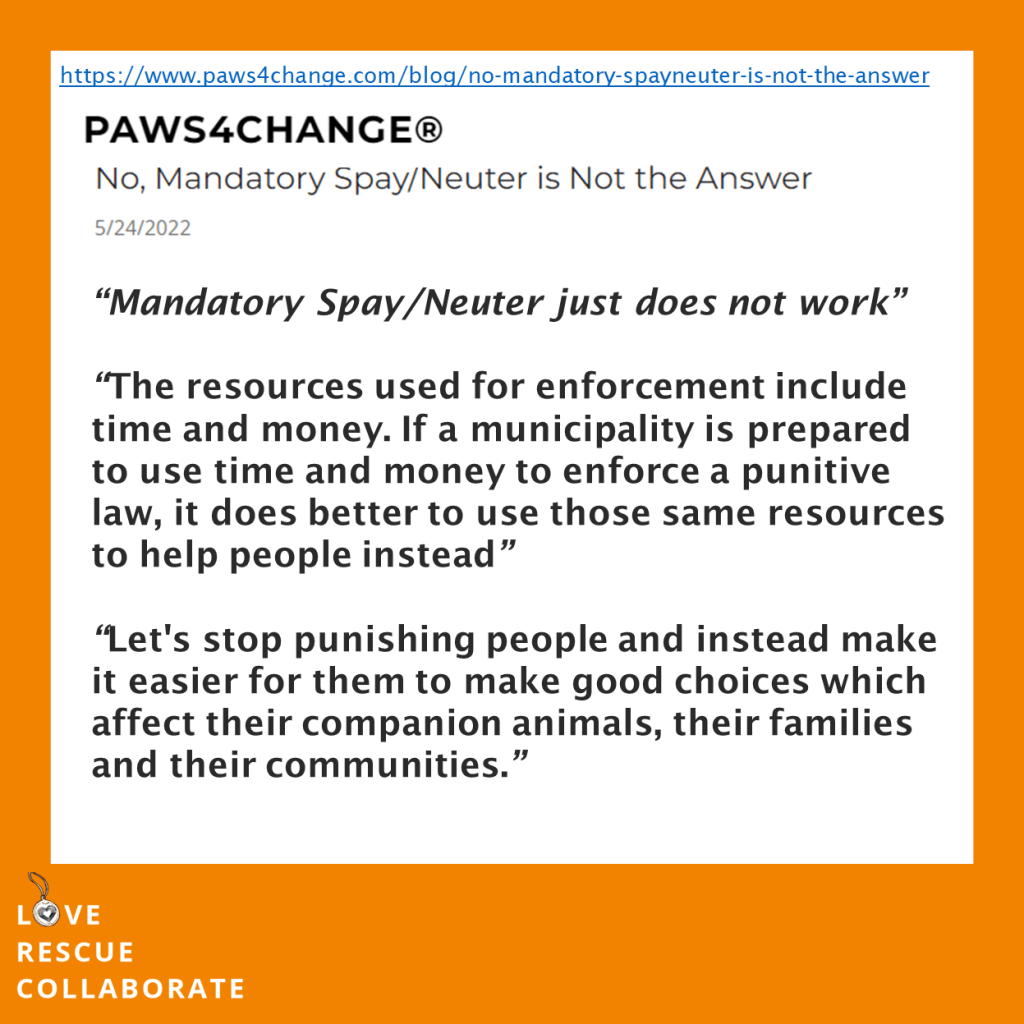
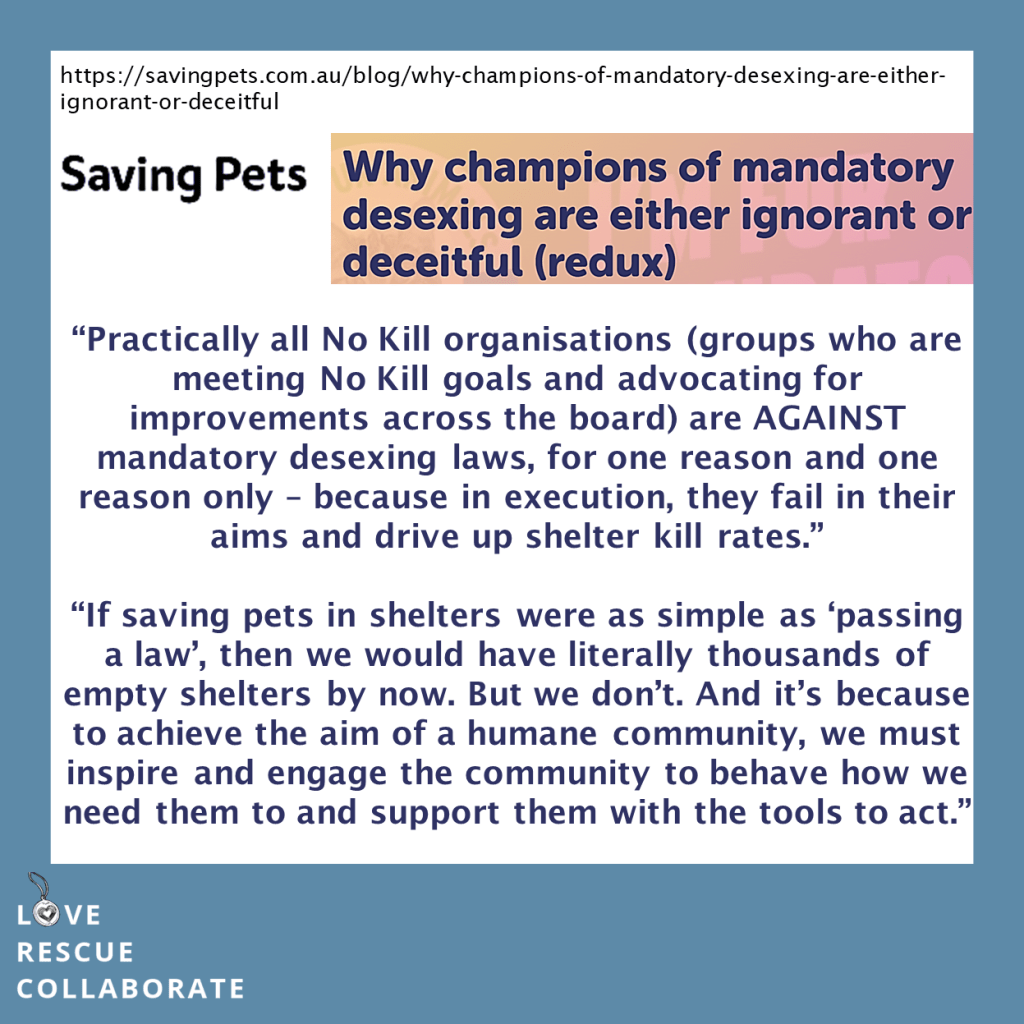
The are many more animal welfare organisations who agree with these views in Australia and other countries.
Special recognition to Australia’s Saving Pets who raised similar points and relevant references in their blogs including 2018.
WHAT’S A BETTER APPROACH? WHAT DOES WORK & IS SUPPORTED
- low-cost desexing (spay/neuter) clinics
- free desexing in high intensity in targeted low socio economic areas (eg Banyule council in Victoria)
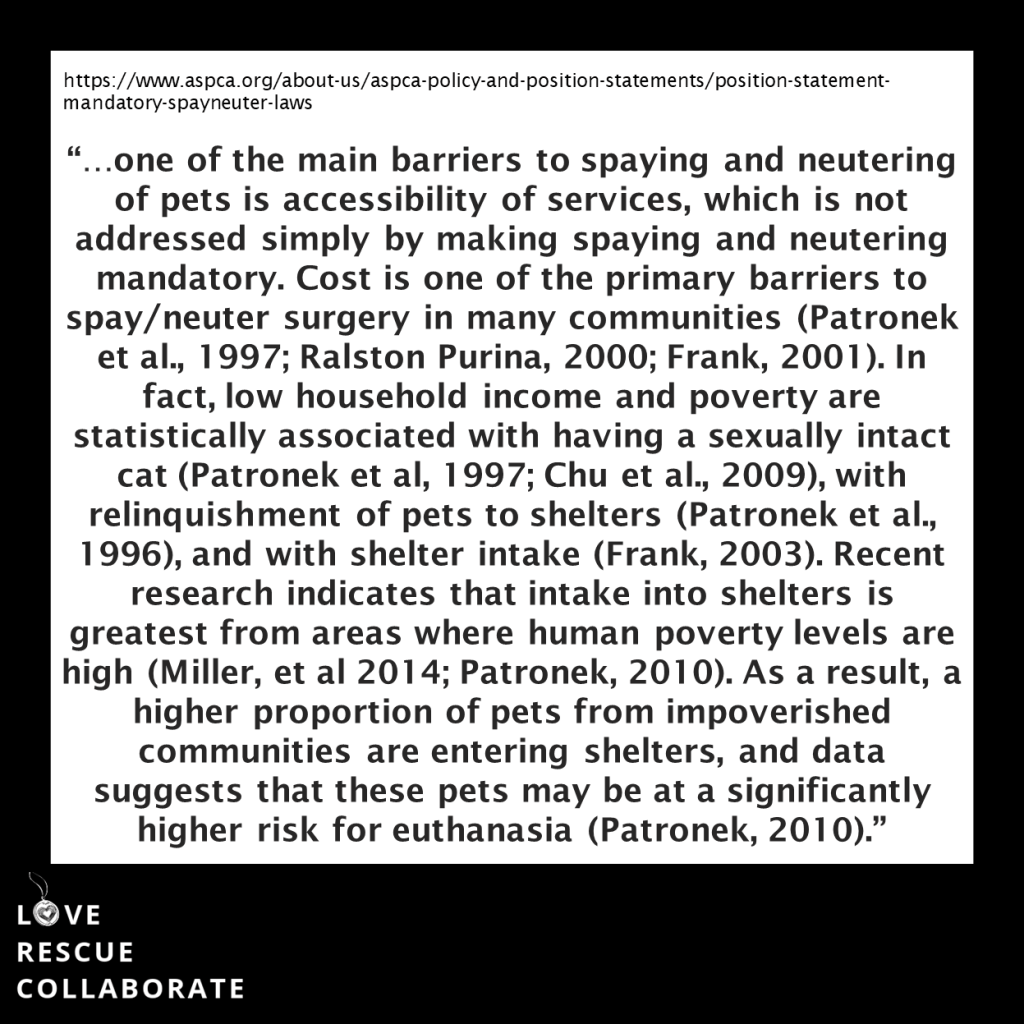
“The most important step a humane community can take to decrease companion animal overpopulation is to make a safe, effective, voluntary spay/neuter program available and readily accessible to the community, and create programs and incentives targeted to the populations known to be contributing disproportionately to shelter intake and euthanasia.” ASPCA
We have yet to see a targeted program for areas where there are significant cultural differences, ie people from other countries retain their country of origin attitudes to animals. When will we see this “elephant in the room” addressed effectively?
(It is covered in the advice from ASPCA.)
ONE WELFARE APPROACH: PROVIDE SOLUTIONS NOT PUNITIVE ENFORCEMENT
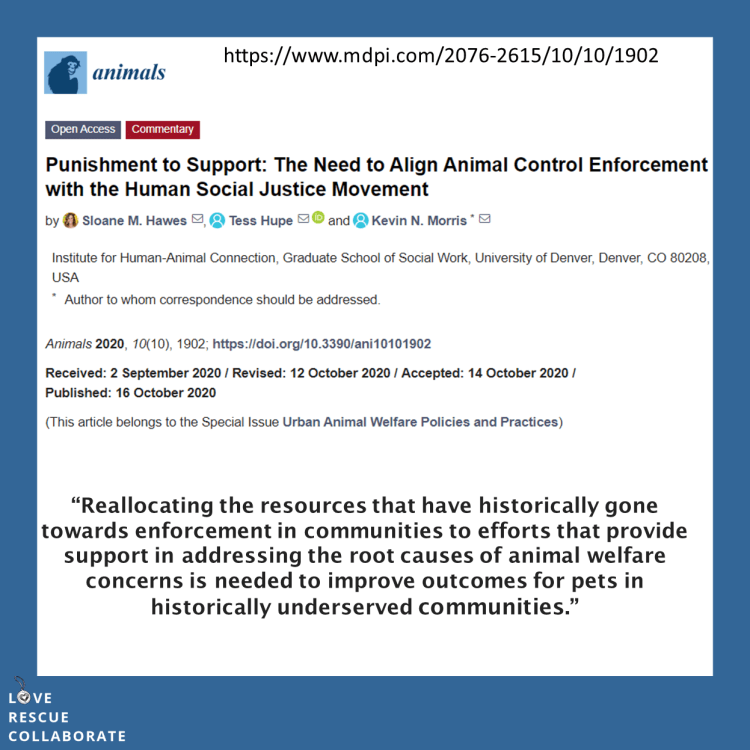
This research confirms that for areas of low socio economics, that hard enforcement is not beneficial to the health outcomes for animals and their owners, it is better to provide support services to assist with proactive animal welfare services.
SUMMARY
The majority of these views have been formed for several years, and not questioned nor put into doubt. Mandatory desexing is likely to:
- increase pets being abandoned,
- increased intakes to pounds/shelters and rescue groups,
- ultimately increase euthanasia rates and costs,
- increase compassion fatigue (secondary trauma) with staff and volunteers in such establishments with increased euthanasia rates.
Many animal welfare organisations support that implemented mandatory desexing legislation has not proven worthwhile.
Those organisations or politicians who propose mandatory desexing have yet to provide evidence/ proof of beneficial outcomes. Just why does this topic get raised?
Again, special recognition to Saving Pets who raised similar points and relevant references in their blogs including 2018, and several years before.
Better to invest in free and subsidised desexing for owners and pets in need.
This includes the stray or abandoned cats, who in the USA are often also termed feral cats.
REFERENCED INFORMATION
AUSTRALIAN VETERINARY ASSOCIATION (AVA)
https://www.ava.com.au/policy-advocacy/advocacy/unwanted-companion-animals/mandatory-desexing/
AIAM Annual Conference on urban animal management 2007, “Mandatory Desexing in the ACT: Has it Worked” Dr Michael Hayward
AMERICAN SOCIETY for the PREVENTION of CRUELTY to ANIMALS (ASPCA)
ENCYCLOPEDIA BRITANICA, Saving Earth, “Should Neutering Pets Be Mandatory?”, Andrea Toback
SAVING PETS, Blog 2018 (redux)
https://savingpets.com.au/blog/why-champions-of-mandatory-desexing-are-either-ignorant-or-deceitful
MDPI, Animals, Punishment to Support: The Need to Align Animal Control Enforcement with the Human Social Justice Movement
https://www.mdpi.com/2076-2615/10/10/1902
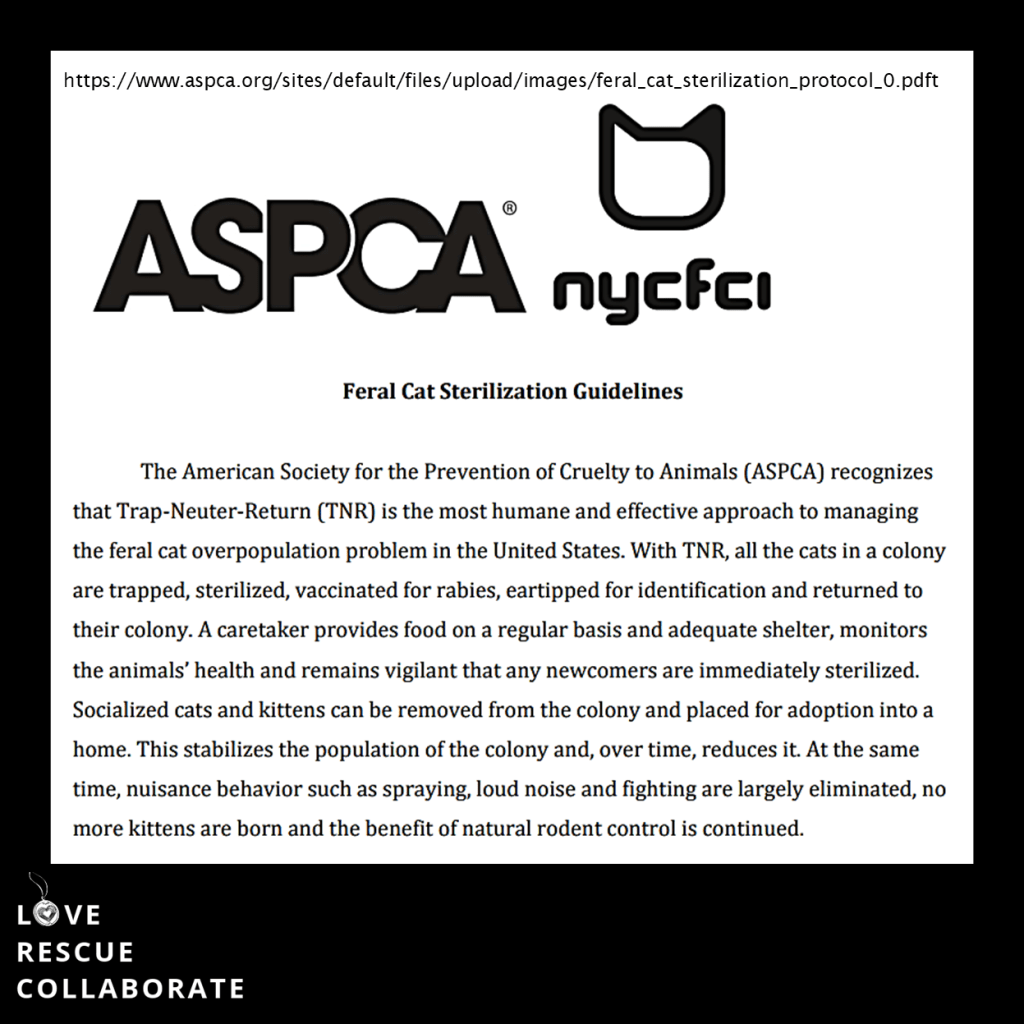
ASPCA Feral Cat Steralization Guidelines
https://www.aspca.org/sites/default/files/upload/images/feral_cat_sterilization_protocol_0.pdft
 LRC
LRC 