High intensity, high volume or mass desexing – what does this mean?
All terms are generally used to describe a focused project to desex (spay/neuter) as many cats as possible, preferably in a rapid time frame in a targeted geographical area (e.g. suburb or suburbs) where high volumes of cats have been identified. Several related projects may be performed under a program of works, such as targeting one suburb or location at a time.
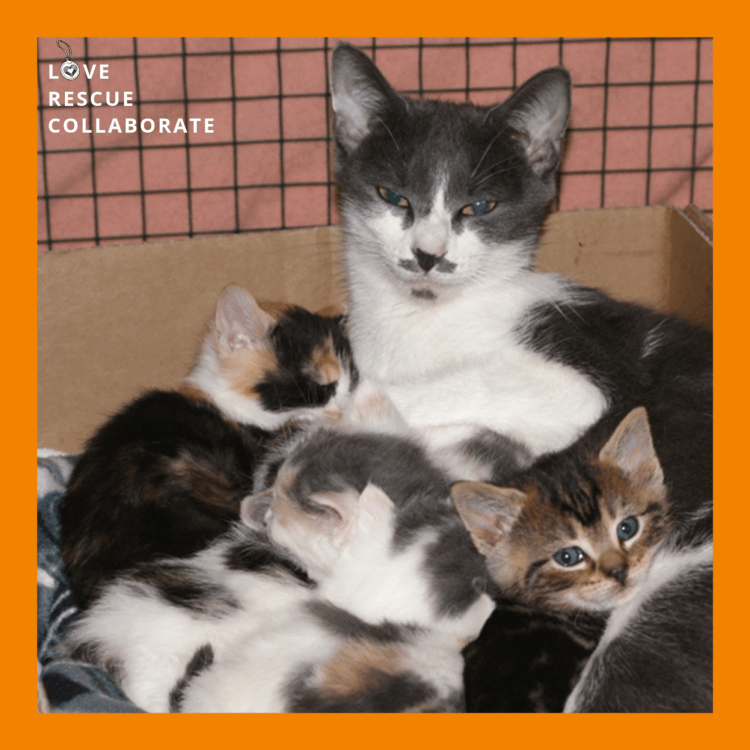
We adore cats, but we need to see far fewer cats & kittens from breeding, fewer abandoned, fewer ending in pounds or shelters being euthanased.
Many of us are aware of the benefits for desexing our own cats.
Where a neighbourhood has a large number of roaming undesexed cats, the numbers increase too rapidly. Noticeably, even more rapidly in recent years with warmer conditions related to climate change.
In some suburbs, rescues and residents describe a tsunami of cats and kittens. Then the cats may be viewed as:
- being forsaken and ownership becomes unclear
- losing social skills with people, they may incorrectly be labelled “feral”
- becoming a nuisance and are open to attack by cat haters
Currently in NSW intensive desexing activities are carried out by a variety of groups, including:
- Small rescues, who are volunteers providing a level of care to a community of cats
- Several Australian councils, who may work independently or with the assistance of others
- Large animal welfare organisations eg AWL NSW branches and/or support local rescuers with subsidised desexing; the Cat Protection Society supporting local rescuers or individuals with subsidised desexing or; RSPCA NSW supporting councils
Are you aware of the benefits of high intensity desexing of cats?
By focused efforts to desex as many cats as possible in an area, the breeding cycle is stopped or significantly reduced. The number of cats can be better managed and further reduced with rehoming practices and education on responsible ownership.
One of the leading organisations on desexing (also known as spay/neuter) is Alley Cats in the USA. We see examples from overseas of high volume desexing of cats in hotspots, and these processes have successfully been kicked off here in Australia. Let’s take a look at a few…
Banyule Council Victoria
The achievements at Banyule were raised in a separate blog item October 2020, which we have included in the Referenced Sources.
As an Animal Management Officer, Jenny saw firsthand the flood of kittens being born and quite often abandoned. As many rescue groups were full, it left no options with the council at the time other than to euthanase.

Since 2013 Banyule council has been subsiding free desexing for cats in “hotspots”. The program has been highly successful in reducing the number of abandoned cats and kittens; and reducing the number of complaints made to council in relation to roaming cats.
The yearly program has been provided a more valuable outcome, than the alternative of the council pound dealing with more surrenders, the costs of euthanasia and the emotion and mental stress for the Animal Management Officers, pound staff and vets. The Banyule council example is referenced in studies, and available to other Australian councils.
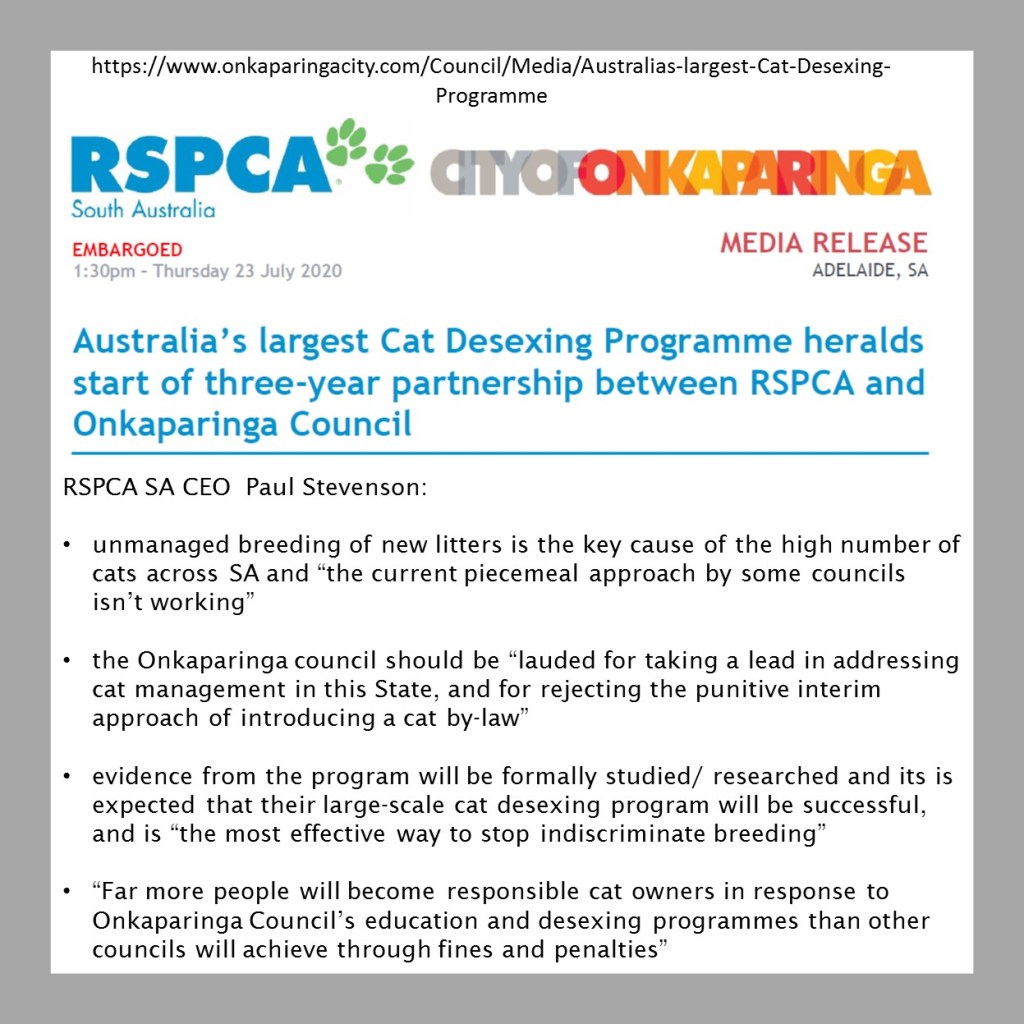
Onkaparinga Council in SA
In 2020, Onkaparinga announced a two year program to desex 2,000 cats. The council is currently half way through their targets, ie they have desexed aaround 1,000 cats.
The press release at the time included some very powerful views on the expected success. We have included the original press release in Referenced Sources below.
The Mayor, Erin Thompson expressed key views, including:
- Increasing desexing rates deliver the biggest benefits for cat management outcomes
- The number of unwanted litters of kittens were creating problems
- It was estimated thousands of kittens and cats were surrendered to pounds and shelters each year
- The council’s three focus areas are: “desex, microchip and ‘indoors at night’ “
- They are seeking outcomes which are “good for cats, it’s good for wildlife, and it’s good for neighbours”
Community Cat Program under the Australian Pet Welfare Foundation
This is a unique program in Australia from an organisation we consider a leading authority on what has worked and what hasn’t worked with cat management issues.
Refer Referenced Sources for the webpage and the 2021 End-year progress report Community Cat Program document.
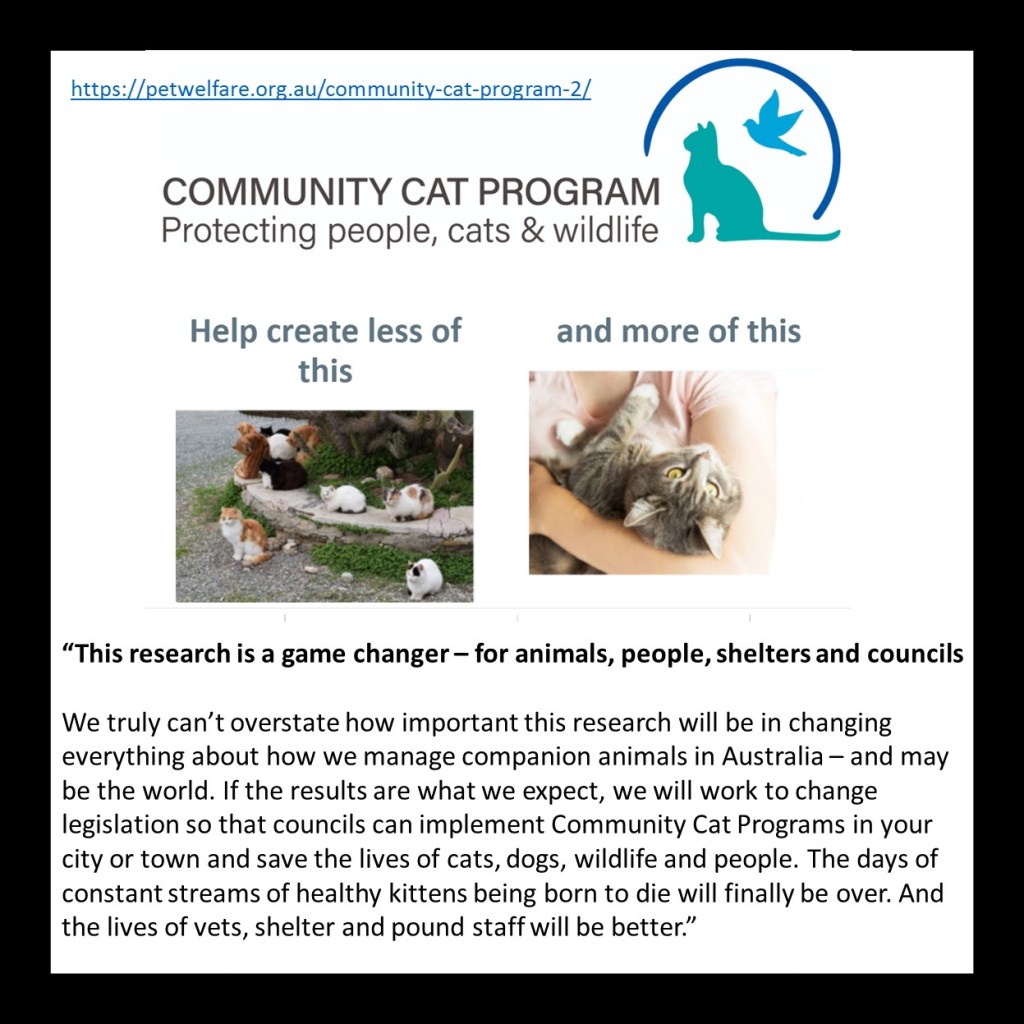
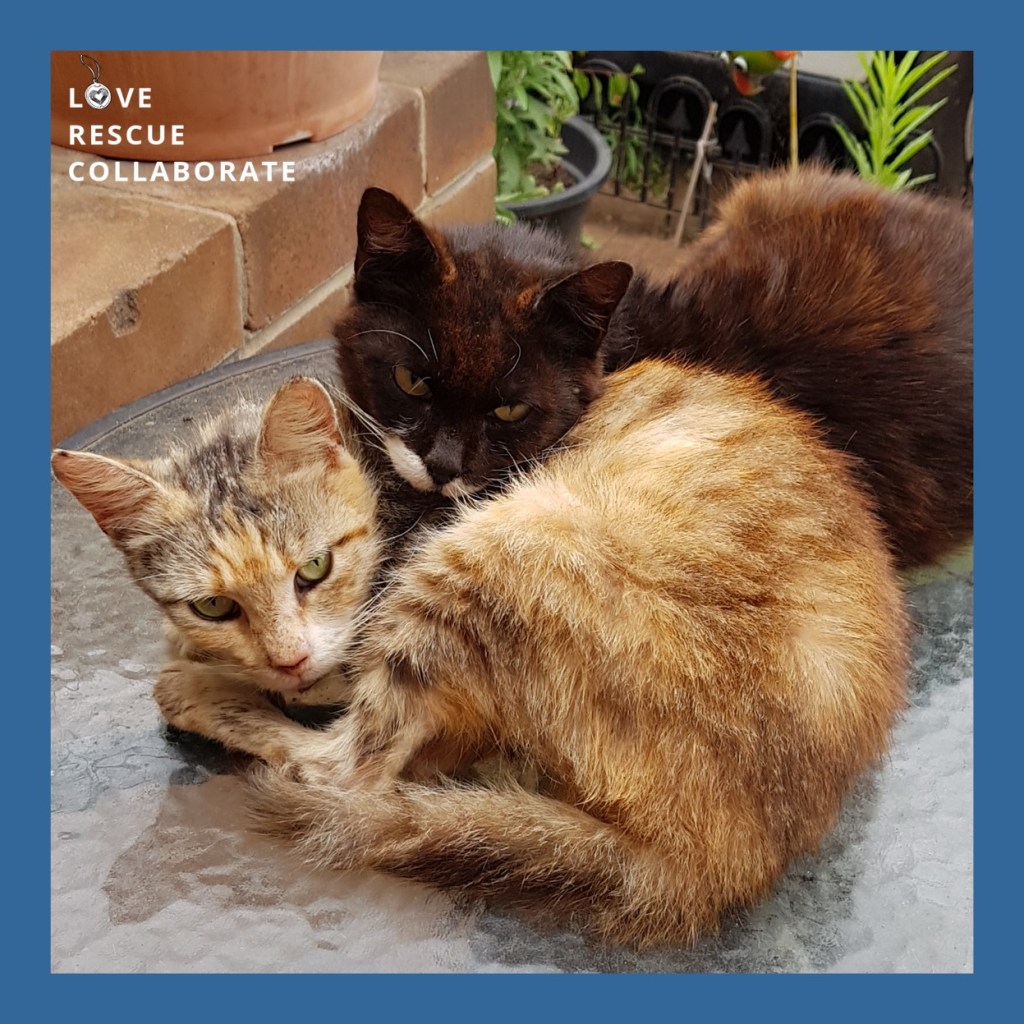
“Most of the animals currently euthanased in Australian shelters and pounds are stray cats from cities and towns. This is because how we currently manage them doesn’t reduce their numbers. It just leads to a constant cycle of breeding, impoundment, then euthanasia. More breeding, more impoundment, more euthanasia…”
[Photo of undesexed cats c/o LRC Sydney based rescue group]
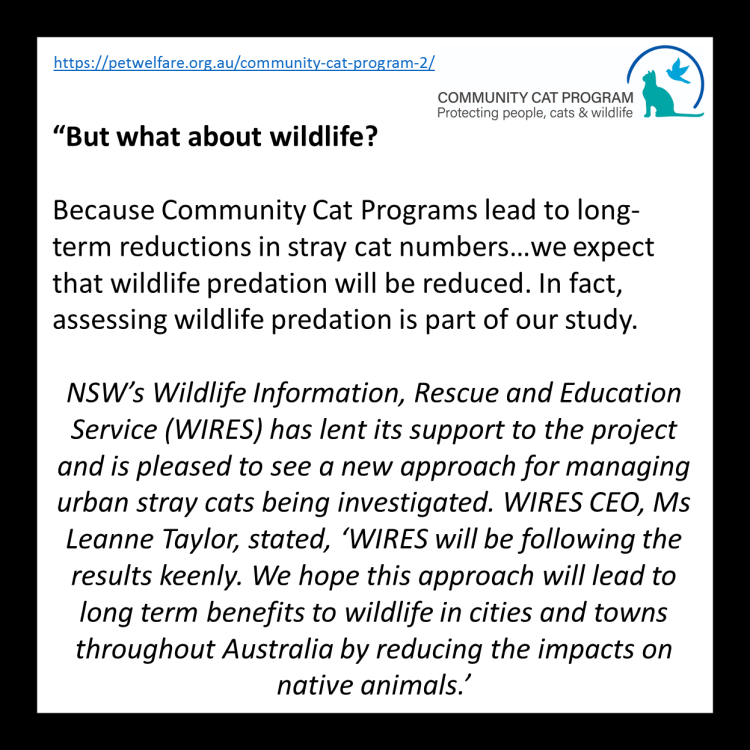
The APWF approach became an innovative five year trial, to utilise desexing as the main method for managing stray cats in urban areas.
The are several projects in a number of states under this program, and more detail is included in the APWF status report and includes:
Queensland (QLD)
Pilot program completed
Pilot extended to another area
Over 1,000 cats desexed
South Australia (SA)
Onkaparinga has desexed near 1,000 cats
Victoria (Vic)
Banyule Council benefits from some of the lowest figures in the state for impounding and euthanasia following years of intensive desexing in the local government area.
City of Greater Shepparton is ramping up with facility improvements for a high-volume cat surgery to begin high intensity desexing in targeted areas.
Section 4 “Project research aims and interim results” of the status report provides the findings and outcomes
It also includes summaries of related programs by Banyule and Onkaparinga councils, the National Desexing Network (NDN), and RSPCA.
In a nutshell, this program provides measurements showing that with intense desexing, there will be fewer cats being impounded and euthanased at council pounds.
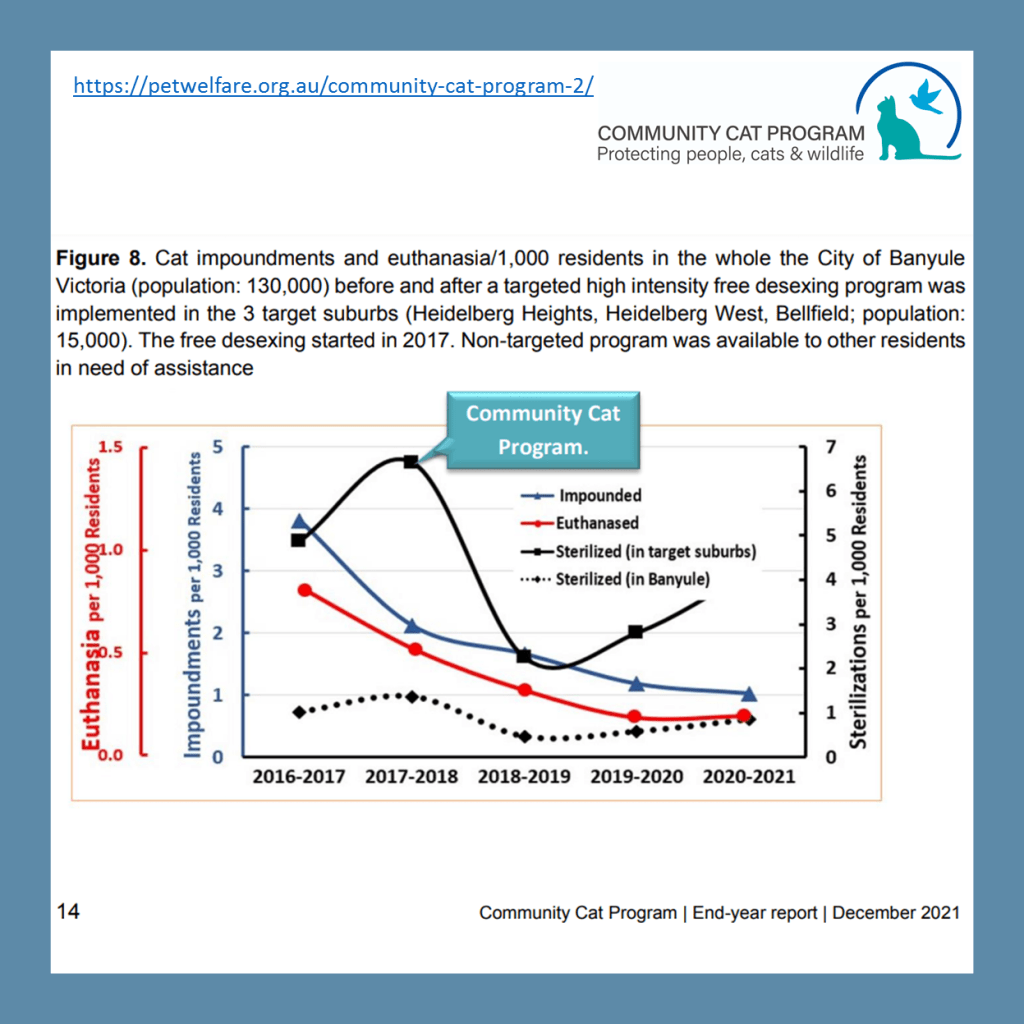
With fewer cats breeding, there are fewer roaming cats and fewer complaints to council.
This also has a roll on benefit to carers, be they paid staff in council pounds or rescuers (ie carers) of community cats.
This may be common sense to many.
The Community Cat Program is providing the evidence.
Investing in high intensity desexing is a wise choice!
Referenced Sources:
https://www.alleycat.org/our-work/spayneuter/
https://www.onkaparingacity.com/Council/Media/Australias-largest-Cat-Desexing-Programme
 LRC
LRC 